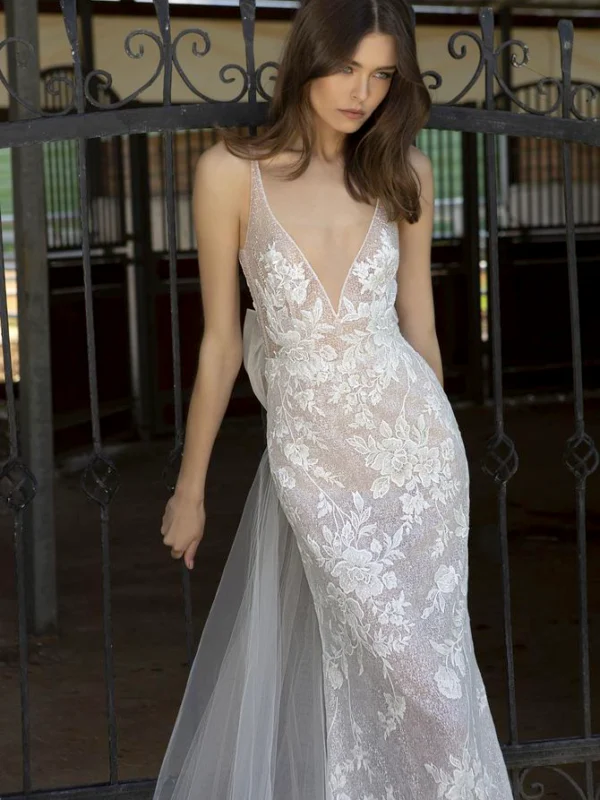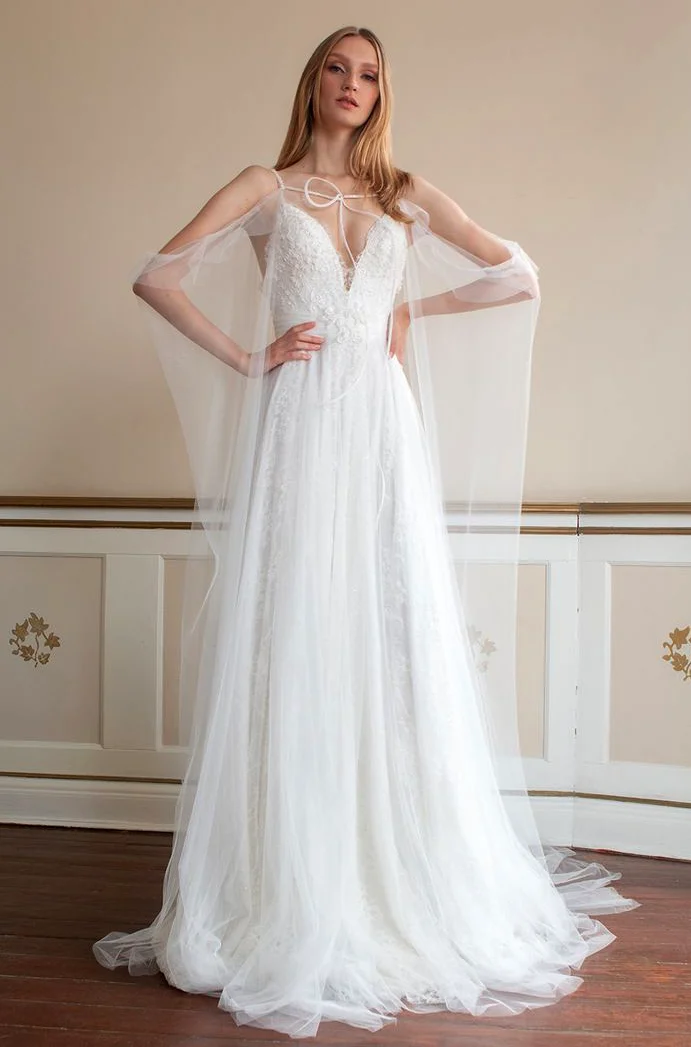
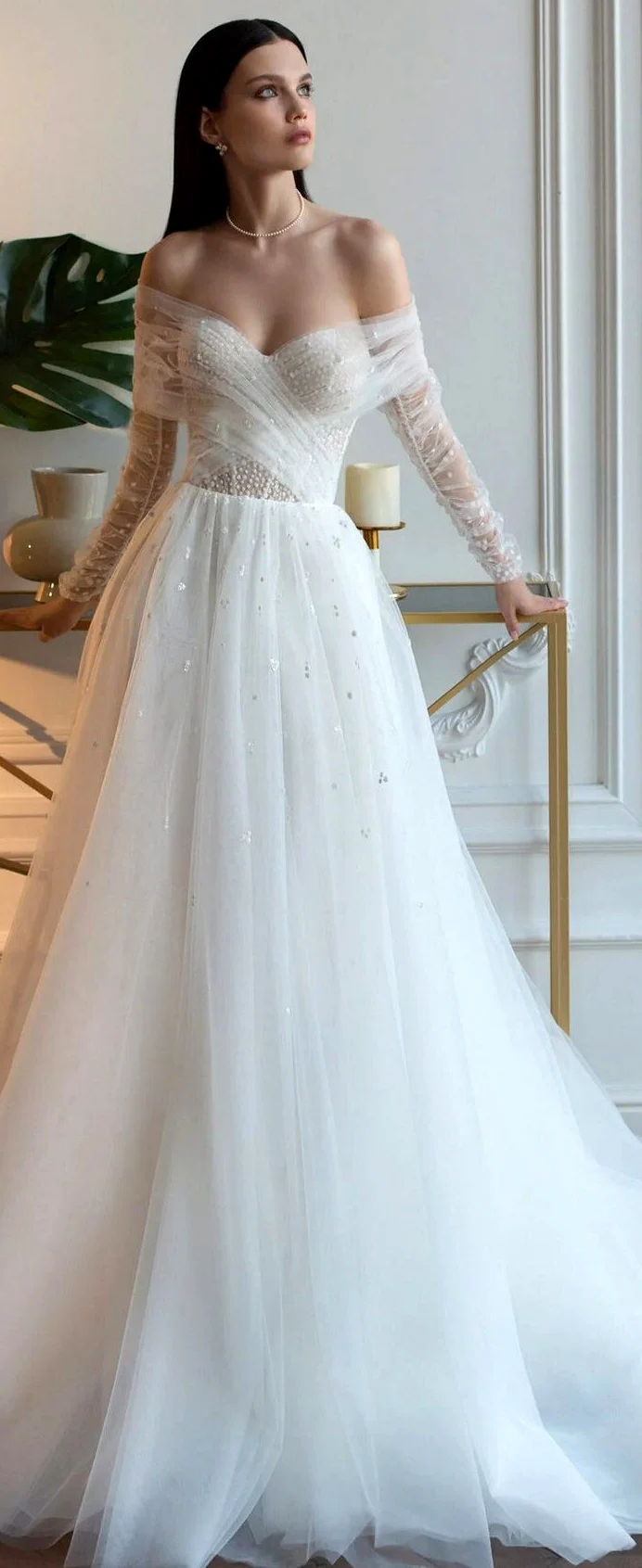
You can change your bridal look deliberately without immediately seeking a second dress. Decide what should look different between two situations first: exposed shoulders instead of an extra area, a back visible without a veil or less outer volume around the skirt. The references show different layers, sleeves and a veil. They cannot establish removability by themselves. Use them for the intended visible result and test the actual sequence on the offered outfit. Only the real connection determines whether a picture idea can become two wearable states.
Change your bridal look: choose two specific situations
Select an earlier and a later moment in your day. You might want more shoulder area covered on arrival and a quieter upper line at dinner. A veil might be worn for one section and put aside afterwards. Describe only the change you actually need. Every different picture idea need not join the same sequence. Two clearly defined states are easier to test than several possibilities whose pieces and order remain unclear. A small change can be enough for your own plan.
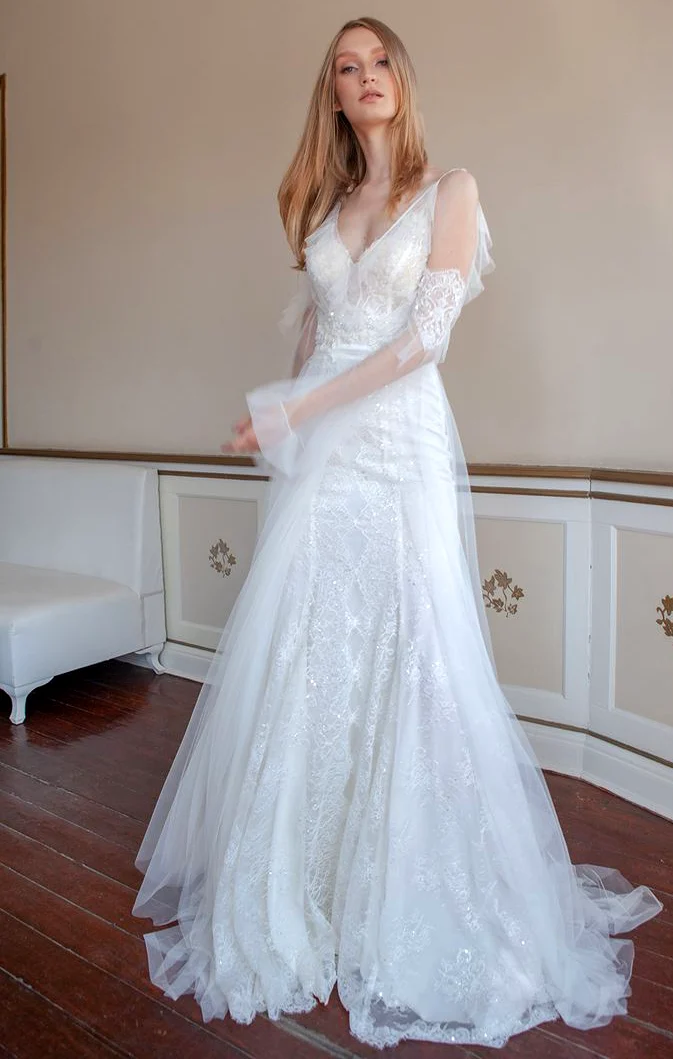
Record the preferred front and rear view for both moments. The pale reference with a wrap tied in front creates a different shoulder outline from the dress with broader side-set bands. The veil photograph introduces another drawn line behind the upper body. Choose which of these areas you want visible earlier and later. The shared basic look can stay quiet; the change need not transform every zone simultaneously or promise a particular dramatic effect. It should answer the preference you have actually identified.
Distinguish the pieces genuinely included
Ask to see the particular outfit completely. Which main pieces are present, which layers are permanently connected and which are genuinely removable? A front tie can make a possible hand movement visible but does not explain the complete attachment. The same applies to a broader skirt area beside a narrower inner line. Request a view of the actual connection on the product. You can then assess the proposed change through real steps rather than similar-looking photographs alone. Establishing each boundary helps later decisions about jewellery too.
A separate top and skirt differ from a dress with an added layer. The two-piece bridal outfit guide explores the boundary between top hem and skirt waistband. For your change plan, first establish which parts can remain independent. No universal quality hierarchy is needed. A permanently attached detail may be exactly right if you want it all day. A removable piece is useful only if both actual states meet your preference. Compare the real offer against that practical aim.
Rehearse the upper change with arms and jewellery
The sequence includes several arm and shoulder arrangements: longer sheer-looking areas, narrower side sections and a larger wrap. Test a genuinely offered version with lowered arms and while reaching. If its added layer can be removed, assess the remaining bodice again afterwards. It should sit as you want during later wear, not only during the change. Wishing for another look does not turn a permanently attached sleeve into a detachable piece. The actual connections need to provide the proposed sequence.
Include jewellery after establishing the basic steps. A longer earring or bracelet may sit differently beside an additional edge. Rehearse with your actual accessories instead of discovering their contacts immediately before the event. Choose whether one piece should be put aside temporarily or stay on through both states. This is a practical order rather than an obligation to add more accessories. A smaller change may meet your needs better than an elaborate process you do not genuinely want to use. Confirm the complete result with shoes and bag too.
Plan veil and outer skirt area separately
The front view with a veil combines it with longer sleeve areas and a clearly drawn upper centre. Compare the veil initially as its own layer. Which lines should remain visible after it is removed? Check the actual attachment with the planned hairstyle and anyone who may help. Inspect the back afterwards. The later state then becomes a deliberately chosen view rather than simply the absence of an object. Keep other additions similar during the first comparison so the veil’s effect remains clear.
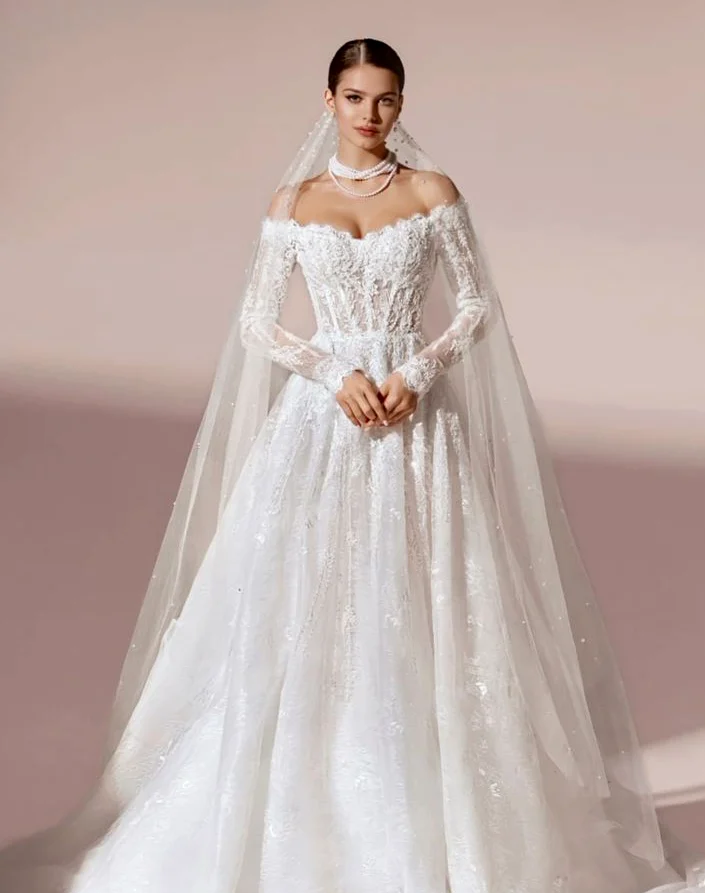
In the photograph with a broader outer skirt area, the lower change may appeal most. The wedding dress with an overskirt guide adds separate comparisons of inner and outer lines. Plan a change only where the actual connection permits it. Ask which area remains and how the middle transition looks afterwards. Wear the intended shoes in both states. The sideways-spread photographed area does not provide a complete trial of its ordinary fall when you move or sit.
Test a short sequence of real hand movements
Work through the steps once in a sensible order. Where do bouquet and bag go? Who holds the removed layer? Which connection opens first, and which jewellery stays on the body? Use the actual pieces and a suitable place where you can move normally. A fixed number of minutes taken from another example is unnecessary. The useful question is whether you understand the actions and want to perform them with the available help on your day. Doing everything unaided is not a universal requirement either.
Walk a few steps after the change, sit and stand again. Assess the remaining outfit without constant rearranging. Have the helper find the same connections during the rehearsal rather than merely watching someone else operate them. Record an unclear step and resolve it on the actual model. A sequence is not fully tested when a decorative layer has only been lifted briefly from an arm; both complete wearing states belong in the decision. With permission, inspect matching views to identify the real visible difference.
Provide for removed pieces and a possible return
Decide beforehand where a genuinely detached piece will remain. Ask how the particular item should be held or placed and whether a suitable carrying arrangement is provided. Rehearse putting it back on if that is part of the plan. Hairstyle or other additions can make a connection differently accessible from the first dressing. A clear sequence therefore considers the intended later use as well as removal. If you do not want to wear the layer again, that is another practical preference to record rather than leaving it uncertain.
Finally, compare the work involved with the benefit of the two states. Removing the veil and leaving other lines unchanged may be enough. A confirmed wrap may be exactly the temporary area you want. Read the actual pieces’ labels; GINETEX explains care symbols. Choose a change whose visible result appeals and whose real actions you have rehearsed yourself. More pieces do not automatically make a better plan. The appropriate change meets your specific preference through an arrangement that actually exists and can be worn.
Choose what should change and what may stay. Confirm removable parts on the actual outfit and rehearse the steps with jewellery, shoes and any intended help.
Frequently asked questions
Does an extra visible layer prove removability?
No. An additional area may be permanently attached. Ask to see the actual fastening and have the proposed change demonstrated on the product.
Do two looks require two dresses?
Not automatically. A genuinely removable veil or wrap may alter the visible arrangement. Decide through the actual available pieces.
What should I check when someone helps with the change?
The helper should know the actual fastenings. Rehearse the order, jewellery contacts, hand positions and a place for removed pieces.
Are a top and skirt the same as a dress with a wrap?
No. Separate main garments and an added layer are different constructions. Establish which pieces the particular offer actually contains.