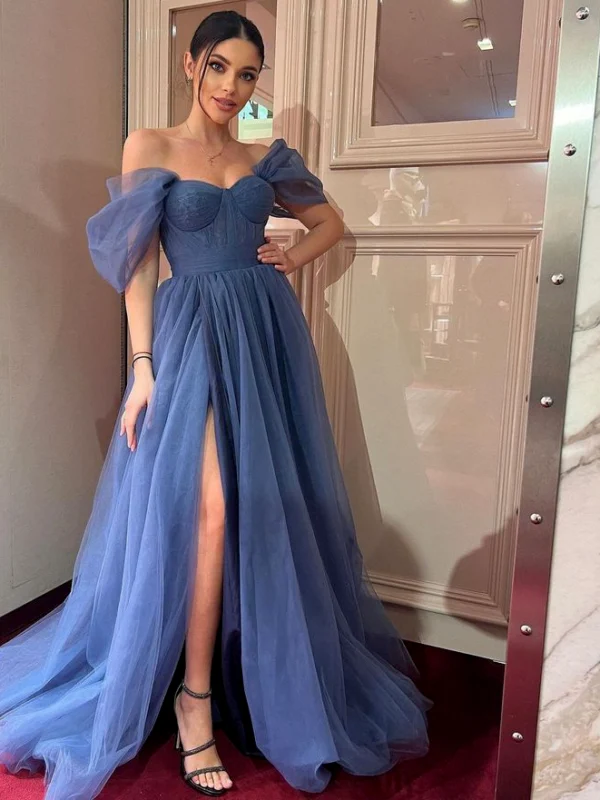
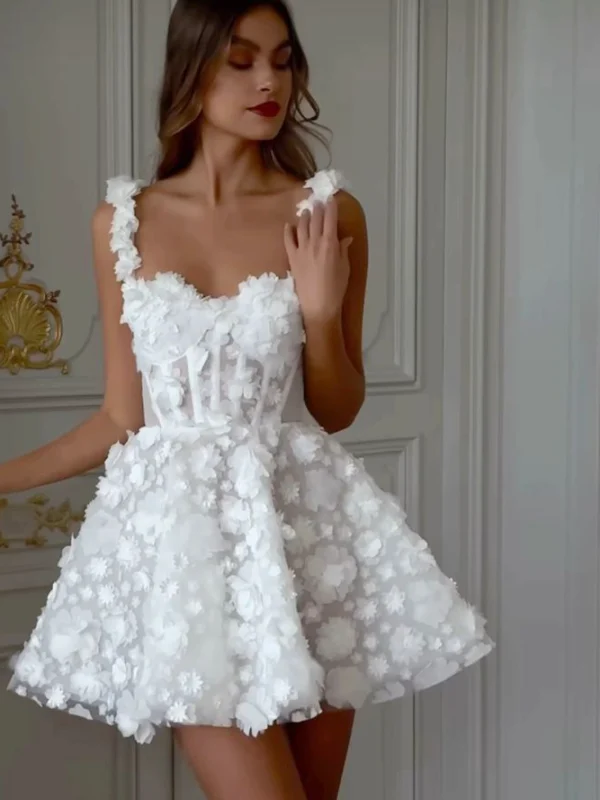
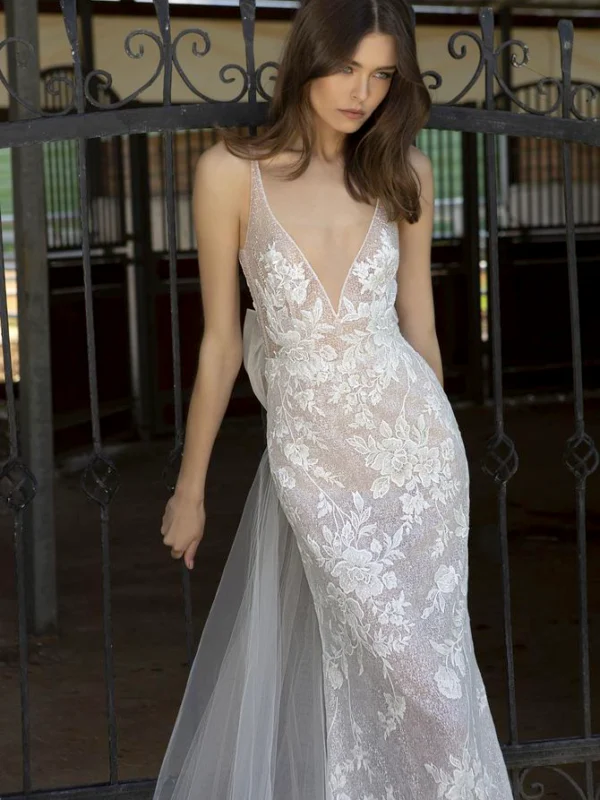
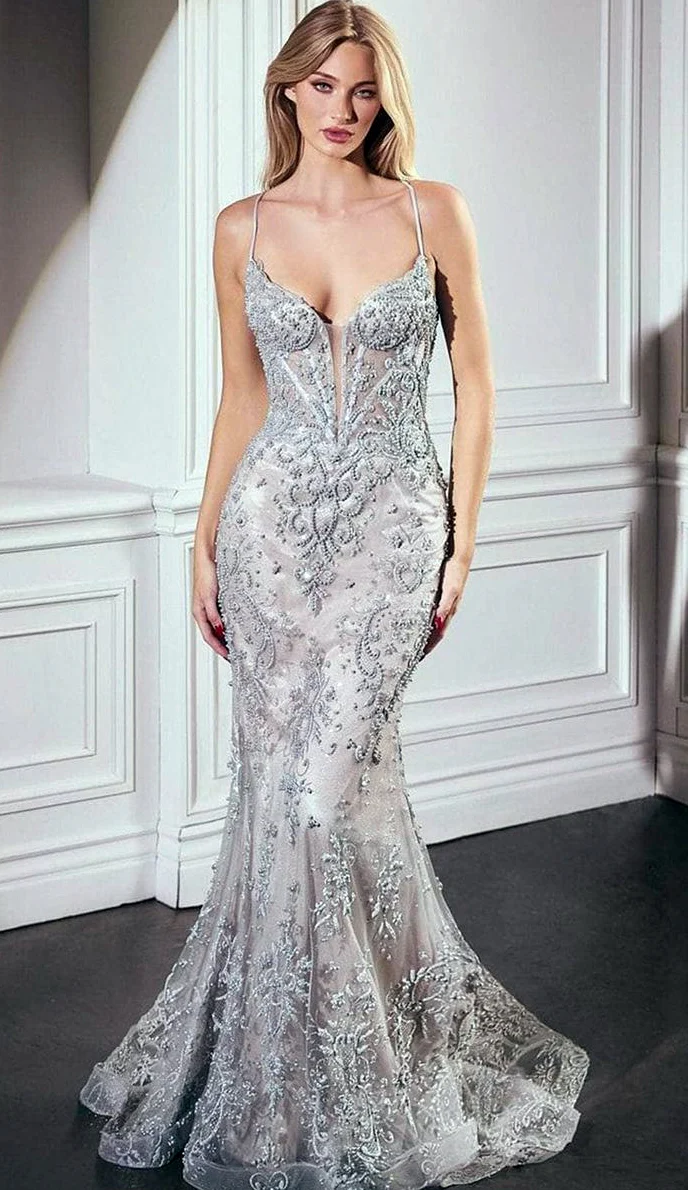
A silver wedding dress can be the starting idea for a cool, pale wedding look. Be more specific about whether you want a broad silvery effect, many small bright points or a clearly drawn ornament. These references compare three cooler-looking dresses with one warm gold-coloured rear view. They establish neither mother-of-pearl nor a particular fibre. Begin with visible colour and lines, then assess the actual dress and the accessories you intend to use for your celebration. The pictures help you describe a preference rather than verify a product’s construction.
Describe a silver wedding dress as a clear colour idea
Explain the colour without a material promise: perhaps pale cool silver with white accessories, or a greyer main shade with one small warm accent. A shiny photograph does not show how your actual candidate will look beside the chosen veil or the other person’s outfit. For close coordination, compare real samples or garments together. Decide whether a deliberate difference between pale areas is welcome, rather than ordering everything described as almost the same colour and assuming that alone completes your shared brief.
The warm cream-gold rear comparison helps sharpen that decision. Large floral lines and a warm pale ground make a different relationship with skin and background from the cooler front pictures. Do not turn this into a general rule about which skin tones should wear a colour. Compare two real candidates on yourself and describe which you prefer. Your own clear assessment is more useful than claiming that a colour is inherently required or excluded for an entire group of people, especially when the pictured setting differs from yours.
Distinguish ornamental lines from evenly spread points
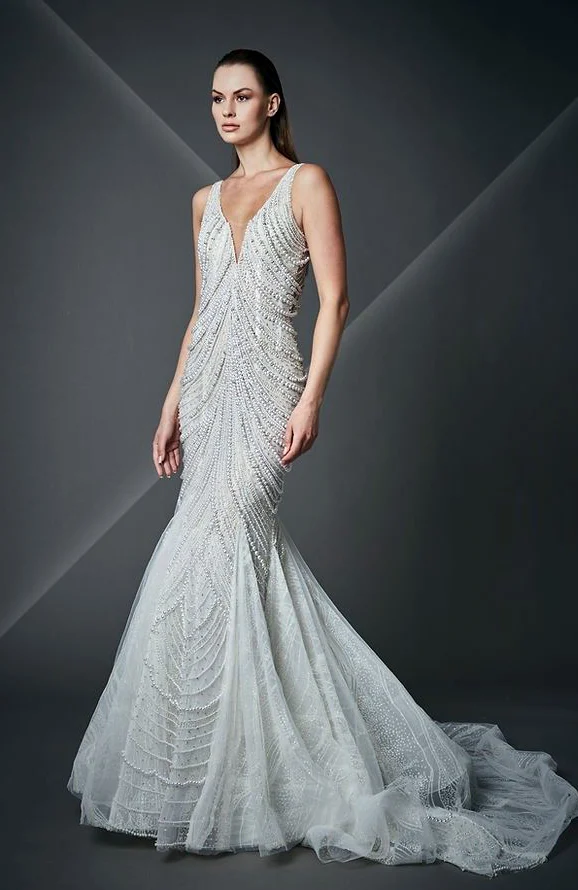
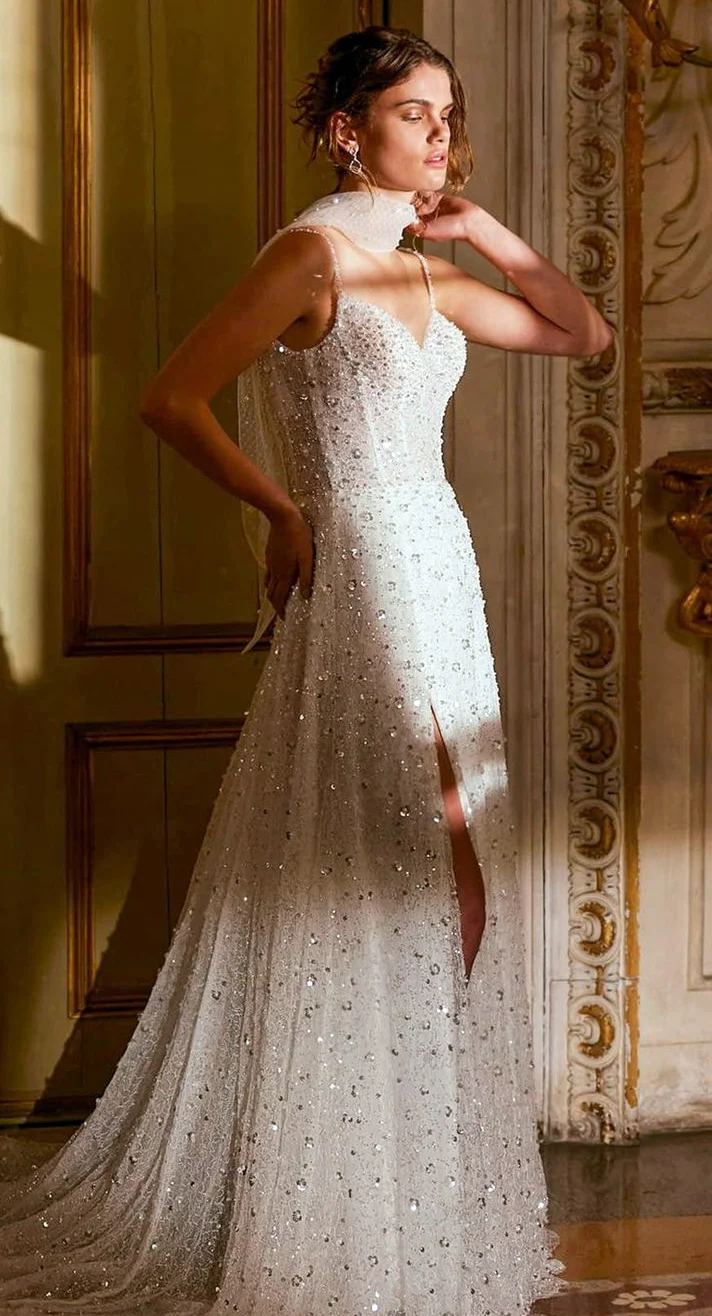
The cool silvery dress with broader straps has repeated curved rows travelling from the upper body across the hip into the flared lower area. In the narrow-strap slit comparison, individual round bright details are distributed more widely. These surfaces offer different starting points: a recognisable direction or a more evenly divided area. Look from a few steps away first and decide which order you want to register as the large effect, before evaluating every small element close up or choosing accessories to repeat them.
In the silver front reference with fine straps, larger looping motifs travel around the centre. They share space with clearly outlined upper sections and a deep central opening. If you like that arrangement, name the main priority: ornament or upper lines? The shimmering wedding dress guide adds further comparisons between bright points and broad surface effects. A silver wedding dress does not automatically require stronger shine in every accessory. Decide on extra details after the actual dress, instead of giving every small part equal visual importance from the beginning.
Connect the silvery area to the whole silhouette
The two cooler front examples with curved decorative rows sit close through the upper skirt and widen lower down. The slit comparison interrupts the long front differently. Do not compare these routes only as chest crops. Photograph the real candidate full length with the intended shoes and walk a few steps. You can see whether you still enjoy the pattern direction as the fabric moves and whether your normal stride works with the actual lower outline. A posed photograph cannot supply that complete movement test on its own.
Add a seated view and the moments when you hold something. In the slit picture, pale cloth is lifted near the neck by one hand; that position does not show how the fabric rests around the neck without the hand. If you want a similar accessory, place your real piece with your hands relaxed first. Compare its natural drape and then the intended movement. A held pose can suggest an attractive line, but should not be treated as a complete wear test. Check where the cloth stays when you let go before deciding to recreate the photographed effect.
Choose jewellery by position rather than quantity
With a strongly ornamented dress, start from the free area you want to emphasise. A short necklace, earring or small hair piece draws attention somewhere different from adding another broad area to the bodice. Put on two versions, removing just one item for the second. You can see whether the extra detail has its own purpose or merely repeats an already busy front. You do not need a blanket rule that every silver-looking surface can only be combined with one other jewellery colour; assess the actual pieces together instead.
If you want a small warm accent beside the cool dress, test the real object on the full look. The warm rear reference is another garment, not evidence that its shade matches your candidate. Hold your chosen jewellery, dress and any flower sample together rather than judging three separate product photographs. Decide which accent should recur and which can remain a single detail. Actual metal or stone information is a separate product question; it cannot be read from a bright point in the photograph. Keep position and material verification as distinct decisions.
Coordinate the veil and other pale areas deliberately
A silver wedding dress beside a white veil is not automatically a failed match. Ask whether you want an obvious two-colour relationship or a quieter shared tone. Place the real veil in front of and behind the dress and compare the overlap. Then inspect its edge beside the ornamental lines. A broad added border can establish a different focus from a less interrupted pale surface. Evaluate both with the intended hairstyle, so the veil’s position around your face and back enters the decision along with its colour name.
For a particularly continuous colour brief, the monochrome bridal look guide helps assess pale pieces as a shared set. You do not have to adopt that goal: a deliberately visible difference can also be your choice. In either case, record which real items were compared. If the outer layer or a large flower arrangement changes later, check the overall view again. The purpose is your particular appearance, rather than forcing every object at the celebration into one named shade or continually searching for another almost identical match.
Bring colour and practical use together in the final test
Finish with front, rear and seated photographs using the same planned accessories. Where possible, compare under lighting relevant to your actual rooms, without promising that one photograph establishes an identical colour everywhere. Add two notes: what you like about the colour, and which practical adjustment remains open. A troublesome hem or unsuitably placed fabric around the neck then stays visible as a specific task instead of disappearing behind a pleasing overall impression. Recheck the same set after a change rather than replacing the entire comparison with new accessories at once.
Before cleaning or pressing, obtain the information for the actual dress and independently chosen pieces. GINETEX explains care symbols; use the real label. Silver wedding dress describes a colour and styling decision here, not a verified outer cloth or decorative material. Complete views, a small selection of real accessories and a named colour goal let you compare candidates meaningfully. Save the chosen combination as a picture so later additions are judged against the same actual set and their individual contribution remains clear.
Choose a silver wedding dress through the desired cool colour goal and motif order. Then compare the actual veil, jewellery and complete silhouette on the real candidate.
Frequently asked questions
Which product information should I request for the silver effect?
Ask about the actual outer cloth and decoration of the offered dress. Silver describes visible colour here, not a verified fibre.
Must a white veil match the exact shade?
Not necessarily. Deliberately choose visible contrast or closer tones and compare the real surfaces together.
Can I add warm-coloured jewellery to a silver wedding dress?
Try one actual warm accent with the complete outfit. Decide whether it preserves the cool base you prefer.