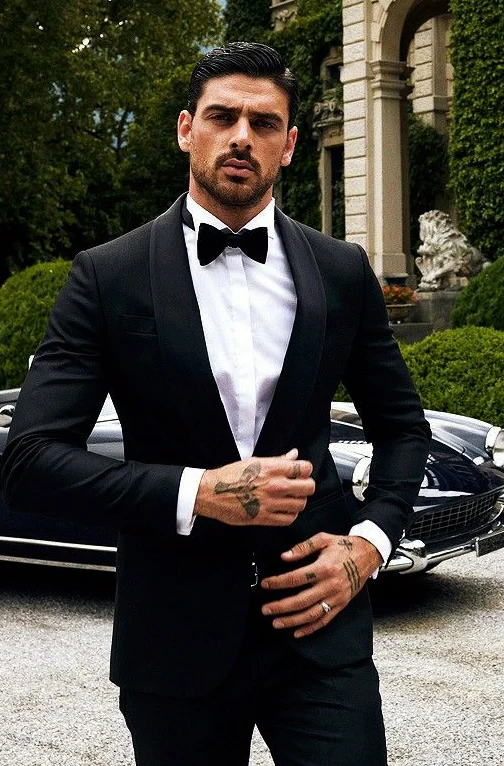
The white shirt front forms a broad, largely uninterrupted area below the bow tie in this black upper-body photograph. Shiny-looking lapel edges run down beside it, and no waistcoat is clearly visible. One hand sits near the jacket front, with the other lower in front of the body. A watch, ring and visible shirt cuffs add further details. Hands and cropping obscure parts of the lower front, so the picture does not provide an unobstructed fastening view or a complete trouser outline.
Compare this image with a reference where a dark waistcoat interrupts the white area. The practical question is how broad and quiet you want that pale centre to remain. Try your real shirt under the intended jacket and bow tie, first with your arms down and then while moving normally. Check the collar and whether you keep wanting to pull the front back into position. Copy the watch or ring only if they serve your own plan. For shoes, trouser length and the rear outline, request additional views of the same actual outfit rather than completing it with another black photograph.