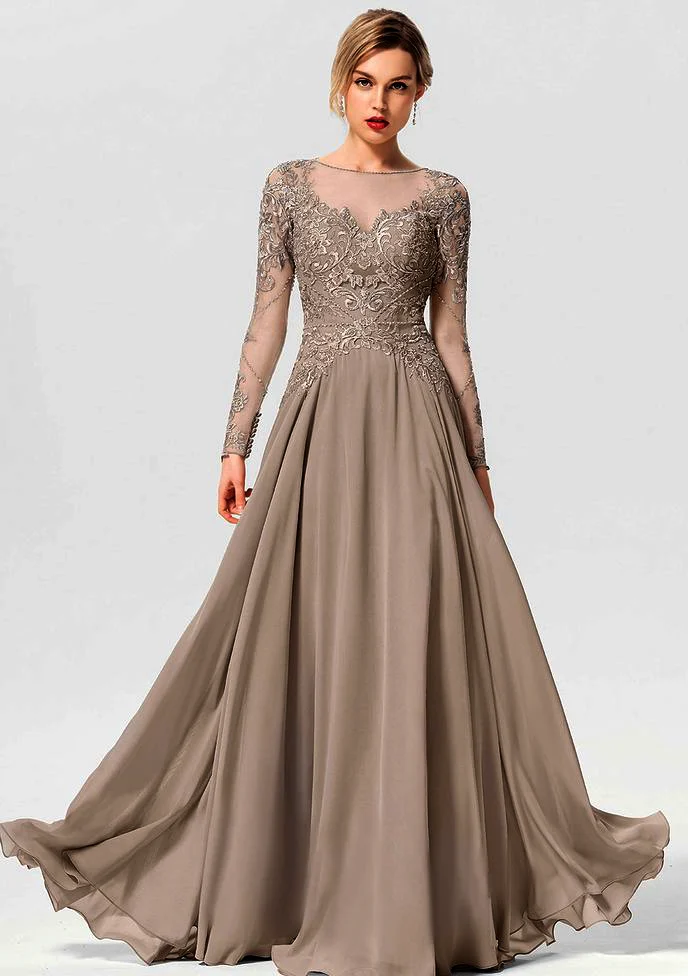
A beige dress reference for separates means a comparison of areas here, rather than a pictured two-piece outfit. The long dress has pale motifs over its arms and upper body. Below a clear waist line, the skirt falls more broadly and quietly. The hands sit beside the skirt. Decide whether the contrast between a decorated upper area and a large quiet lower surface appeals to you.
For your own combination, try a patterned top with a full plain skirt or trousers. Matching the length is unnecessary. Focus on how the lower edge of the top meets the waistband: tucked in, overlapping or ending with a clear boundary. Choose a quieter bag initially so that you can assess the relationship between the two clothing areas.
You can borrow the long-sleeve effect without also choosing the pictured neckline. Test actual arm space while reaching. The image establishes neither detachable pieces nor a particular fibre. Use it for colour and volume comparison, then assess your own waist transition separately while standing and sitting.