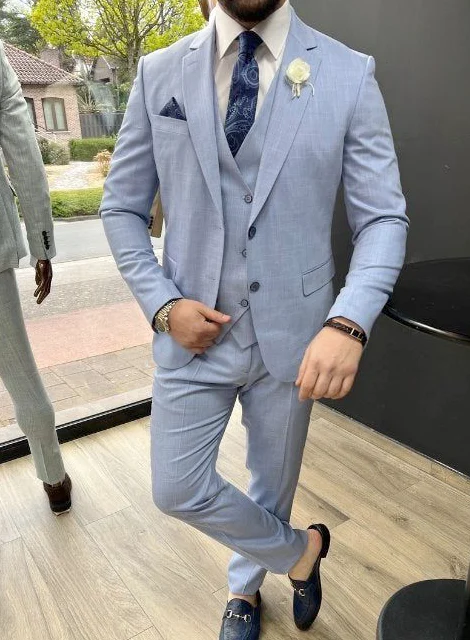
A pale blue outfit connects jacket, waistcoat and trousers through similar-coloured surfaces here. White shirt and a darker patterned tie sit above the waistcoat. A dark pocket accent and small pale lapel flower appear beside them. Dark shoes with a pale bar detail expose an ankle area. Legs are crossed with one hand near the front middle. Another suit look is only partly visible at the left edge. Similar colour establishes no identical fabrics and the pose cannot show ordinary even trouser length on both legs.
Compare the quieter upper-to-lower connection with the grey-blue contrast idea first. Would you like the boundary less noticeable? Use your actual pieces and keep neck solution and shoes consistent initially. A lapel detail can be chosen later rather than deciding colour relationship and accessories simultaneously.
Stand with both legs normally and walk at the fitting. Inspect the hem after sitting again. Clarify actual included pieces when assessing an offer. Visible ankles establish no invisible socks. This reference mainly compares closer colour surfaces and provides an observable lower finish for your own real shoe trial.