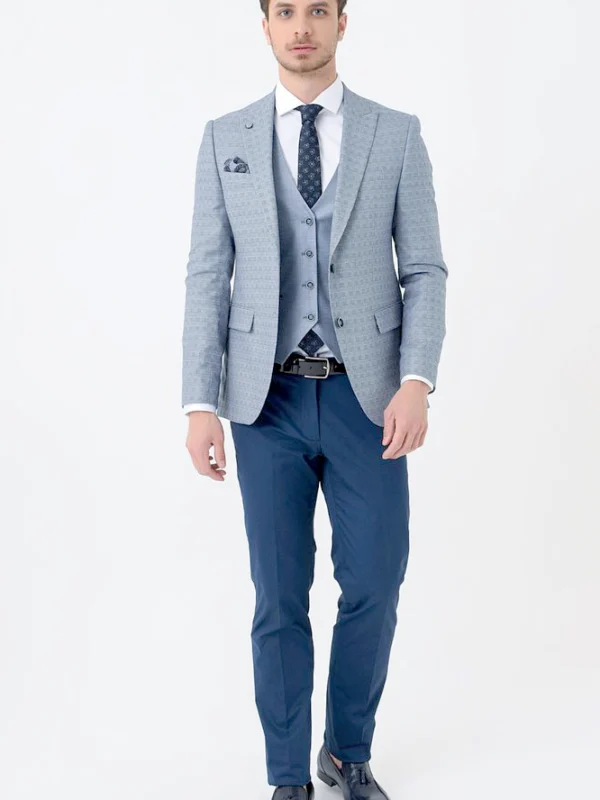
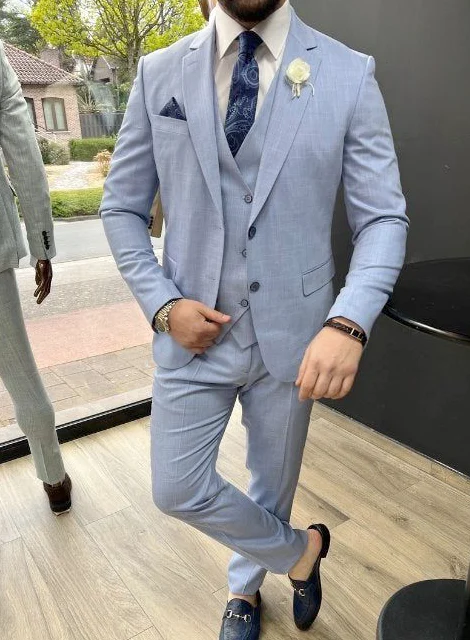
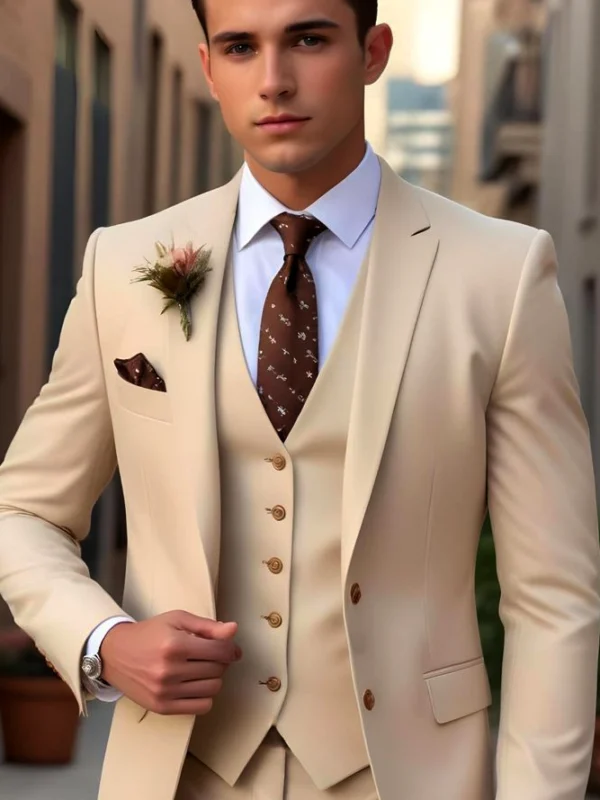
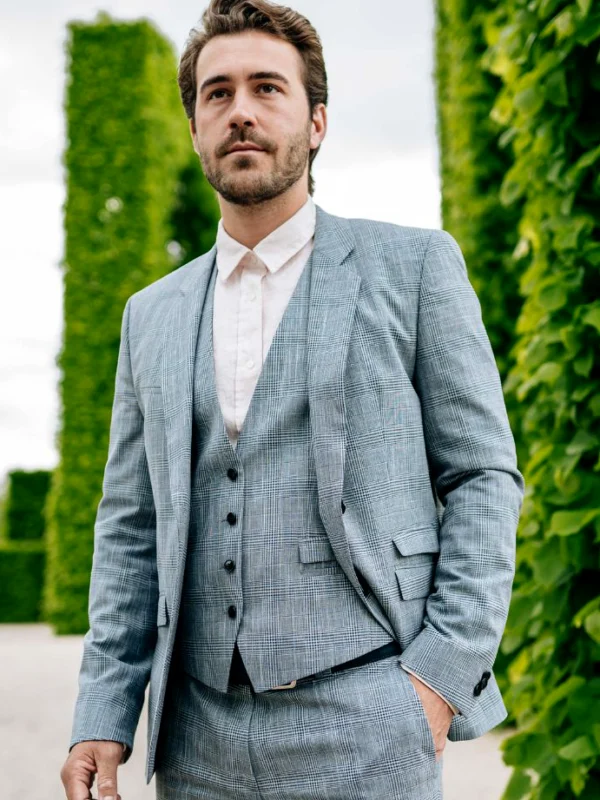
Upper and lower colour boundaries are distinct in the grey-blue full view: a paler upper ensemble sits above bluer trousers. The pale blue version keeps visible areas closer together and adds another shoe finish. Beige and finer grey supply two upper alternatives without showing complete lower boundaries. Do not use them as proof of an unknown whole combination. Their role is describing upper colour and neckline more precisely after your actual trouser decision, with the missing lower information obtained from the real offer.
Select a closer-coloured and a clearer contrast version with your actual jacket first. Keep shirt and shoes consistent. Inspect the transition without a bag before the body and assess it with the jacket removed too. Decide on an additional waistcoat afterwards.
Add complete leg views for each real version. Test hem with your shoes walking and after sitting. Similar pictured colours identify neither fibre nor pieces supplied together. These four references help select a specific visible boundary instead of inventing missing trousers and shoes from small upper crops.