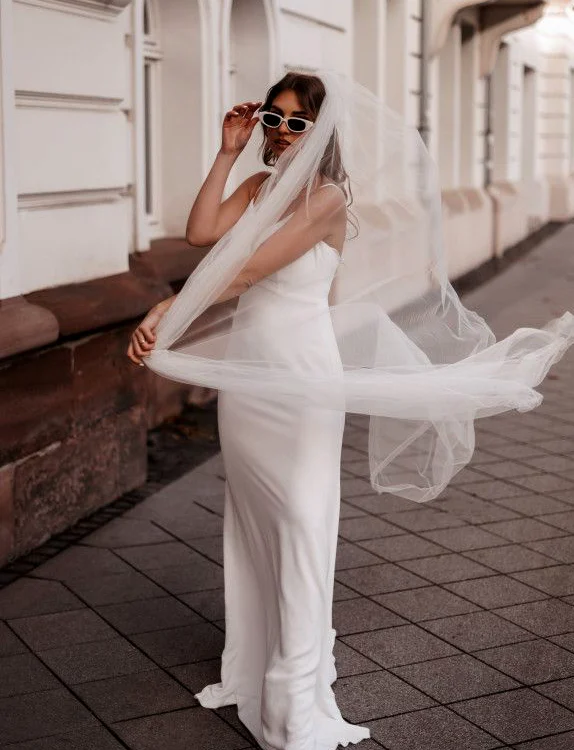
A long pale veil creates a large light surface in front of and beside a slim pale dress here. The garment has fine straps and a comparatively quiet front. The wearer holds the veil outwards, with sunglasses adding a pale frame and dark lenses. This movement changes the visible width of the outer layer without showing its only possible state. It is an additional reference for surface area rather than a replacement for the ordinary fall.
Use the image to ask how much extra pale area you want beside the dress. Try the intended veil length completely instead of holding only a small edge sample. Let it fall normally first and inspect front, side and back. Add the held view afterwards as another comparison, choosing the area across different actual states.
Check veil and dress colour together under the same conditions. You may enjoy a slight tonal difference or seek a closer relationship. Add sunglasses or other jewellery after that comparison. Pale frames and dark lenses are possible small contrasts to select for your own look without needing to adopt the whole photographed combination unchanged.