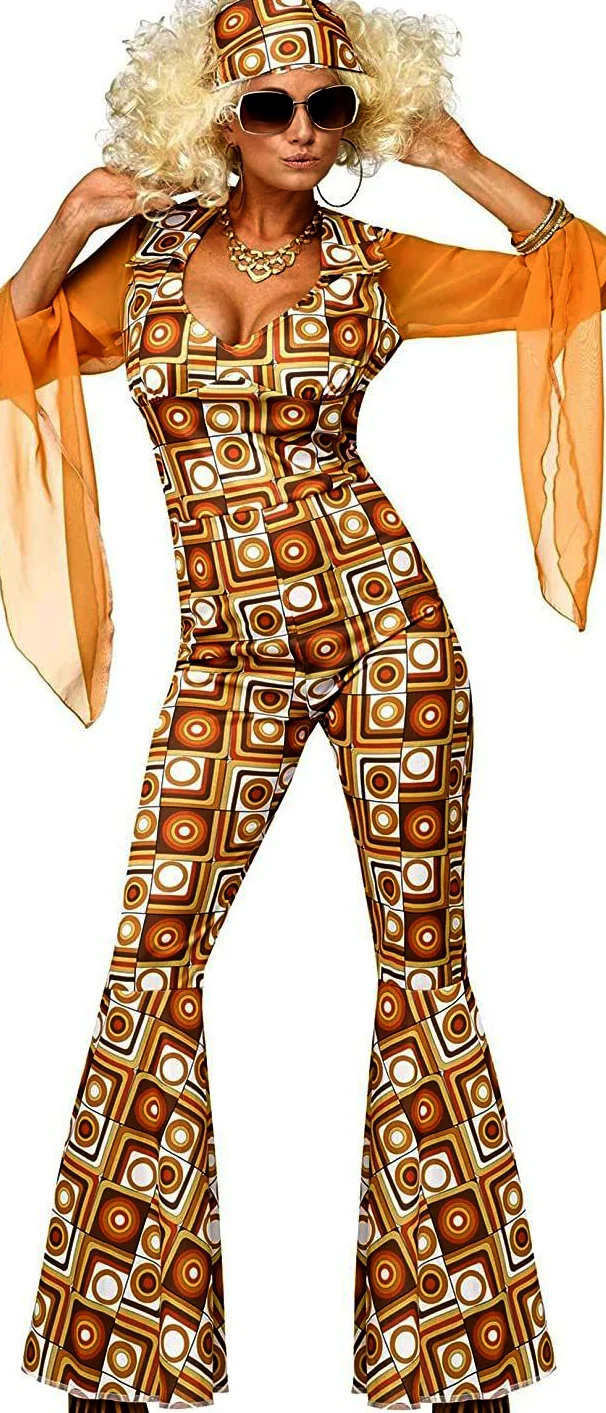
Orange geometry repeats circles and angular areas over the bodice and legs that widen below. Long translucent-looking orange sleeve sections hang at the sides. A coordinating patterned headband, large dark glasses, earrings, necklace and several bracelets add separate visible layers. Pale curly hair frames the face. This is an extensively assembled reference, but its pieces’ actual age, a particular historical origin or the way the hair was created cannot be established from the picture. You can still compare pattern and additions as separate decisions.
Start by asking whether you would wear the graphic whole without accessories. If so, add one piece and inspect the front again from a distance. The headband repeats the pattern, while the glasses create their own dark area. Decide which job you want rather than adopting both automatically. With long side sleeve areas, test your actual bag position and hand placement. Inspect the version without glasses too, so the outfit does not depend on a single brief camera pose to feel complete. An elaborate reference can then lead to a more selective personal combination.