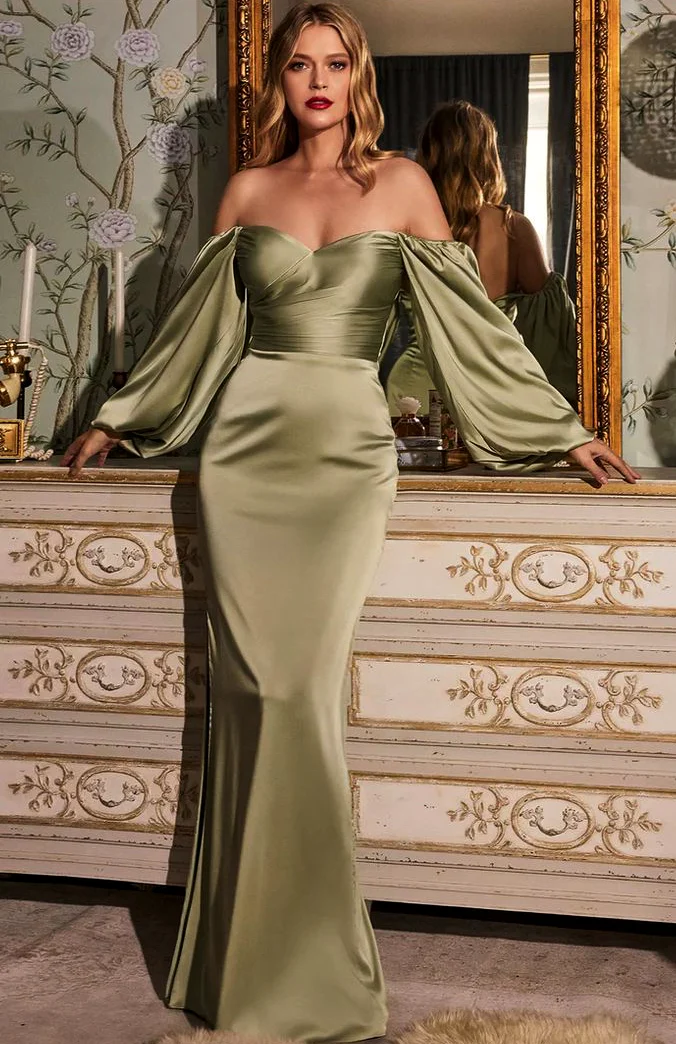
An olive off-shoulder dress places full sleeves gathered at the wrists beside a closer torso and skirt in this reference. The upper neckline follows a softly curved line with visible middle folds. Both hands are supported sideways on a surface. A mirror repeats parts of the back. Beside the pink example, the useful distinction is how greater sleeve volume sits alongside a less spreading lower contour rather than matching it with another broad area below.
Try a similar combination with free hands first. Inspect the upper edge after reaching and greeting, then observe sleeves while seated. Add planned outerwear. Decide whether the distribution of larger arm area and closer middle expresses your intended silhouette better than simultaneous width in the skirt too. Compare the actual choices with shoes unchanged.
Walk and request ordinary direct full and rear views. Mirror fragments cannot replace a complete set of angles. Have fabric, inner layers and possible alterations explained on the real model. Visible surface identifies no material. The concrete picture idea is the comparison of fuller sleeve and narrower lower form.