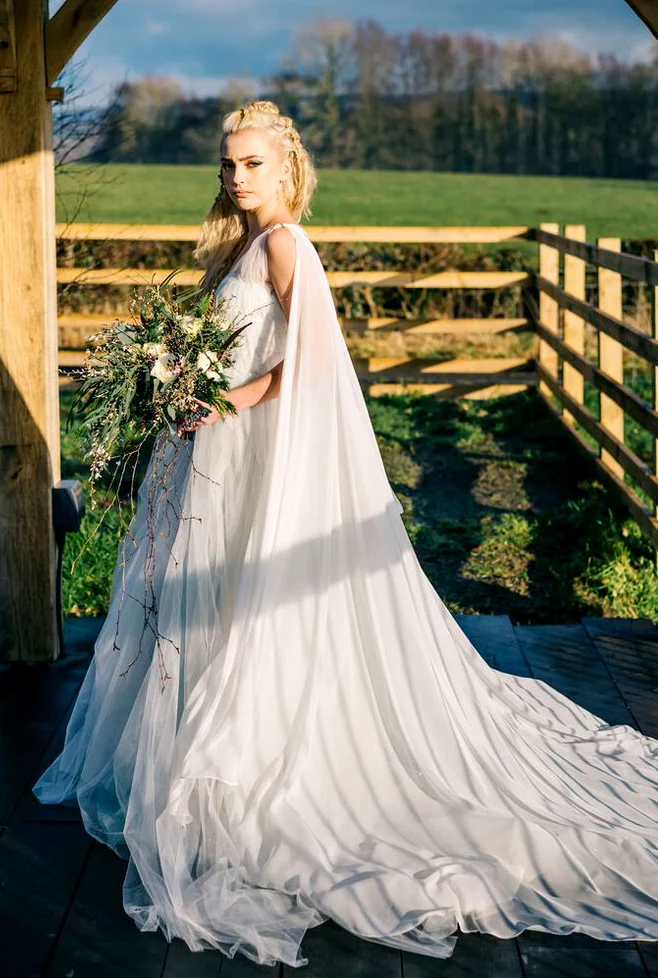
A pale shoulder layer creates a broad falling area down the side and rear of this outfit. Fine vertical lines run towards a long section spread across the wooden floor. The wearer holds a leafy bouquet, and the upper silhouette is seen from an angled side view. The picture helps compare the relationship between bouquet, shoulder and trailing surface. It does not identify a separate veil, detachable cape or a particular fibre merely because the upper layer looks translucent.
For a personal addition at the back, first establish the actual construction of the proposed garment. Then place the intended head covering or outer layer over a paper sample to see which area remains visible. Try the bouquet position without copying the exact pose. Ask for a demonstration of managing the long fabric while walking and sitting. If another person will help, include that person in the practical explanation. Decide whether your detail should be visible with all layers on or only after one is removed. This makes the broad surface a useful placement idea rather than a promise that every trailing arrangement is equally manageable.