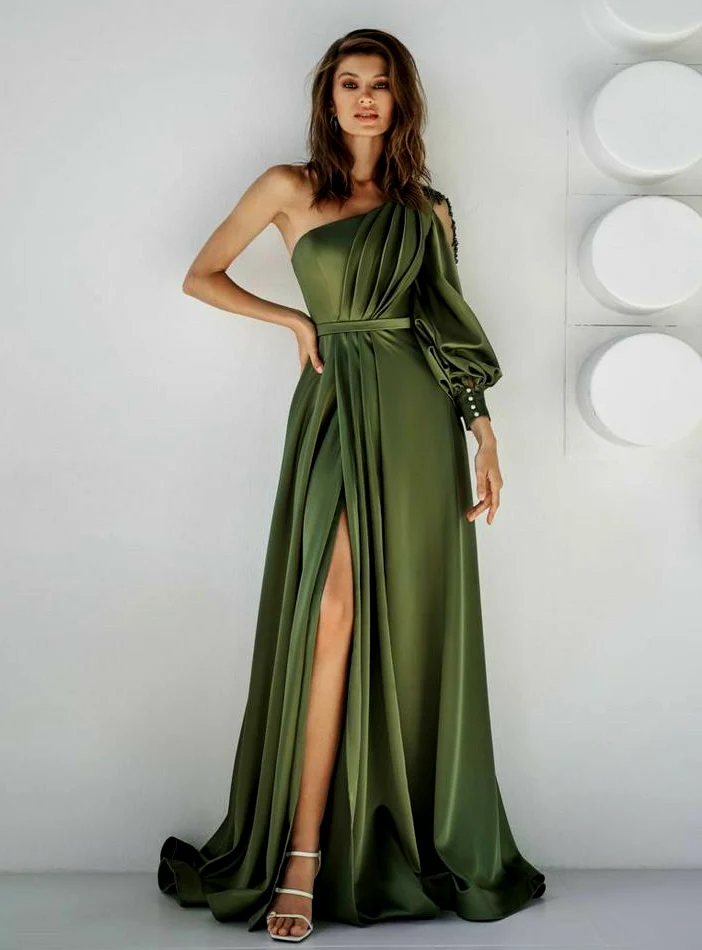
An olive one-shoulder dress combines an asymmetric upper shape, one visible long sleeve, folds at the middle and a leg opening. The long fabric area continues below the gathered section. Decide whether the one-sided shoulder or collected waist interests you most for a comparison. Both need not remain together in your own model. You can look for one effect in another real shape once you can explain the feature you want.
Try the upper arrangement with relaxed arms and planned hair. Reach and greet someone rather than only holding a turned pose. Compare fabric at the middle while standing and after sitting. Do not straighten it immediately; inspect how it lies through your ordinary movement first. That helps reveal which result you actually want to retain.
Add an outer layer and remove it again. Test both states because the one-sided form is seen differently beneath it. Walk with your shoes and check the leg opening from the side too. Waist, length and bodice wishes need separate assessment on the actual dress. Photographed folds establish no generally easy alteration or particular material property.