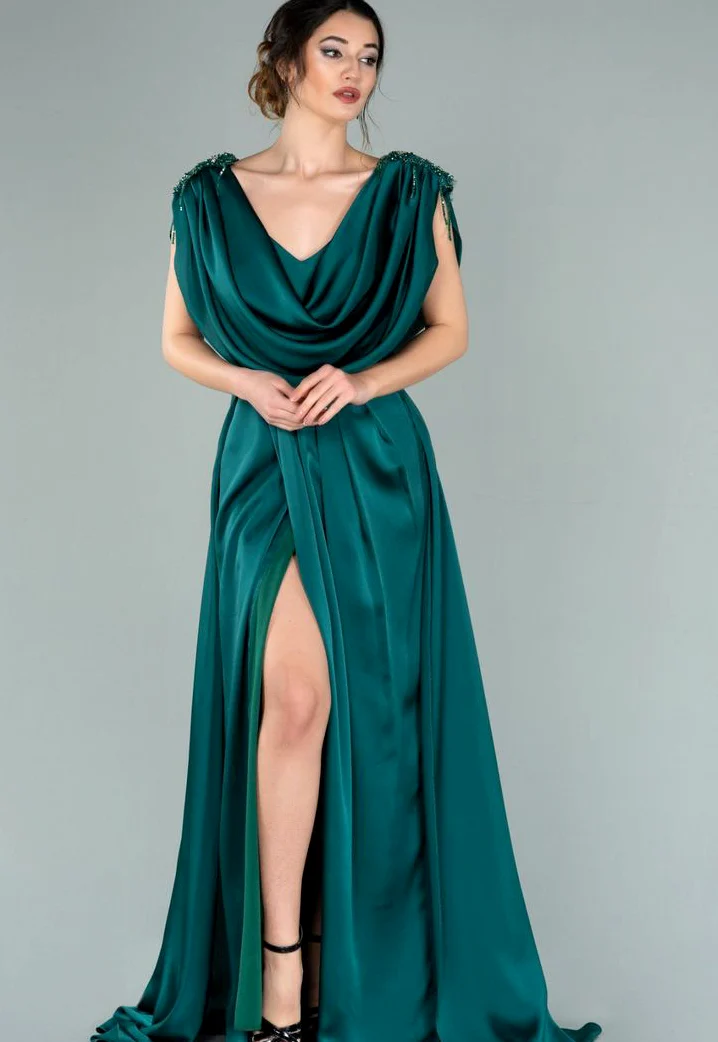
A green cowl-neck dress creates a broad falling area between the shoulders in this reference. Gathered-looking sections sit at the shoulder ends, while the long skirt opens over one leg. The hands are brought together in front of the waist. That position may affect the fold arrangement, so another view with relaxed arms would be helpful. The image shows design features without establishing a reliable account of the internal construction or the fibre used.
At the fitting, compare the neckline while standing and sitting. Observe how far the falling area reaches as you move and whether your preferred coverage remains. Start jewellery trials without a long necklace so you can judge the shape unobstructed, then consider an addition more deliberately. Check the slit independently using a normal stride. Softness of appearance above does not replace a movement test below. If an alteration is proposed, assess it in the complete garment because changing a shoulder position may affect the draping. This reference is especially useful for comparing upper fullness with a narrower lower silhouette.