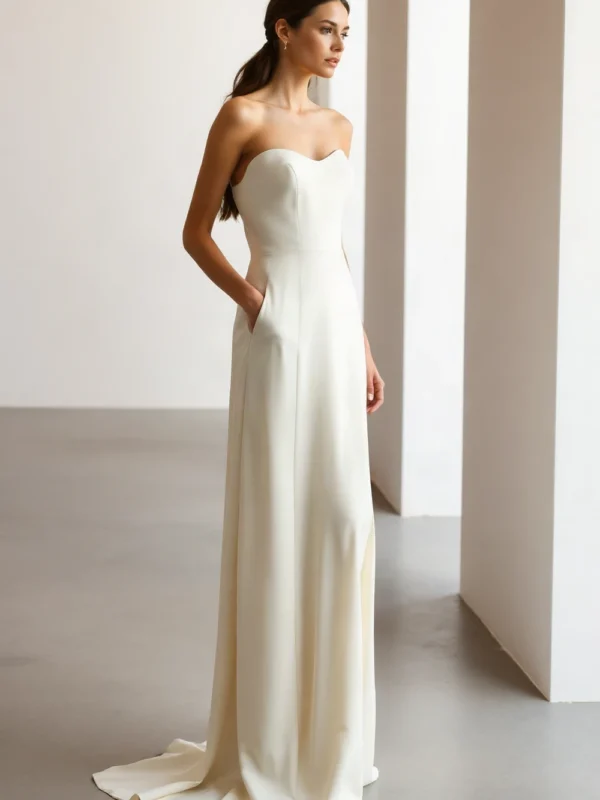
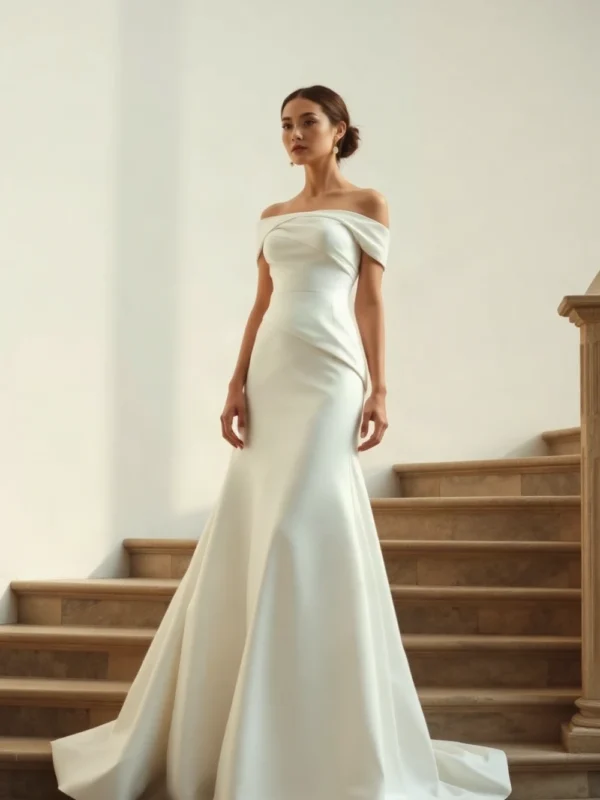
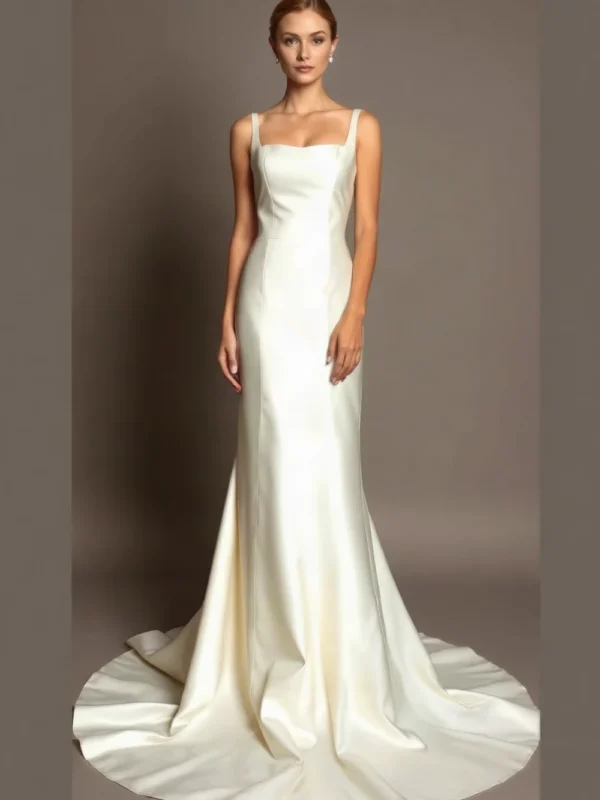
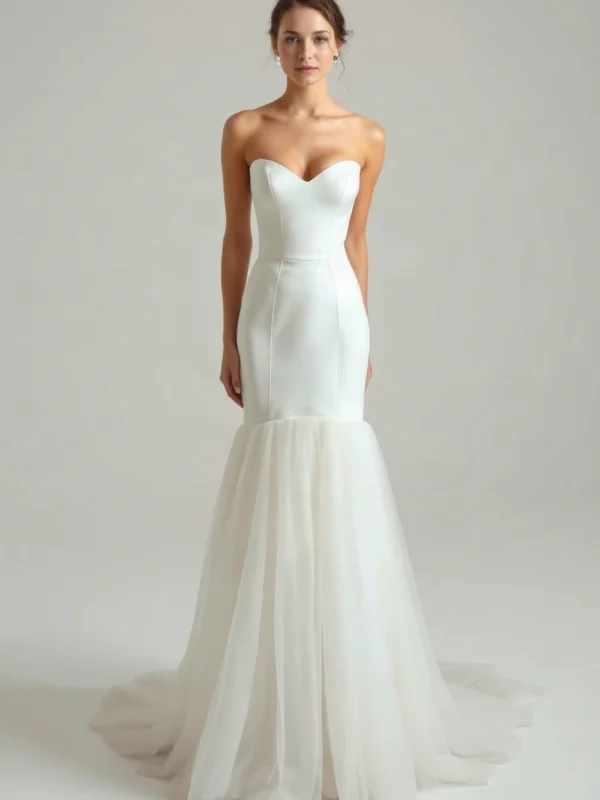
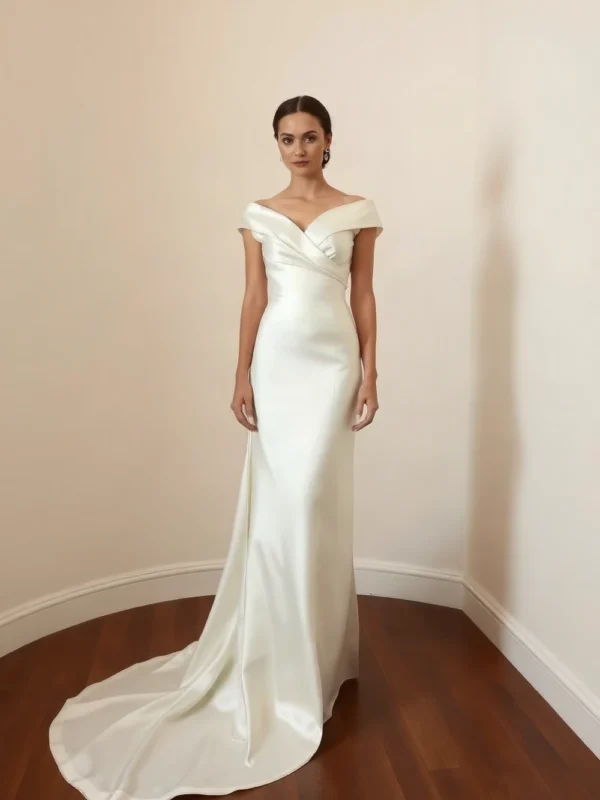
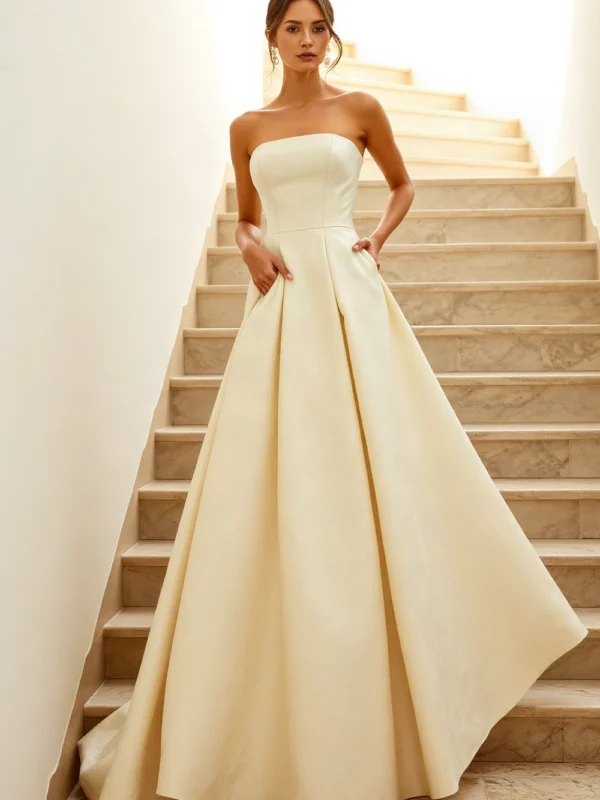
The shared language of this gallery is an ivory bridal look shaped through cut and volume rather than dense embellishment. Smooth or softly reflective surfaces make seams, folded necklines and skirt construction easy to read. As a result, proportion—not decoration—creates the main distinction between the six concepts.
The first image pairs a shallow sweetheart neckline with a long, quiet skirt, while the second uses a crossing off-the-shoulder fold above a close fishtail silhouette. The third is more geometric: slim straps frame a square neckline, and an expansive circular train adds drama behind an otherwise restrained front. These differences show how the upper and lower halves can carry very different visual weights.
In the fourth look, a sharply shaped sweetheart bodice contrasts with a light, semi-sheer-looking layer that begins around the knees. The fifth offers a softer interpretation through a crossed off-the-shoulder neckline, narrow skirt and side-swept train. The sixth creates the strongest volume, combining a straight strapless bodice, pockets and broad pleats in a full skirt.
When comparing these ideas, look beyond the static front view. Consider how the neckline may respond when you sit, raise your arms or embrace someone, and whether the train suits the width and surfaces of the venue. A close skirt can limit stride, whereas a broad skirt needs extra room through doorways and between tables. If pockets appeal to you, test how the skirt changes when your hands or a small item are inside.
Accessories can support the sculptural quality by leaving its main line visible. Folded or asymmetric necklines may need no necklace, while a square neckline provides a clearer frame for a delicate one. When a circular train or expansive pleated skirt already supplies the focal point, choose veil length and shoe height with movement—not visual impact alone—in mind.