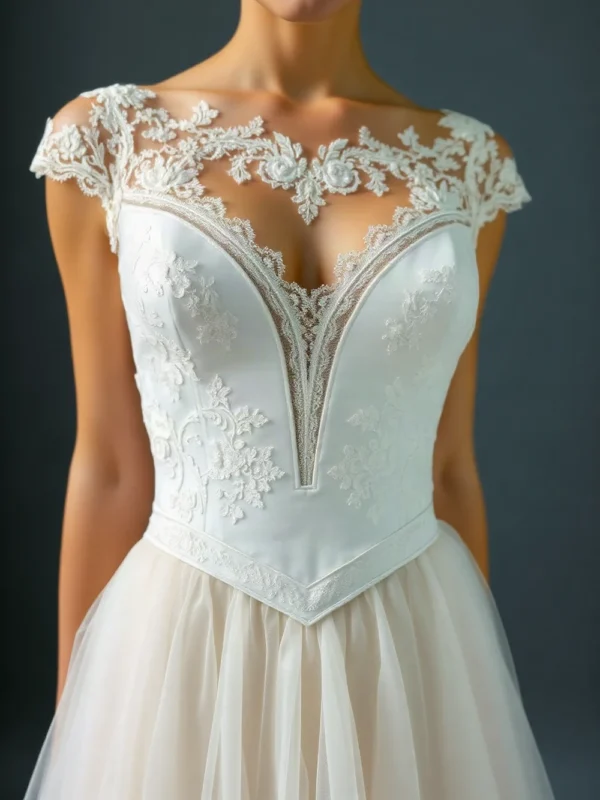
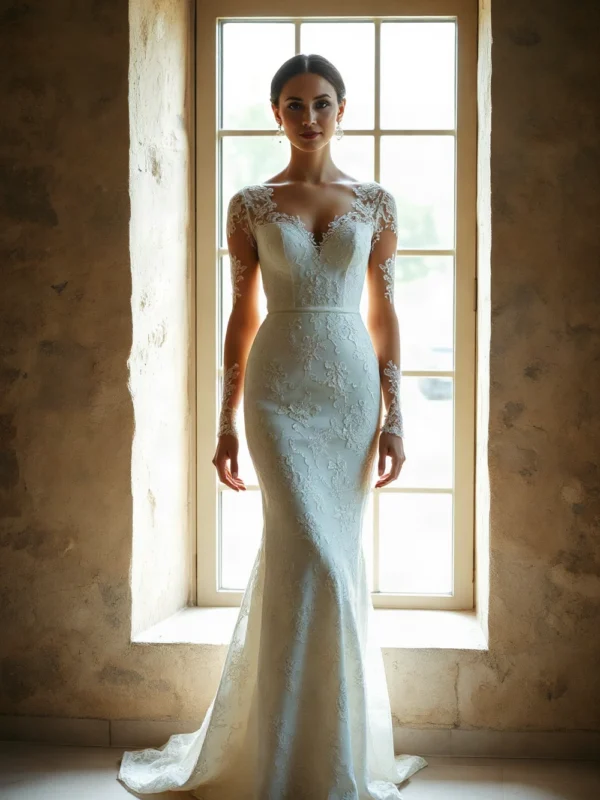
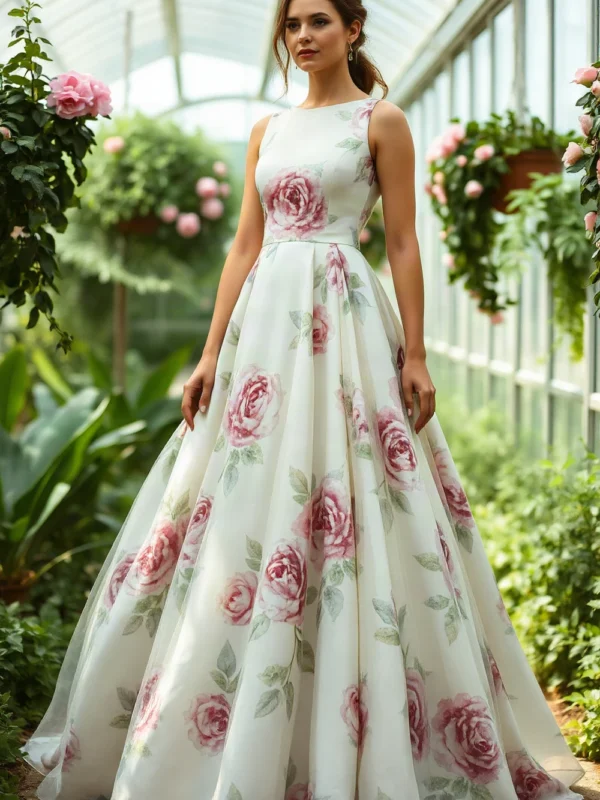
Sculptural modern wedding dresses create character through neckline shape, seam direction, pleats and train volume rather than dense lace or surface ornament. Though initially simple, small changes in proportion transform the silhouette: a shallow sweetheart feels soft, a square neckline geometric, and a folded off-the-shoulder band dramatic. Close and expansively pleated skirts also make different demands on movement and venue space.
The six concepts share ivory colouring and largely unembellished surfaces, yet each balances bodice and skirt differently. The aim is not to name a superior design, but to show how neckline, waist, flare, pockets and train work together. Look beyond a static pose: sitting, walking, raising the arms and using stairs may reveal more than the front view. These practical tests help adapt a sculptural idea to the setting, accessories and personal comfort.
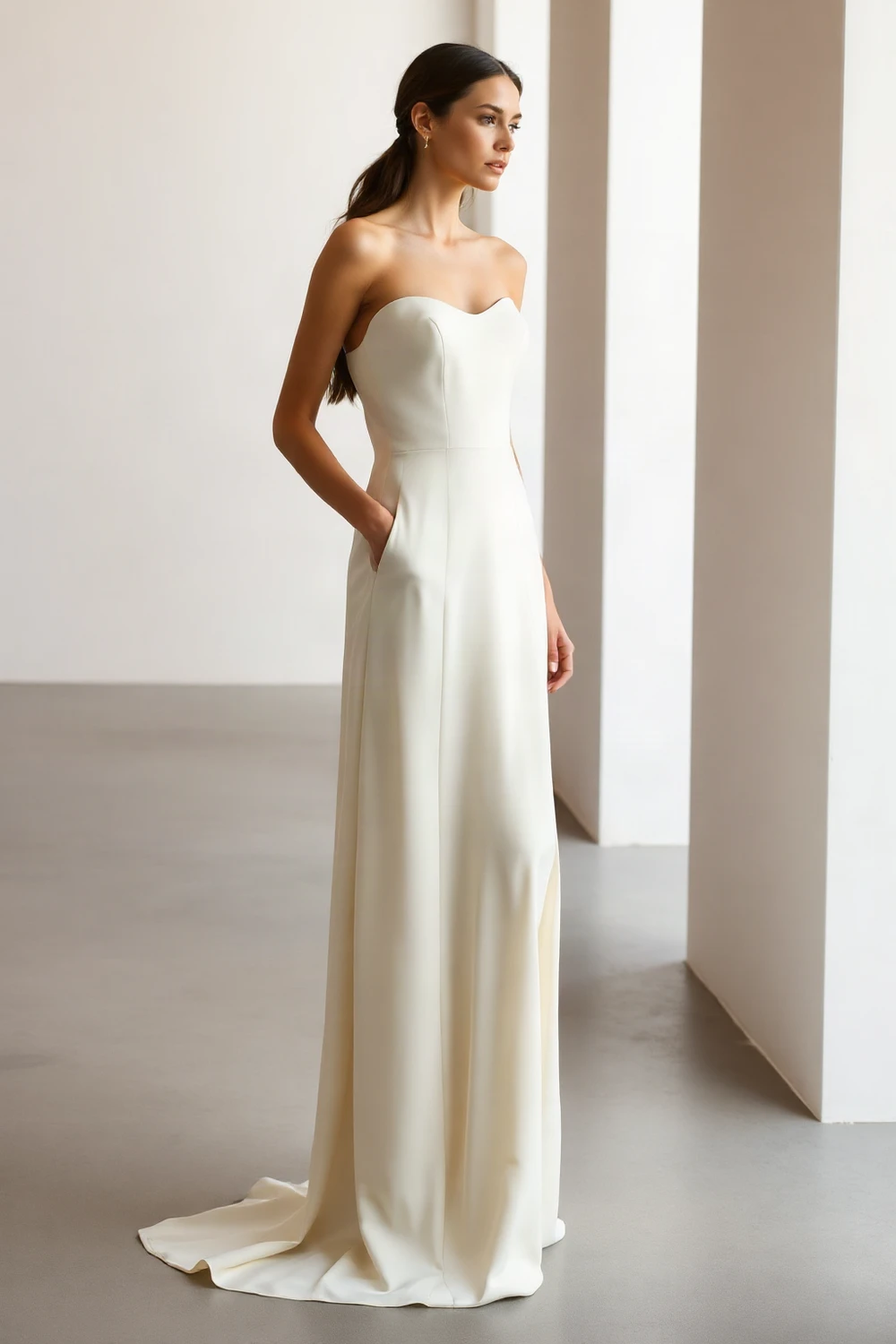
A Soft Sweetheart Neckline and Unbroken Vertical Line
The first design uses a shallow sweetheart curve across a strapless bodice. Its gentle shape opens the shoulders, while vertical seams draw the eye down from the natural waist. The long skirt widens only slightly; without large pleats or a sharp fishtail flare, it remains restrained. A side pocket adds practicality, although a fitting should show whether a hand inside changes the waist or hip line.
This suits someone who prefers clean proportion to an emphatic neckline or broad train. Its short floor extension needs less room than a circular train, but the hem must still be adjusted with the intended shoes. Sit, reach forward and make a few dance movements to test security. Small earrings or a narrow veil preserve the minimal line; for one stronger accessory, keep the soft neckline visible.
A Folded Shoulder Line with a Fishtail Flare
The second look centres on a broad off-the-shoulder band crossing the bodice. Diagonal folds animate the upper body, while a defined waist and close skirt create a long, controlled line. The lower flare balances the horizontal shoulder emphasis and forms a strong base. It is more dramatic than a straight strapless neckline but less expansive than the deeply pleated full skirt.
Assess this structure in motion, not only from the front. Raise the arms forward, sideways and overhead to check for restriction or shifting folds. With a fitted fishtail skirt, stride length and sitting comfort matter too. If the venue has steps, test how the flare crosses them and whether the hem is manageable. Because the folded neckline is already prominent, earrings may work more clearly than a necklace crossing its layers.
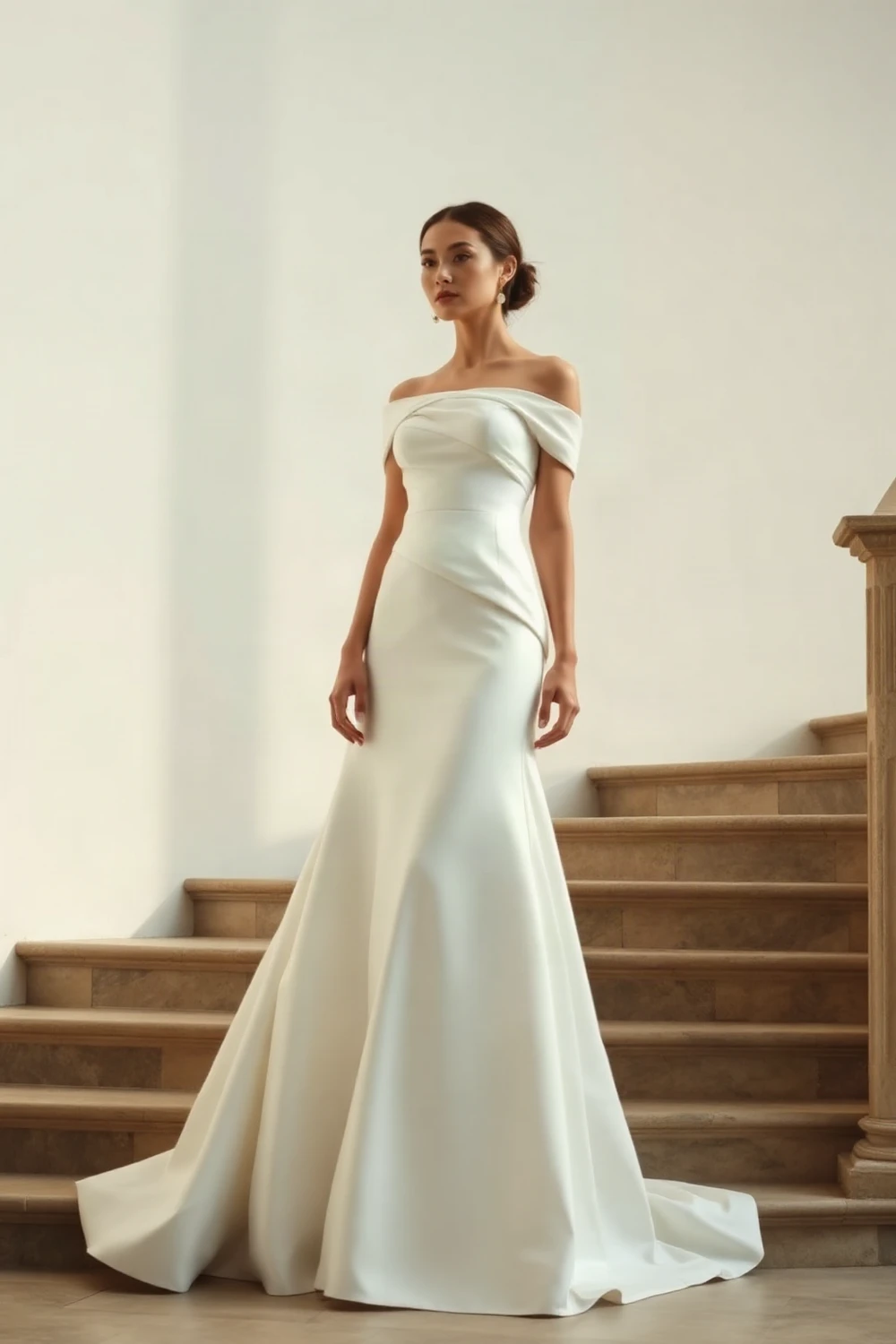
The Contrast Between a Square Neckline and Wide Train
Slim straps and a square neckline give the third dress a precise geometric frame. The long skirt follows a close vertical path from the waist, looking understated in front, while a circular train spreads broadly across the floor. This contrast offers a quiet frontal silhouette with more impact during an entrance, turn or rear view. Although the straps visibly connect at the shoulders, their support and placement still need individual fitting.
A wide train may impress in a composed image, but aisle width, seating and turning space govern its use. Plan how it will be gathered or carried after the ceremony. A fine necklace or earrings alone can suit the open square neckline, provided its corners remain visible. With a long veil, compare a width that echoes the train against a narrower option; the choice changes the lower silhouette’s balance.
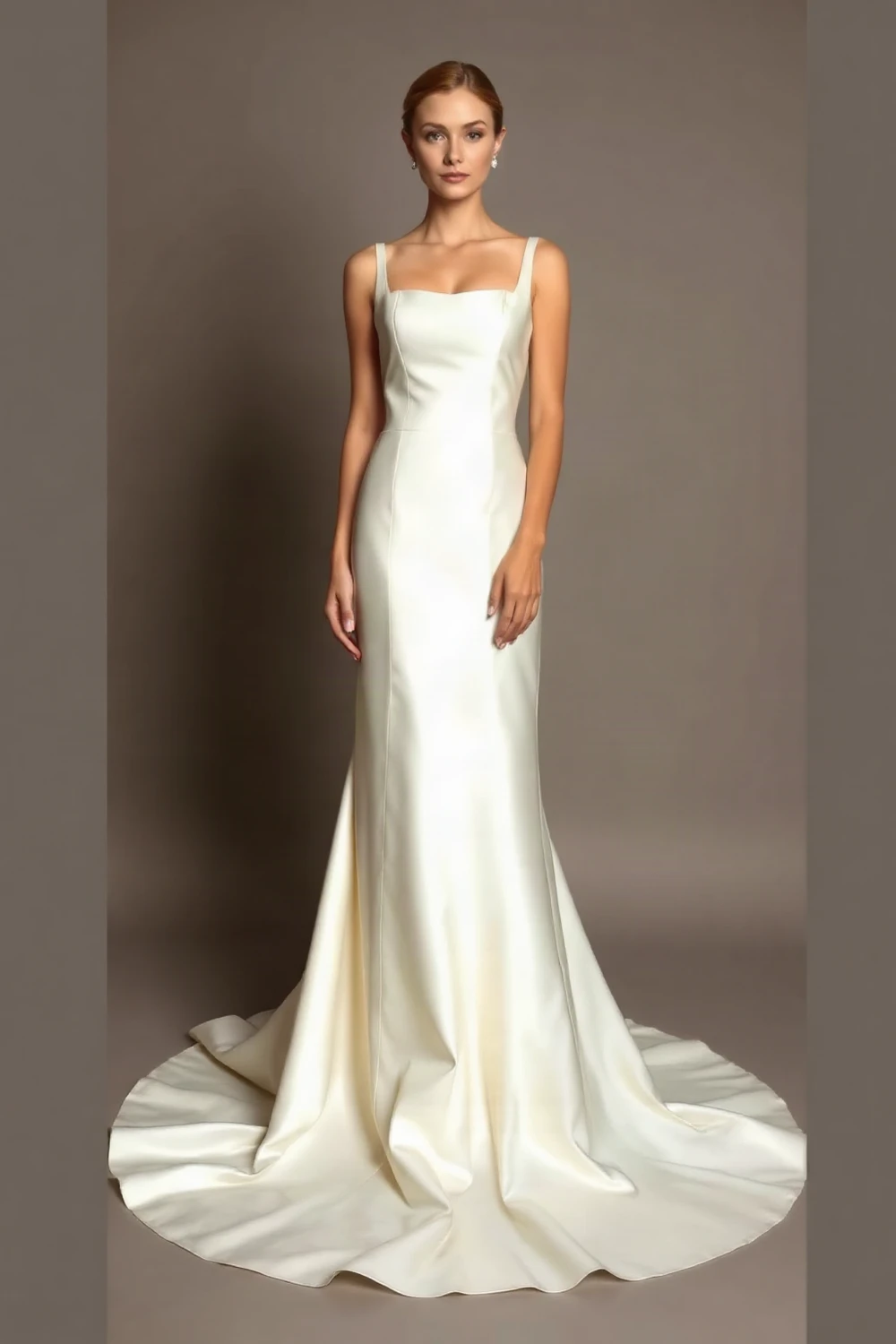
A Structured Sweetheart Bodice and Light Lower Layer
The fourth concept sharpens the sweetheart neckline into pronounced peaks around a close, panelled bodice. Below the narrow waist, the skirt follows the hips and knees before opening into a light, semi-sheer-looking layer. This combines controlled geometry above with softer movement below. It adds more texture than a fully smooth fishtail skirt, yet feels lighter and requires less space than a broad pleated gown.
Test the area around the knees carefully. Walking at normal and extended strides, climbing a step, sitting and changing direction will reveal whether the flare begins comfortably. Observe how the fine-looking lower layer meets the shoes and floor. Because the shaped neckline already creates a clear centre, leaving the neck bare can emphasize its outline. A restrained-width veil also keeps the contrast between crisp bodice and airy lower skirt legible.
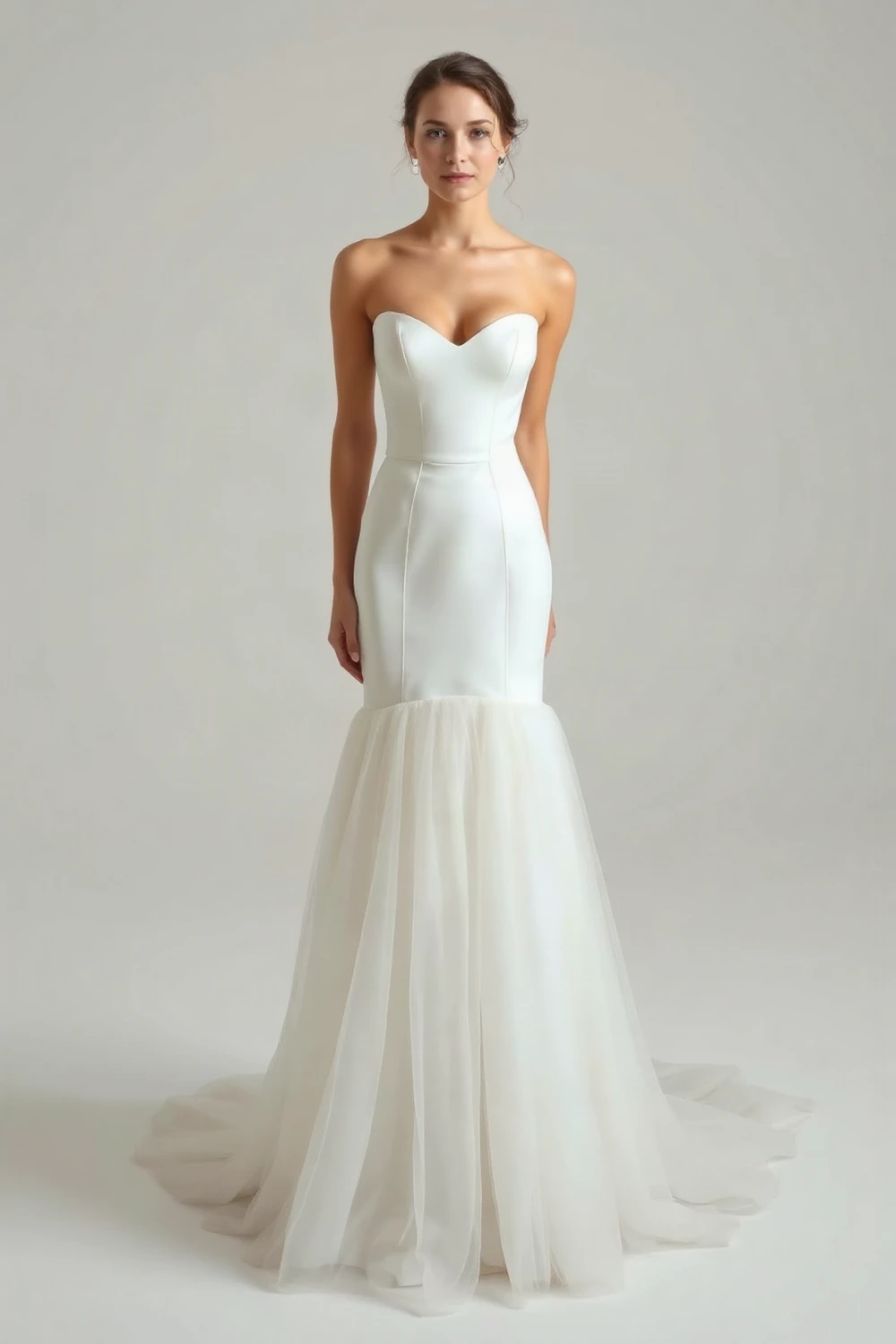
A Crossed Shoulder Neckline and Fluid Narrow Skirt
The fifth gown uses broad overlapping folds to form a soft V across an off-the-shoulder neckline. Their diagonal movement gives the bodice depth, while the skirt remains narrow, long and comparatively quiet. A measured side-swept train completes the silhouette without creating a large circle. The result is more fluid than the second design’s pronounced fishtail, but more layered at the neckline than the first minimalist strapless look.
During a fitting, reproduce natural actions such as embracing, sitting and dancing to see whether the folds stay aligned and the arms feel unrestricted. Test the close skirt with realistic steps and the intended shoe height. The crossing neckline already performs much of a necklace’s visual role, so small earrings offer balance. In photographs, a simple background keeps the directional folds readable, whereas a highly detailed setting may compete with subtle changes in the reflective-looking surface.
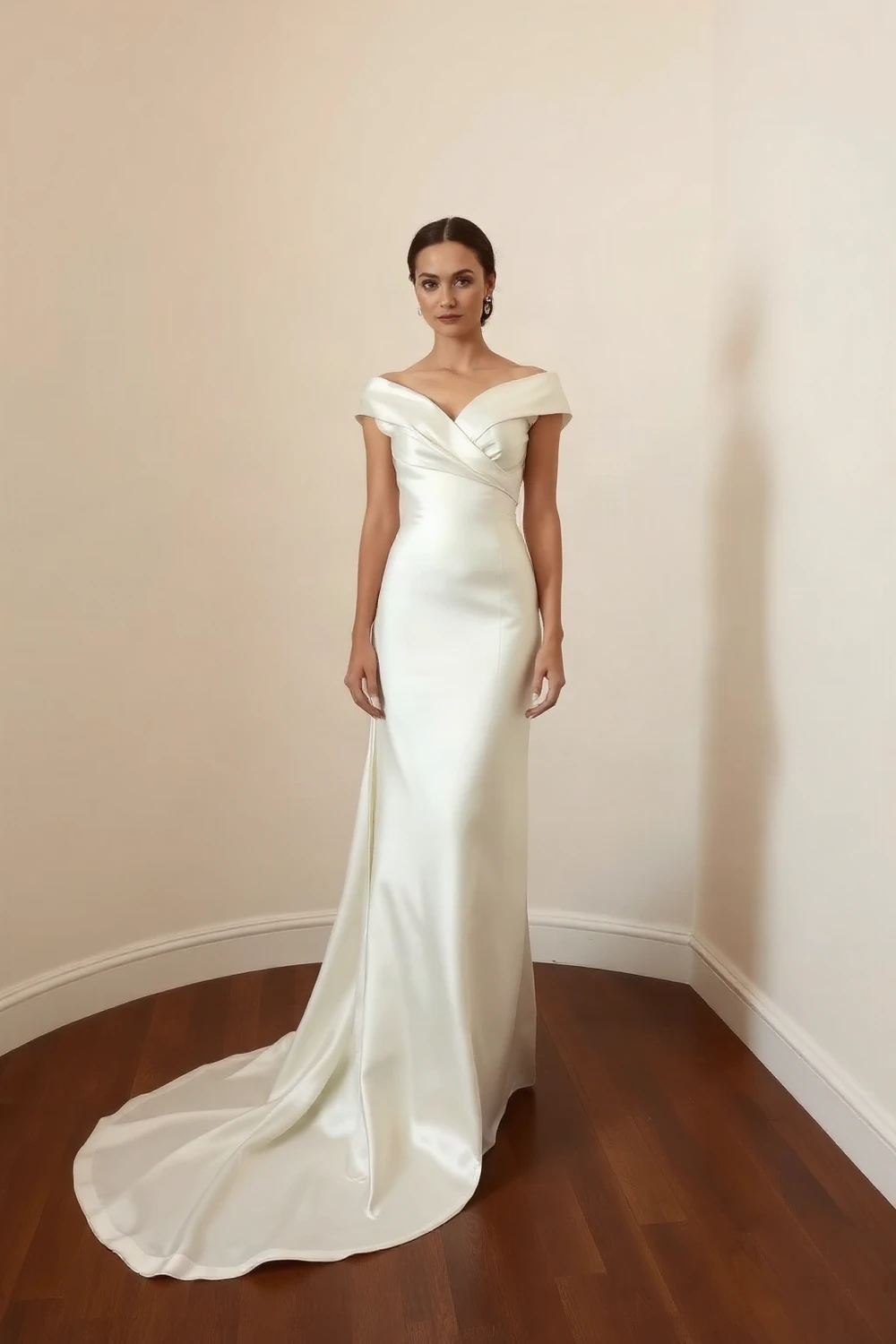
A Straight Strapless Bodice and Architectural Pleats
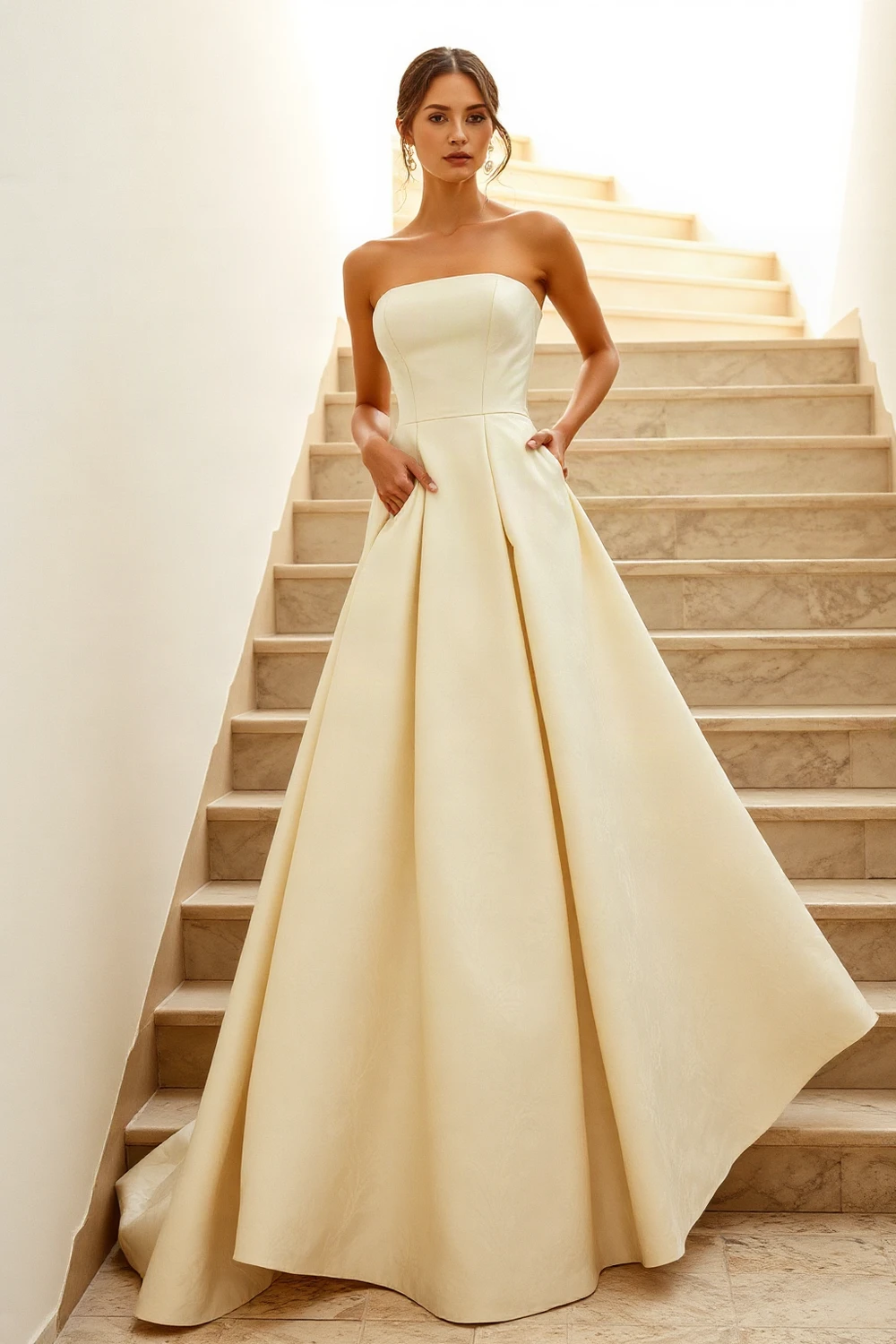
The sixth design joins a straight strapless bodice to large, deep pleats beginning at the natural waist. The upper section stays fitted and quiet while the skirt expands rapidly into the fullest silhouette of the group. Pockets are integrated into this architecture, and hands placed inside emphasize the folds’ direction. The calm horizontal neckline counterbalances the volume and movement below.
This shape can command a broad entrance or staircase, but doors, table spacing and transport matter in practice. At a fitting, gather the skirt, pass through a narrow opening, sit and climb steps. Put a small object in a pocket to check whether its weight distorts a pleat. Keep accessories controlled, test strapless support while moving and settle shoe height before finalizing the hem. If adding a veil, assess its width with the skirt so the two volumes do not compete.
Choosing a sculptural wedding dress means understanding how every line works together rather than isolating the boldest feature. Neckline, shoulder band, flare, pleats and train affect both appearance and movement. Start with the most relevant silhouette, then consider the venue’s floor, passages, stairs and seating. At a fitting, walk, sit, turn, lift the arms and use steps instead of relying on a still pose. Let jewellery, veil and shoes support the gown’s main structure. This turns an appealing concept into a balanced, personal and practical bridal look.
Compare modern wedding dresses shaped by smooth surfaces, folded necklines, controlled pleats and varied trains, with practical guidance on movement, venue space and accessory balance.
Frequently asked questions
How should I choose between strapless and off-the-shoulder necklines?
A strapless neckline leaves an uninterrupted shoulder line, while a folded shoulder band creates a stronger upper-body frame. During a fitting, raise your arms, sit and imitate an embrace; choose according to security and movement as well as the front view.
Will pockets change the shape of a sculptural wedding dress?
Pocket placement and the weight placed inside can affect the skirt line. Check the front and side views with your hands in the pockets, and remember that a heavier item such as a phone may pull on a pleat.
Where is a wide train easiest to manage?
Venues with broad aisles, turning room and relatively even floors are more accommodating. If the setting has narrow table spacing, many stairs or a textured surface, plan in advance how the train will be gathered or carried.
What should I test when trying a close fishtail skirt?
Walk with both normal and longer strides, sit, turn and climb steps while wearing shoes of the intended height. Pay particular attention to whether the point where the skirt begins to flare restricts the knees.
Which jewellery works with a sculptural neckline?
Folded or asymmetric necklines often provide enough visual focus to work with small earrings and no necklace. A square neckline can frame a delicate necklace, provided it does not cover the corners or compete with the gown’s structural lines.