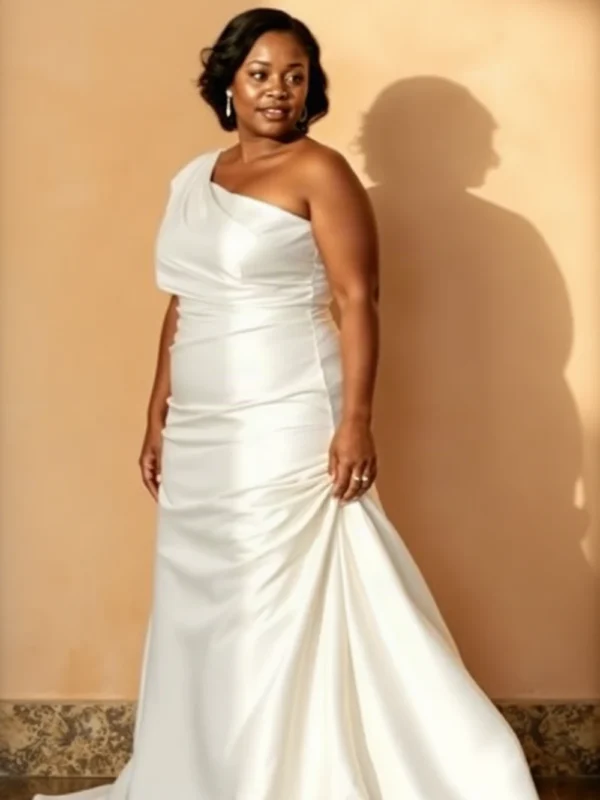
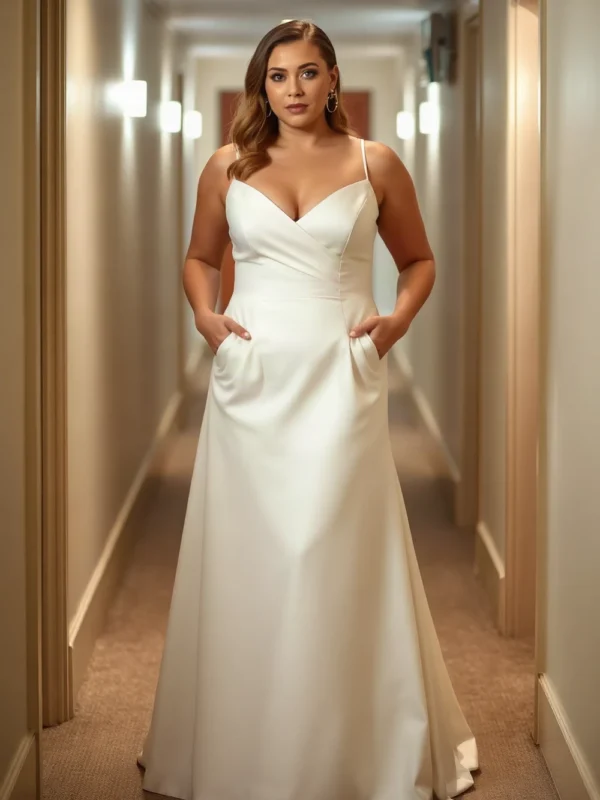
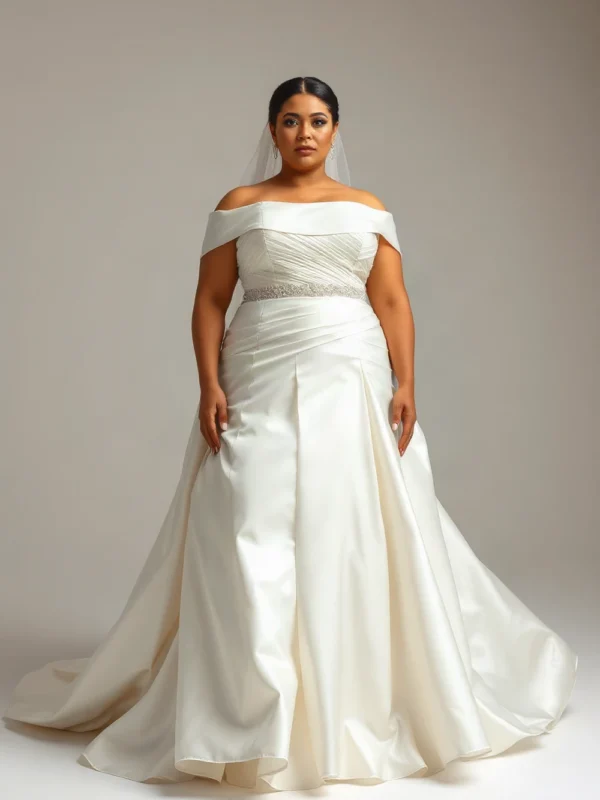
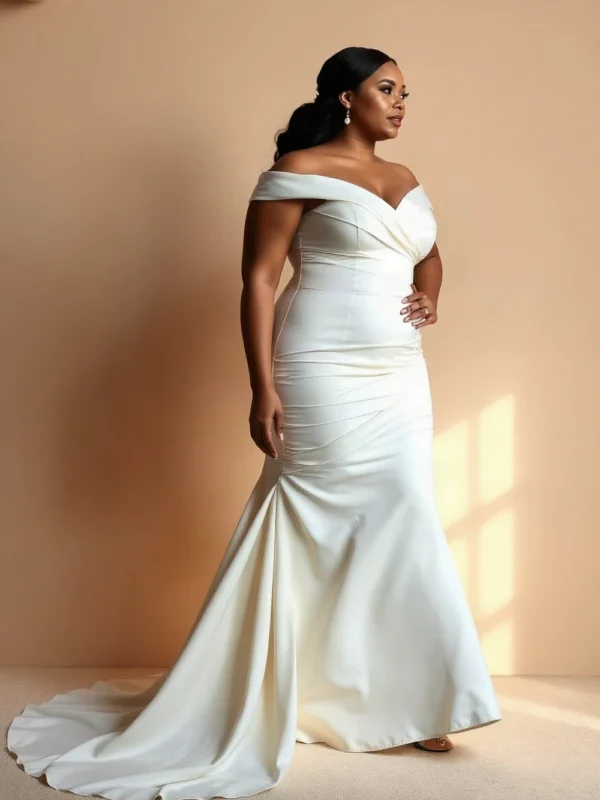
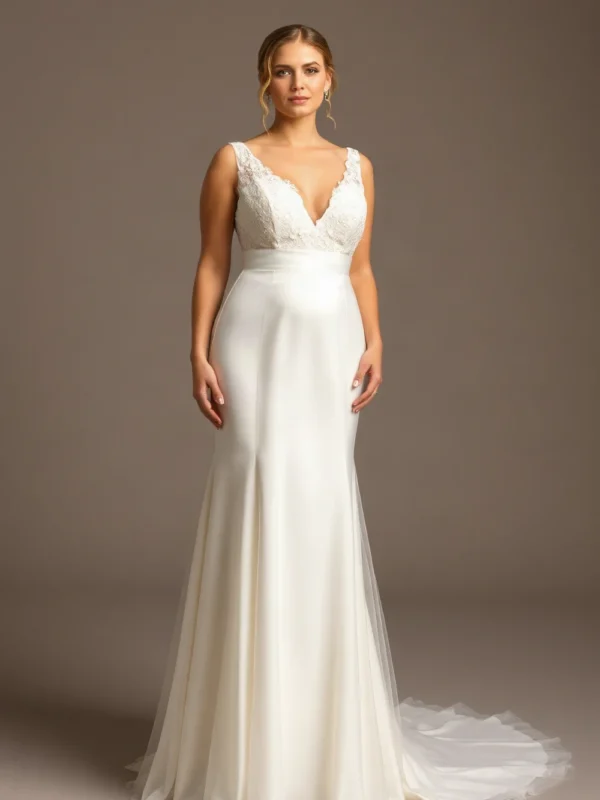
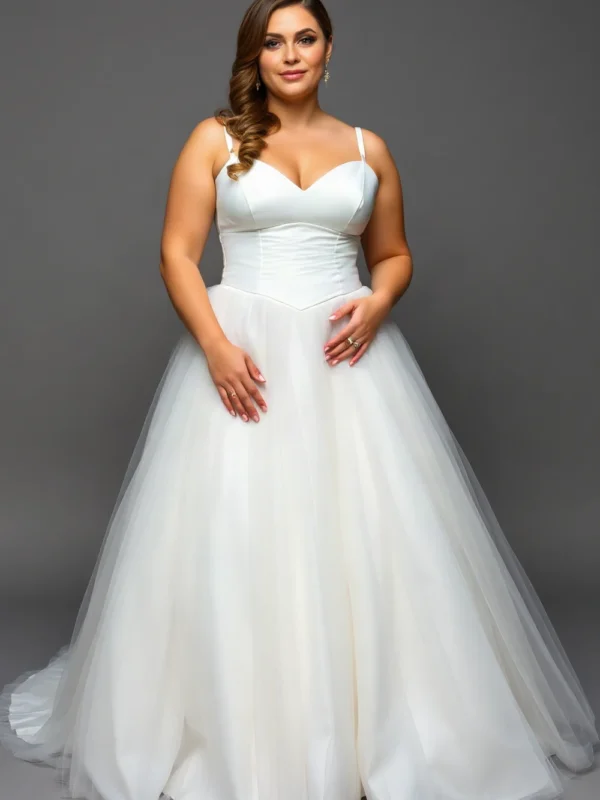
The six images share a light bridal palette, yet their proportions are built in notably different ways. Rather than relying on heavy decoration, they use directional lines: a diagonal one-shoulder neckline, balanced V-necks, broad off-the-shoulder bands and a pointed basque waist all guide the eye through the silhouette.
The first and fourth concepts follow the body closely before opening near the lower skirt. In the first, asymmetry comes from one exposed shoulder and a generous side drape. The fourth uses diagonal ruching and a more recognisable mermaid flare around the knee. Anyone considering either line should compare the standing impression with stride length, turning and seated comfort.
The second and third images offer two interpretations of a widening skirt. The pocketed A-line remains controlled and minimal, with clean surfaces and little visible embellishment. The third creates a more ceremonial scale through a wide off-the-shoulder collar, a narrow reflective belt, deep folds and a fuller hem. If pockets appeal, check the side profile both with empty pockets and with hands inside.
The fifth concept places its texture on the V-neck bodice, then moves through a broad, smooth waistband into a quiet flowing skirt. The sixth is more architectural: slim straps and a sweetheart neckline lead into a seamed bodice, a low central waist point and a broad layered skirt. One reads as elongated and restrained; the other makes the waist-to-skirt transition a defining feature.
Begin selection with the whole composition rather than a single favourite detail. Test neckline security, the position of the waist, the space required by the hem and the way the dress behaves when sitting. Front and side images taken during the same fitting, together with a short walking test, can reveal which visual idea best supports the wearer’s actual priorities.