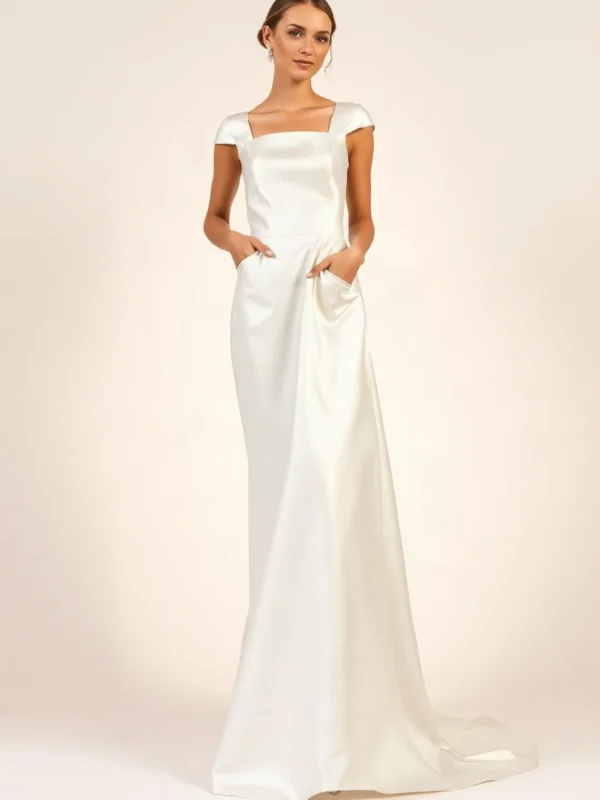
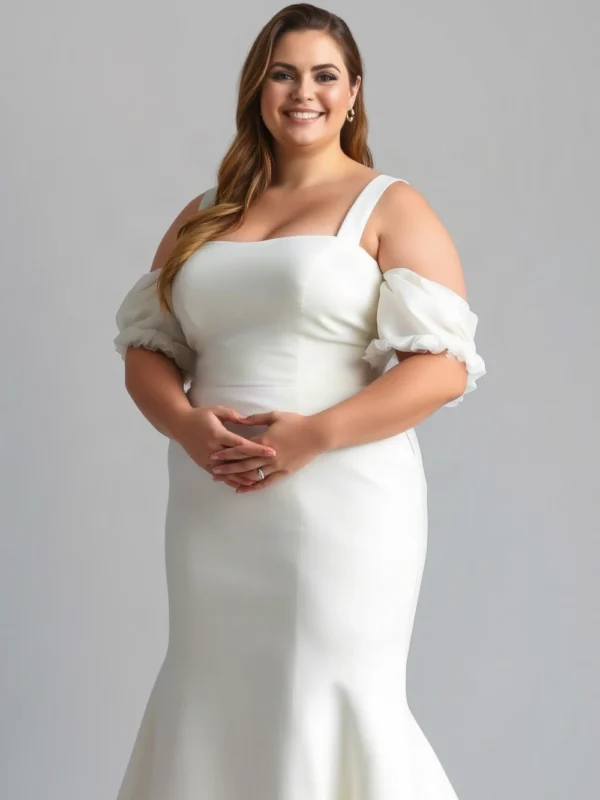
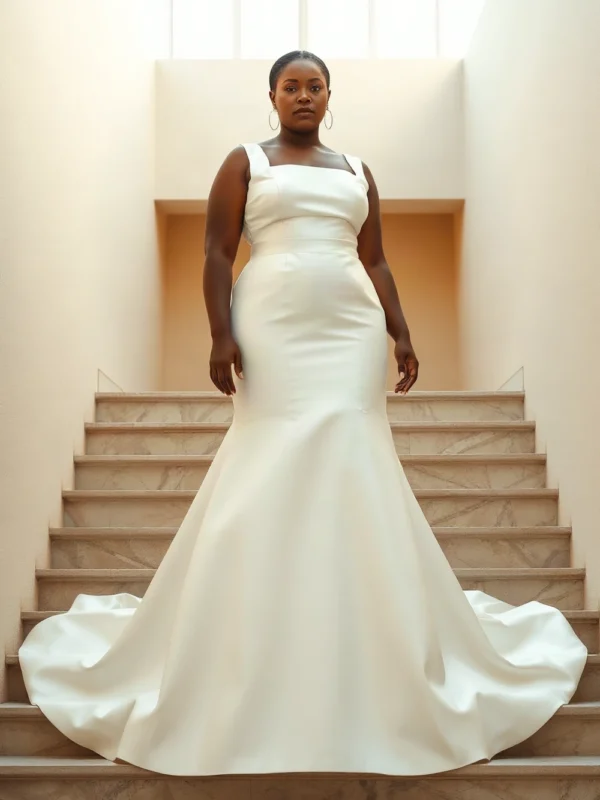
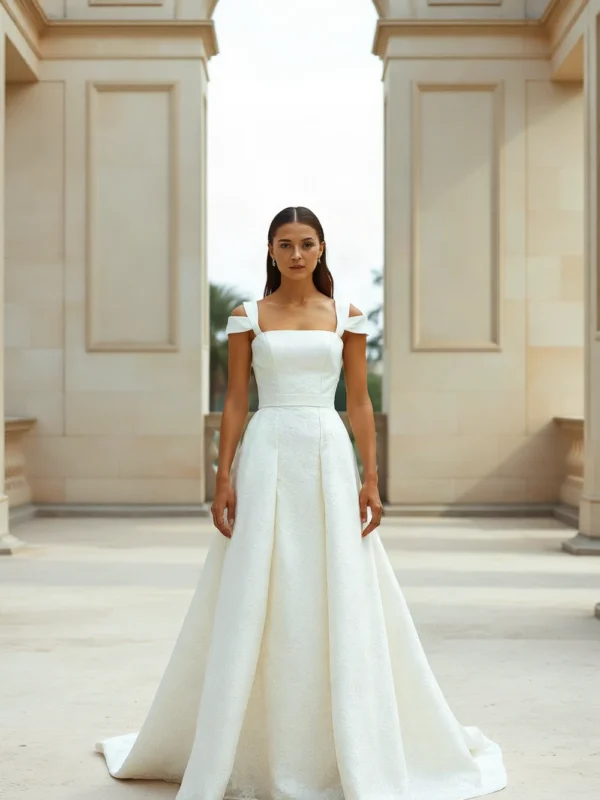
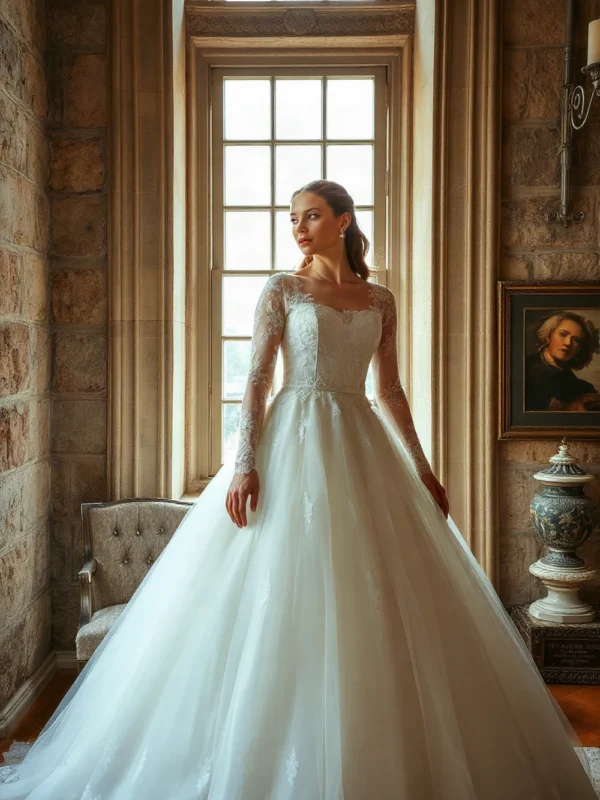
All six images use a square neckline to create a clear frame around the shoulders and collarbone, but their sleeves and skirts give that geometry very different moods. The first look is restrained, with cap sleeves, pockets and a gently widening skirt. In the second, detached-looking puff sleeves soften a fitted body. The third removes sleeves altogether, using wide straps, a defined waist and a dramatic mermaid skirt to make the silhouette feel more sculptural.
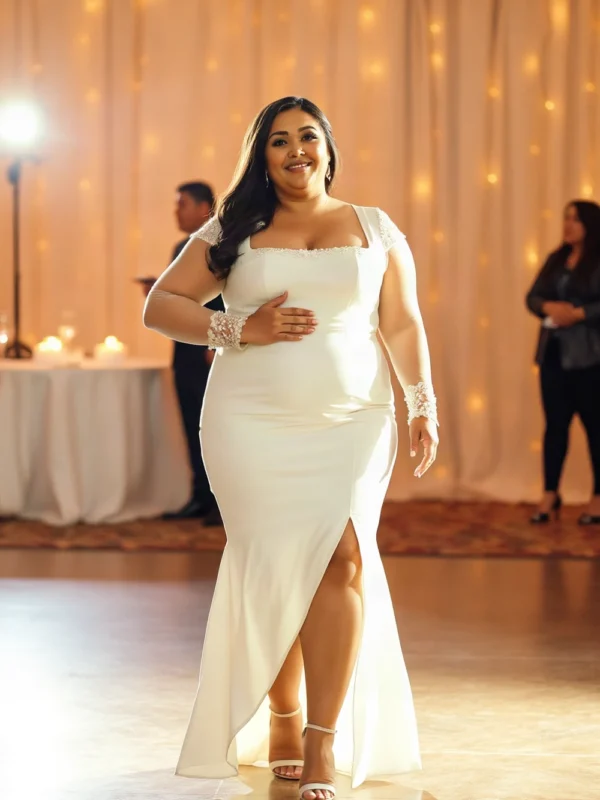
The fourth concept treats movement as part of the design. Its close fit and high front slit draw attention to the stride and shoes. In the fifth, slim vertical straps meet small off-shoulder bands above a broad, subtly patterned skirt. The final image offers the most decorative interpretation: long, sheer-looking embellished sleeves frame a softened square neckline, while a layered ball-gown skirt spreads across the floor.
When comparing the bodices, consider more than how much of the shoulder is covered. Wide straps and attached cap sleeves can create a visually continuous structure, whereas puff sleeves or off-shoulder bands need to be tested for shifting and restriction. Raise the arms, reach forward, sit and turn during a fitting. With long sleeves, check the elbow bend, shoulder rotation and wrist finish rather than judging the look only in a still pose.
The skirt should also suit the setting and the pace of the day. A straight or gently flared line creates a quieter footprint. Mermaid shapes can shorten the stride, while a front slit changes exposure as the wearer moves. Full A-line and ball-gown skirts need more space around chairs, narrow aisles and dance partners. Across every option, keeping jewellery from covering the neckline’s clear boundary is a useful way to preserve the square shape.