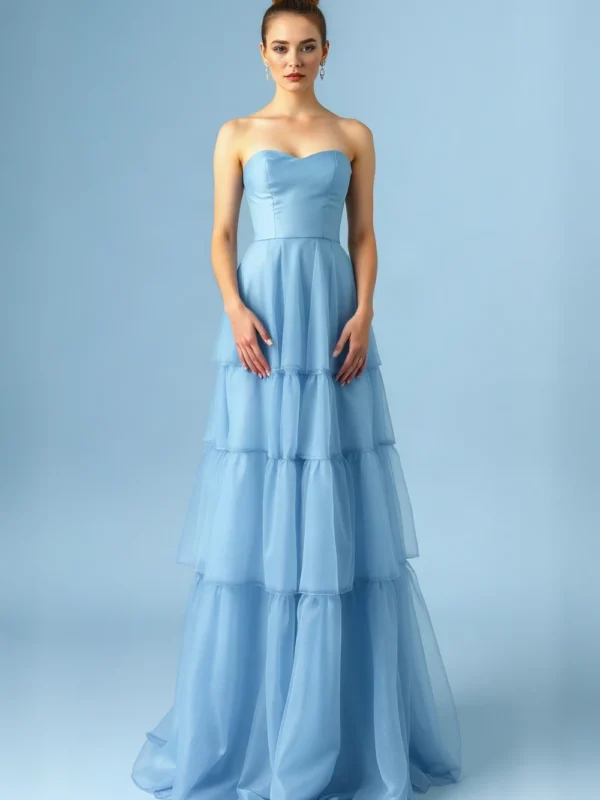
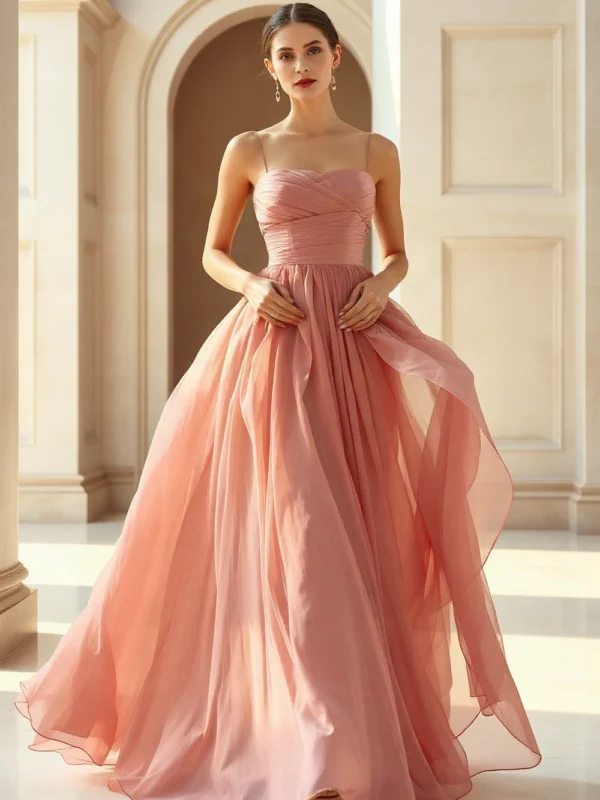
All six looks use floor-skimming length, but they create movement in distinctly different ways. The ice-blue gown builds volume through orderly horizontal tiers, while the dusty-rose design expands from the waist in broad, uninterrupted folds. Both appear light, yet the first relies on measured rhythm and the second on sweeping, romantic fullness.
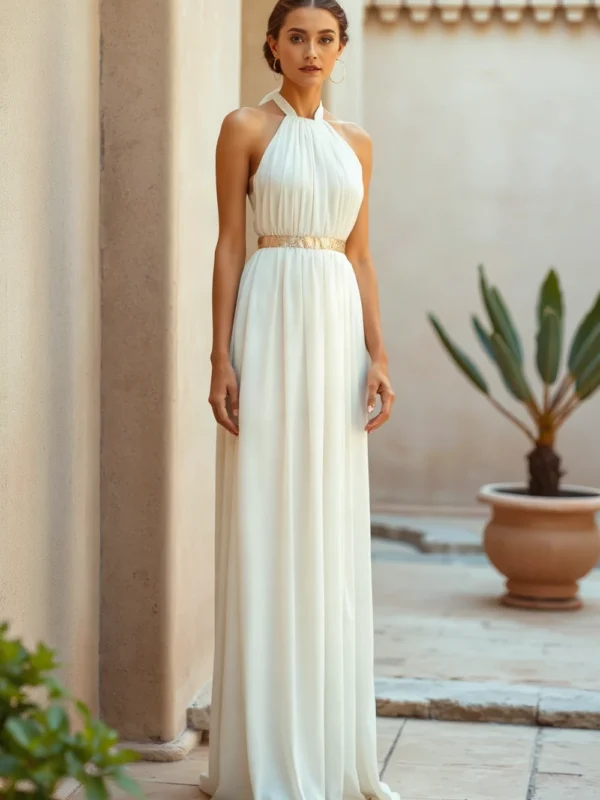
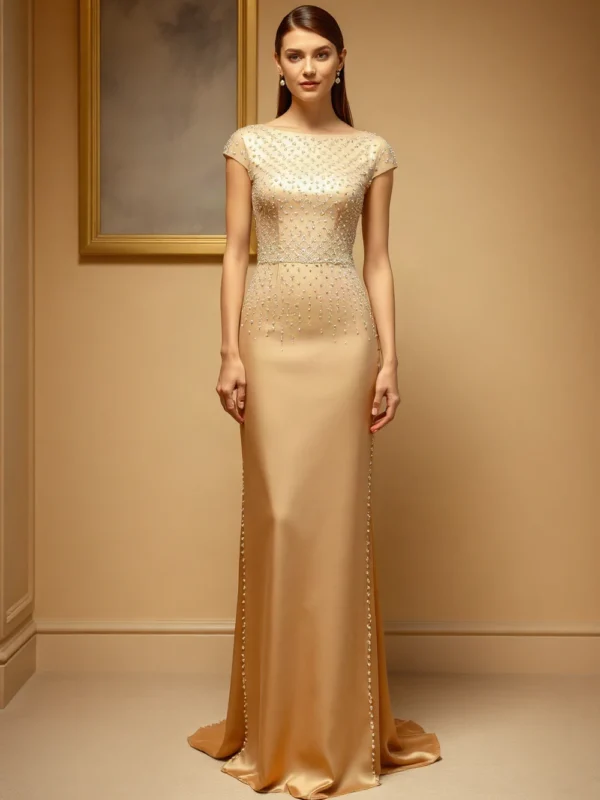
The ivory halter gown has the quietest vertical line in the group. Gathering at the neck and a narrow gold-colored belt give the eye two clear reference points, while the skirt falls without elaborate surface decoration. The champagne look reverses that balance: its silhouette stays narrow, but bead-like embellishment is dense across the upper body and gradually disperses below the waist.
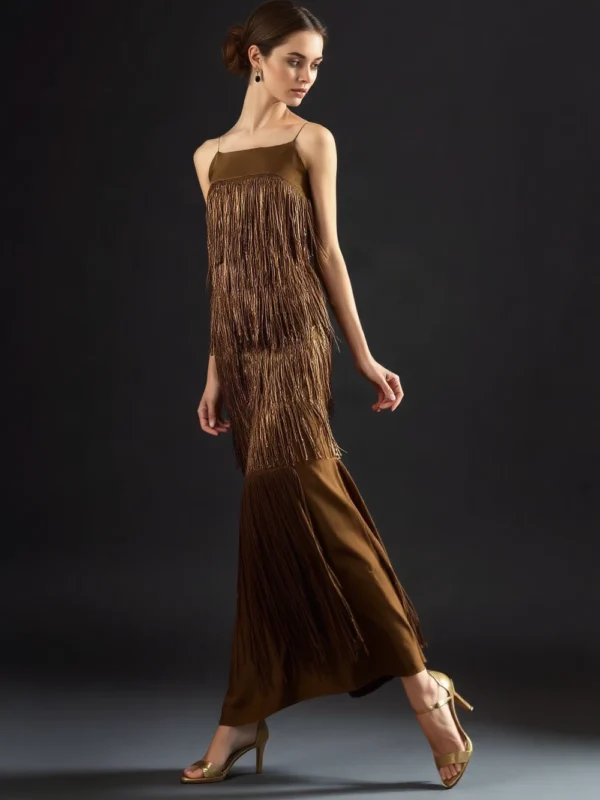
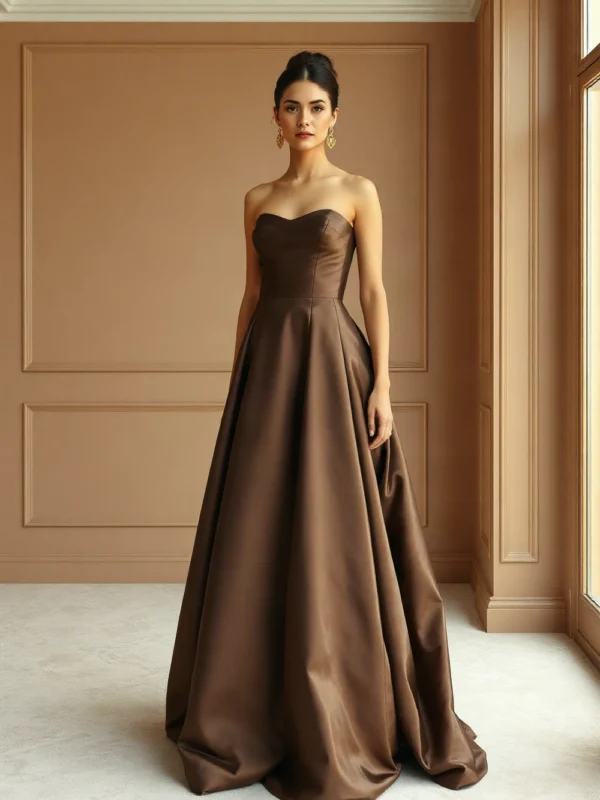
Bronze fringe expresses movement most directly. Its overlapping strands can separate and change direction with each step, standing out against the dark studio background. The chocolate-brown strapless gown uses no comparable applied detail. Instead, a smooth lustrous surface and a dramatically widening skirt turn light, shadow and scale into its statement texture.
Consider how actively you will move at the event. Fringe should be checked for snagging, tiered skirts for their overall circumference and full hems for their behavior on stairs. A narrow champagne column or the controlled ivory skirt may require less surrounding space at a seated dinner, although actual stride and sitting comfort still need to be tested.
Accessories work best when they balance rather than repeat the surface. Small earrings and one metal tone may be enough beside dense embellishment or fringe. A plain blue, rose or brown surface can accommodate a more noticeable earring, shoe or compact bag. Make the final choice by considering neckline security, waist position, hem management and the venue’s light—not color alone.