The shared idea in this gallery is that dark colour alone does not determine an evening dress's character. Similar floor lengths can look restrained, romantic, architectural or ceremonial when the shoulder line, sleeves, surface and relationship with the floor change. Black, near-black navy, forest green, aubergine and teal also respond differently to warm interiors, studio light and the blue light of dusk.
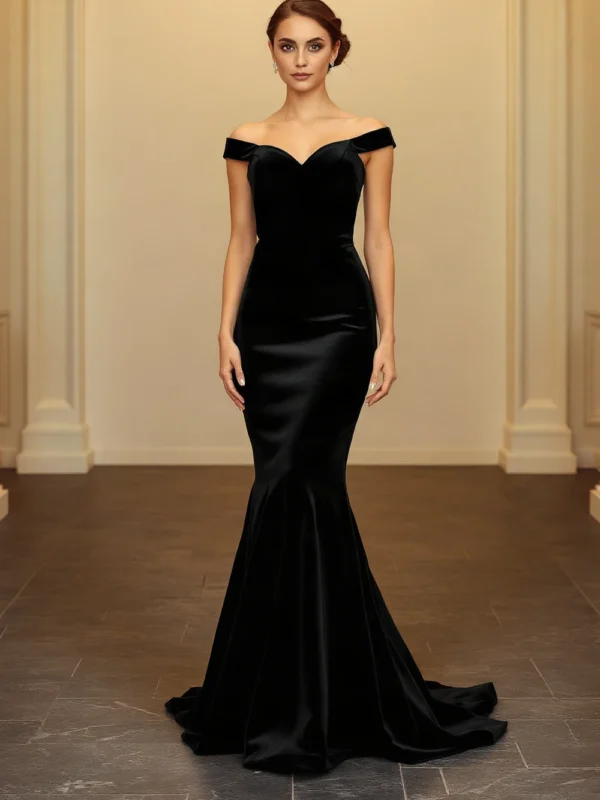
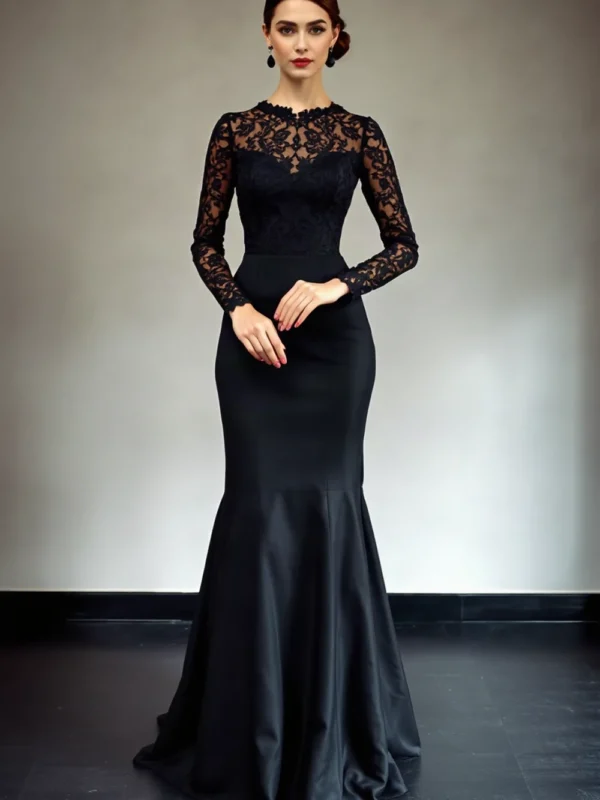
The first two black looks establish the clearest contrast in coverage. The off-shoulder dress frames the neck with a broad sweetheart line, while the second uses a patterned, sheer-looking layer to cover the neckline and arms around an opaque sweetheart shape. Both remain close to the body before widening, but one relies on smooth sheen and the other on the transition between pattern and skin.
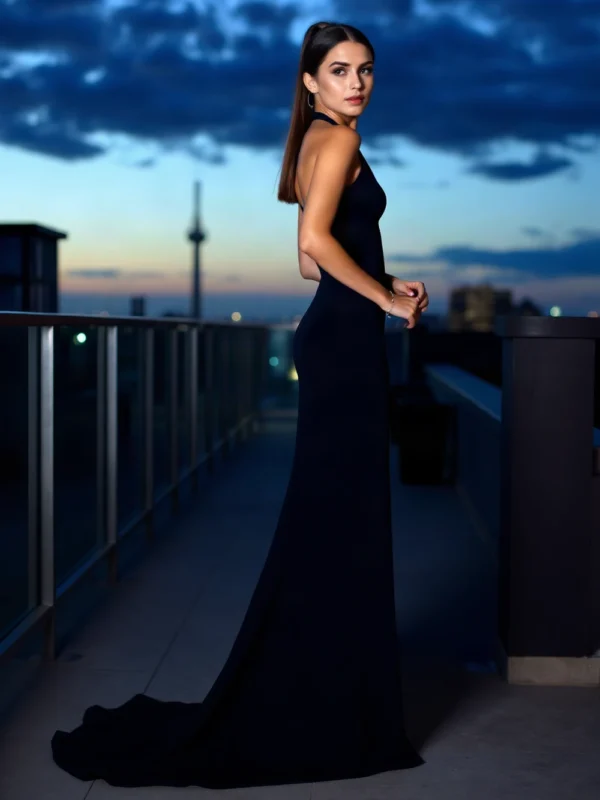
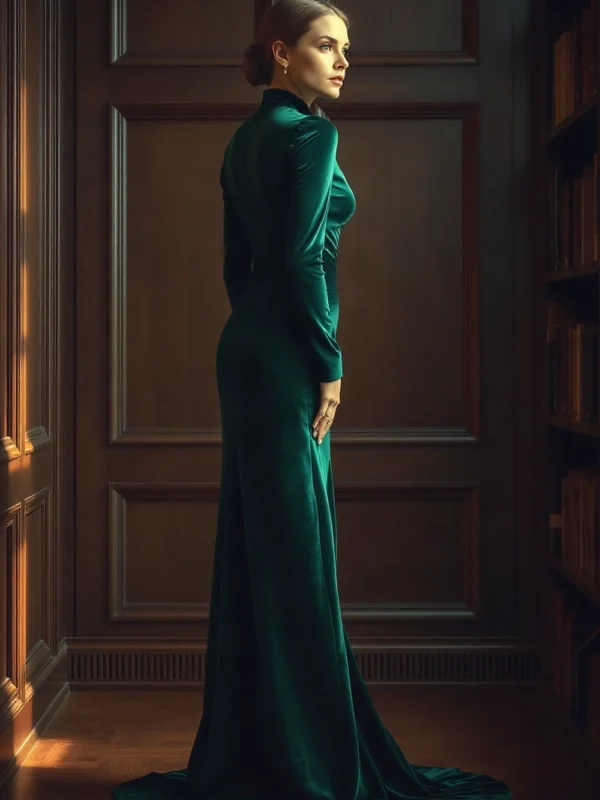
The navy and forest-green examples make the rear view particularly important. On the rooftop, the navy halter dress has bare shoulders, an open back and a long train with very little surface interruption. In the wood-panelled room, the green dress combines a high neck and long sleeves with a light-responsive surface and a broad sweep. Either train requires consideration of flooring, steps and the amount of movement expected during the event.
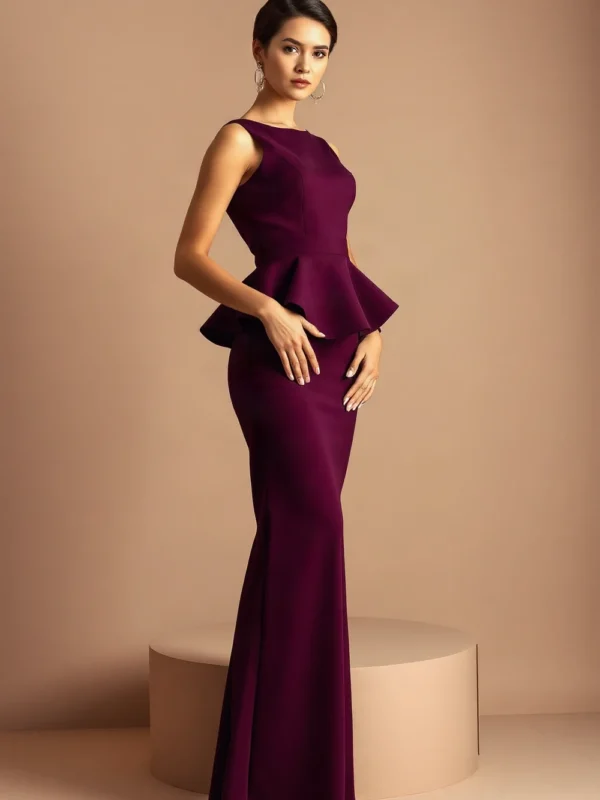
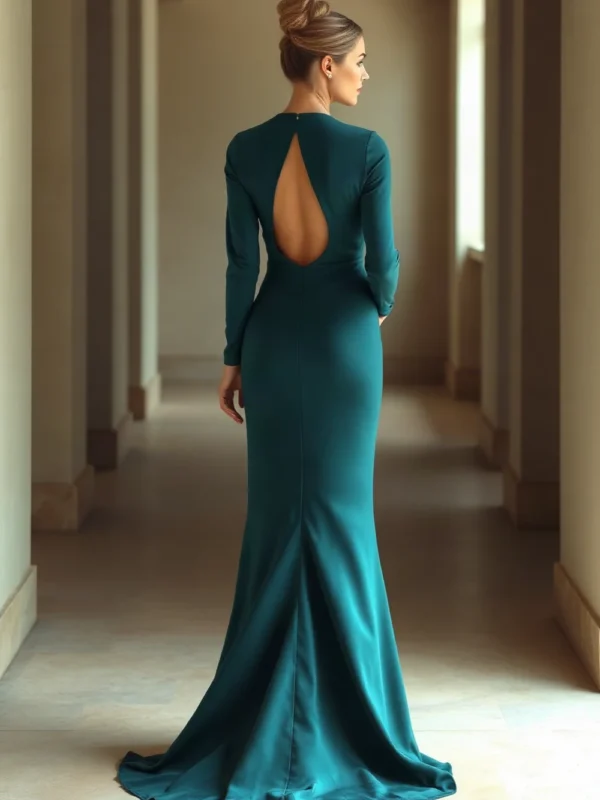
Aubergine and teal direct attention to different parts of the figure. The aubergine peplum creates horizontal volume at the waist, then resolves into a clean skirt without a pronounced train. The teal dress places its main feature at the back: a large teardrop opening enclosed by long sleeves and a narrow silhouette that releases near the floor.
Begin a practical comparison with coverage and movement rather than colour alone. An open neckline leaves space for visible earrings, whereas a high neck may need little more than a compact pair. A peplum suits a deliberately defined waist, while a fitted skirt and train require a realistic walking test. Viewing each idea from the front, side and back helps reveal which detail will remain dominant beyond a single photograph.