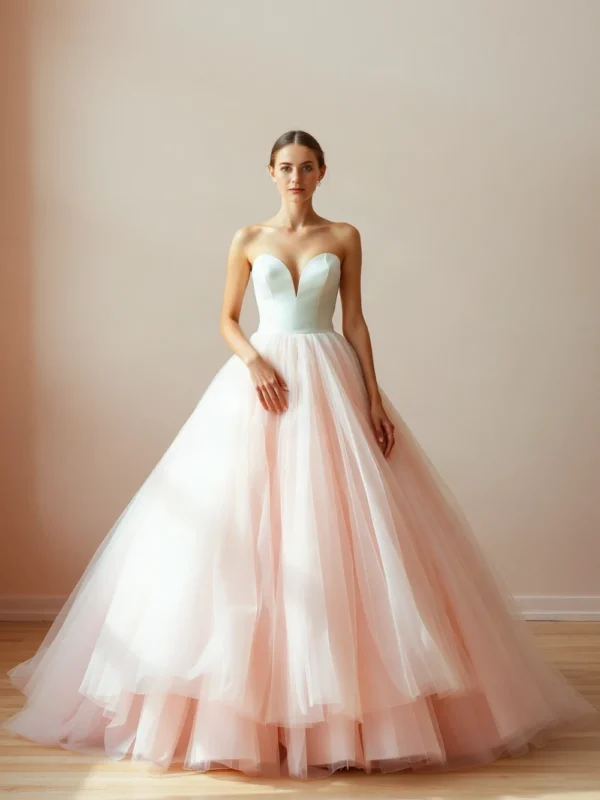
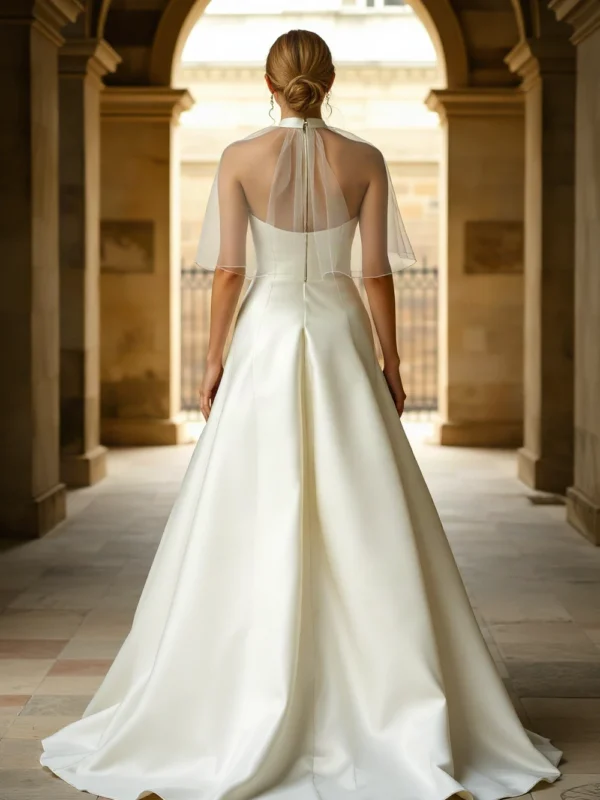
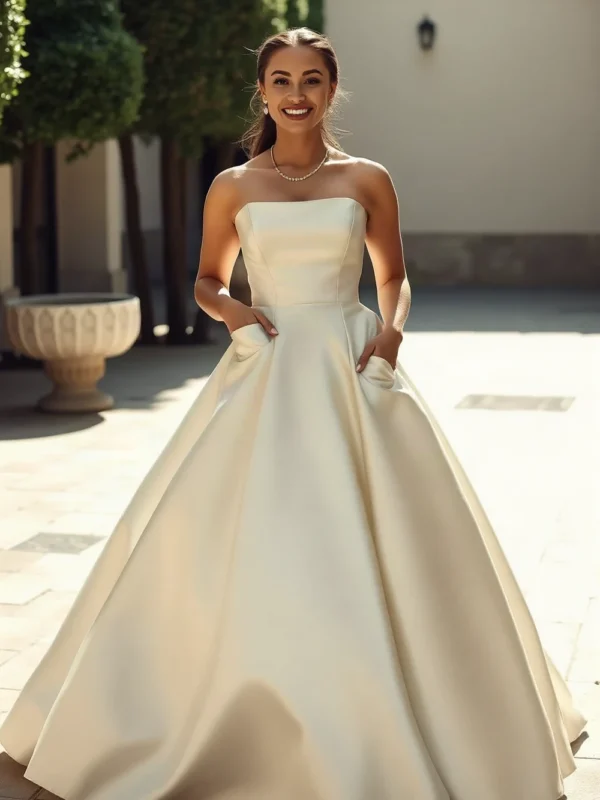
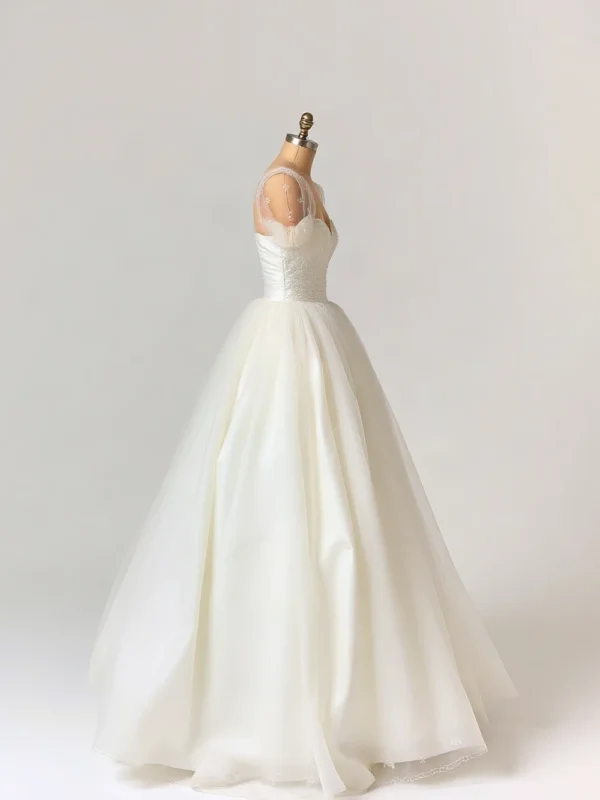
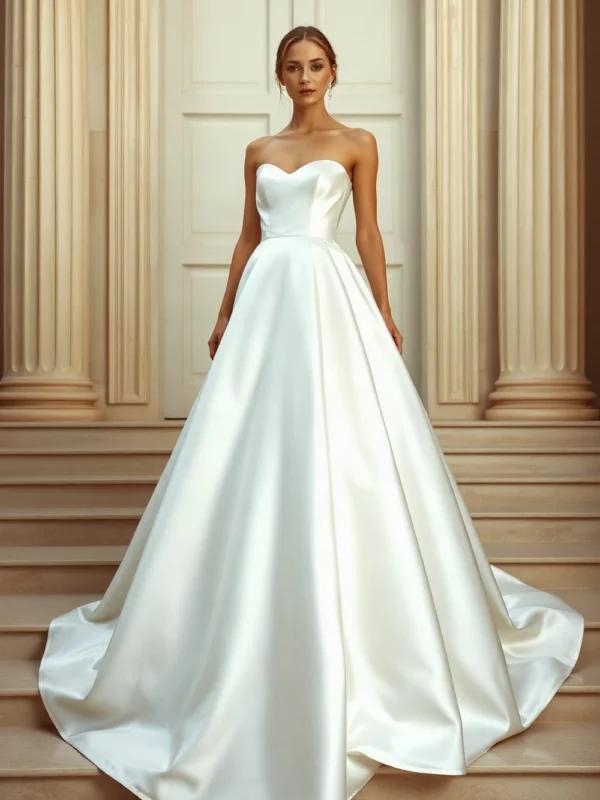
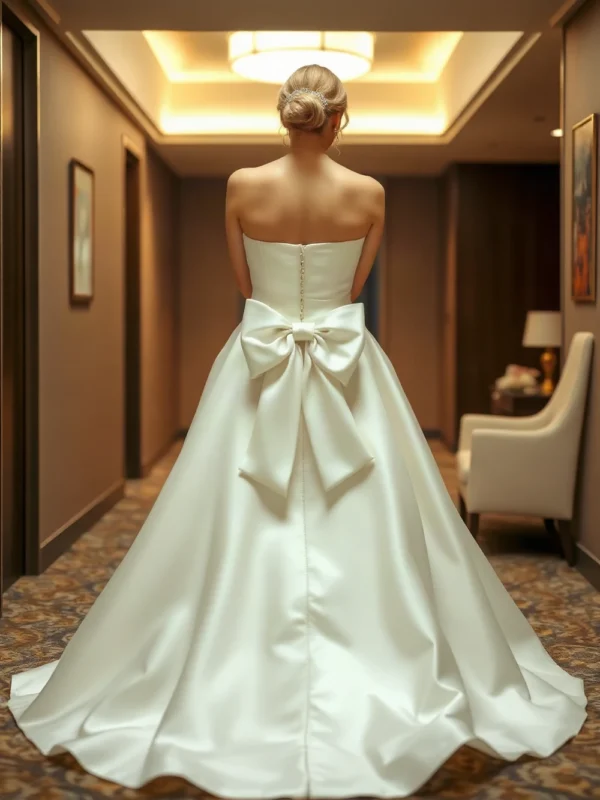
All six looks share a defined waist and a skirt that expands toward the floor, yet each builds its fairytale character differently. The first relies on tinted layers, the second on a transparent shoulder covering, the third on pockets, the fourth on illusion details, the fifth on uninterrupted volume and the last on a dramatic bow.
In the first image, a white bodice shifts into a very pale blush skirt, making the generous volume appear softer and more atmospheric. The fourth also has a light, flowing skirt, but its interest sits higher: texture on the bodice and delicate transparent sections over the shoulders replace the color contrast. These are useful alternatives for anyone choosing between visible color and subtle upper-body detail.
The second and sixth images are designed to be read from behind. A short capelet lightly frames the shoulders while preserving the clean back of the gown. The oversized bow creates a much stronger waist-level focal point. With a veil, check whether its layers compete with the capelet or conceal the bow rather than assuming every back detail will remain visible.
The third and fifth looks show two outcomes of a smooth, minimally decorated surface. The straight neckline and pockets feel relaxed and contemporary; the soft sweetheart neckline and long, gleaming skirt read as more ceremonial. With little surface ornament, seam placement, folds and the way light travels over the skirt become especially important.
Do not choose from the front view alone. Test sitting, walking, raising the arms and using stairs, then photograph every side under lighting similar to the event. Try the veil, jewelry and hairstyle at the same time. A fairytale feature works best when it remains clear without interfering with movement or competing with another focal point.