In backless wedding dress styles, depth is only one part of the design. The line surrounding the opening can change its impression. Long lace-look sleeves create a detailed, romantic frame; compact corset lacing gives a smooth surface a precise focal point. A sheer-looking illusion panel suggests openness without an empty cutout, while halter and bead-like straps make the shoulders and nape part of the composition.
These six images offer distinct ways to balance exposure, coverage, support and decoration. A still rear-view photograph cannot answer every practical question: raising the arms, sitting, walking and turning reveal how edges, straps and skirts respond. Hair, veils and accessories may reveal or cover the intended detail. Each concept therefore offers inspiration and fitting-room prompts. Comparing structure and appearance helps identify a back treatment suited to the silhouette, setting and way the dress will be worn.
Balancing a deep opening with long sleeves
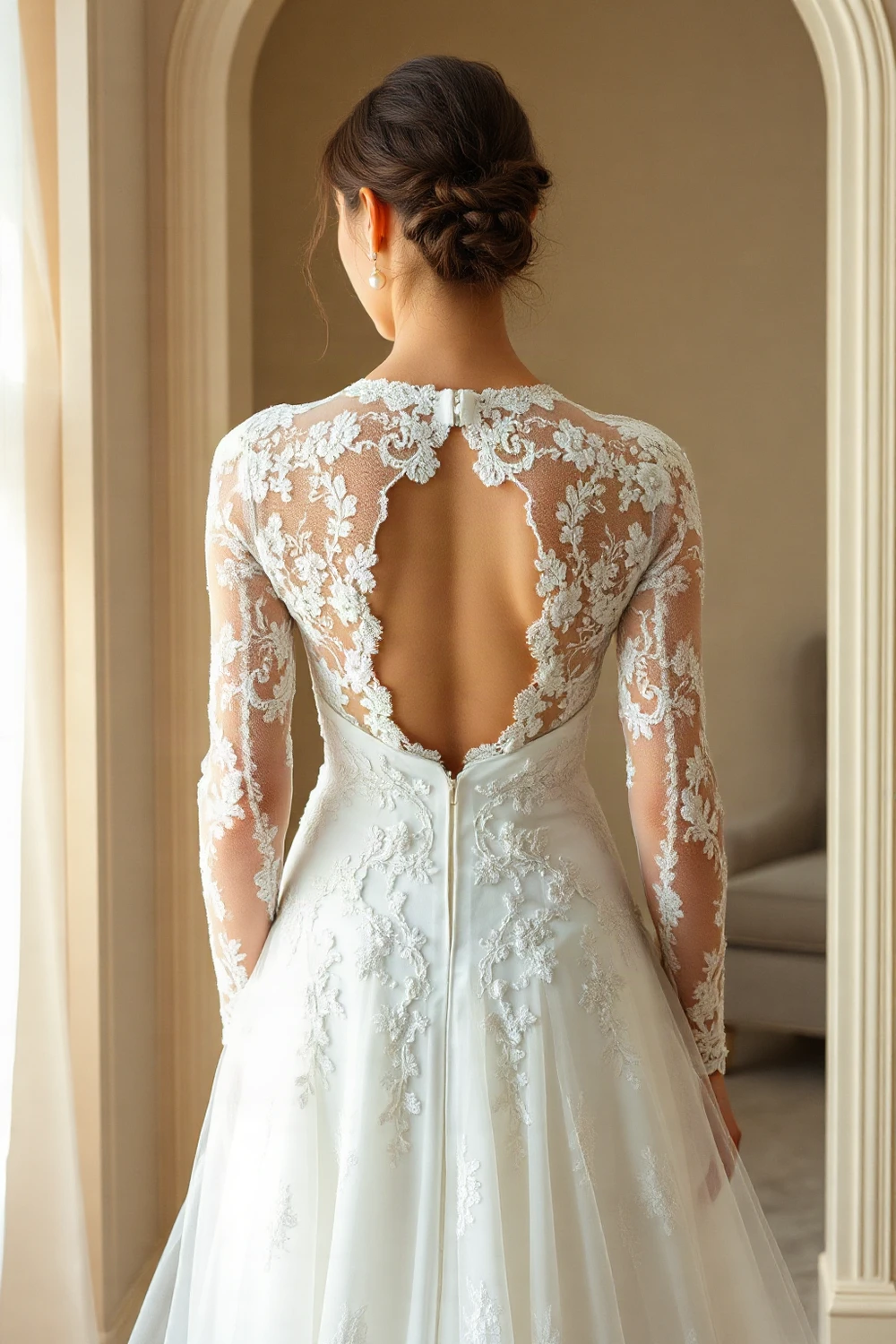
The first image surrounds a deep U-shaped opening that approaches the waist with floral lace-look sleeves and patterned shoulders. The broad exposed centre contrasts with dense white motifs on the arms, balancing an open back with visual coverage around the shoulders and sleeves. Motifs along the edge make the opening appear organically framed rather than sharply cut.
At a fitting, reach forward and lift both arms; the sheer-looking ground and raised details should move without excessive tension. The small nape fastening must lie flat without pulling on the neck. A low bun keeps the design visible, but a veil comb may sit near the fastening. Try the intended veil from several angles to check whether it presses on the closure or conceals the patterned border.
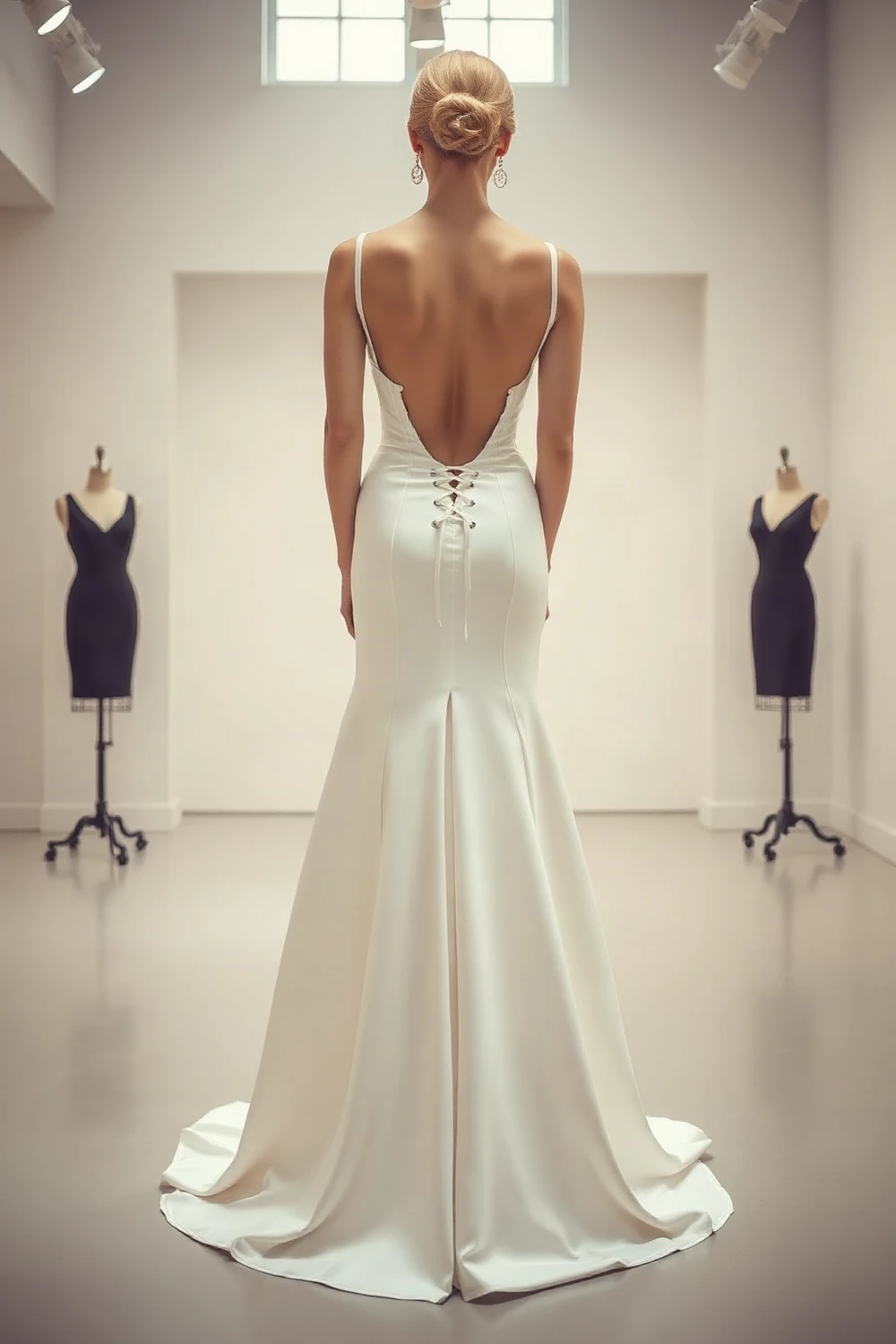
Making compact lacing the focus of a sleek back
The second concept combines fine shoulder straps, a smooth surface and a close-fitting silhouette. Its plunging opening narrows to short crossed lacing just above the waist. With no appliqués or all-over pattern, the laces, seams and accuracy of fit become highly visible. The skirt expands below the knees, balancing the narrow upper shape with a long, controlled flare.
Corset-style lacing does not necessarily provide extensive adjustment. Ask whether the tie changes the fit or is mainly decorative, how tightly it can be secured and whether it presses while sitting. The slim straps should remain on the shoulders, and the open back's side edges should not gape when the wearer turns. This is a strong reference for someone who prefers clean construction with one small, deliberate detail instead of dense decoration.
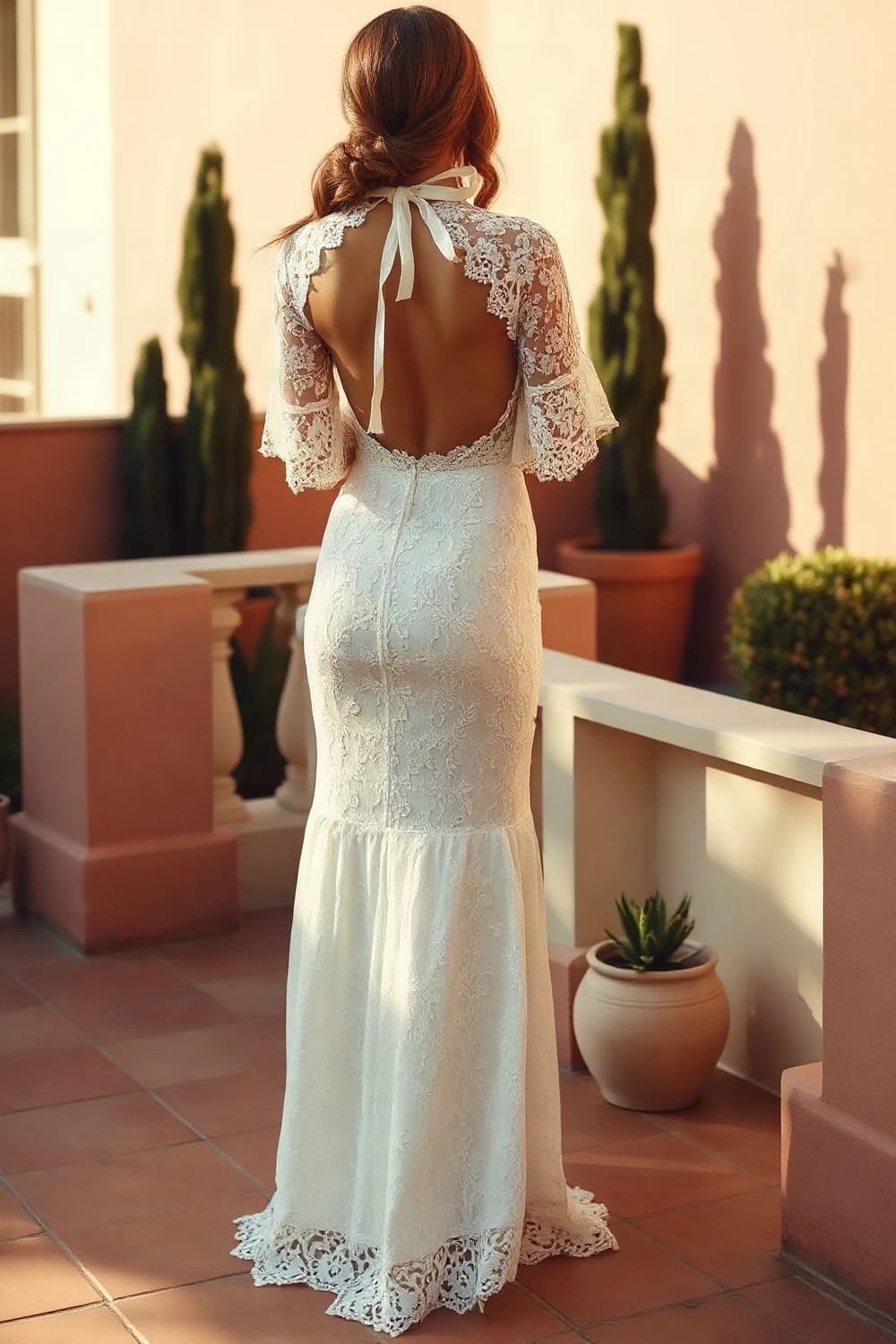
Using a soft neck tie as a romantic frame
The third look frames a broad opening with floral lace-look shoulders and a long ribbon tied at the nape. Elbow-length sleeves widen near their edges, creating a looser rhythm than the first concept's narrow full sleeves. Patterning continues down the close-fitting skirt, connecting the open upper section to the dress, while loose ribbon ends add movement at the centre of the exposed area.
Plan the knot with the hairstyle and veil: a low bun may overlap it, and loose hair can hide its shape. At a fitting, confirm that the tie does not loosen easily, the ends hang evenly and the wider sleeve edges remain manageable near tables or accessories. For an outdoor or warm-weather setting, consider both the sleeves' visual coverage and how their open shape feels during movement, not only in a stationary photograph.
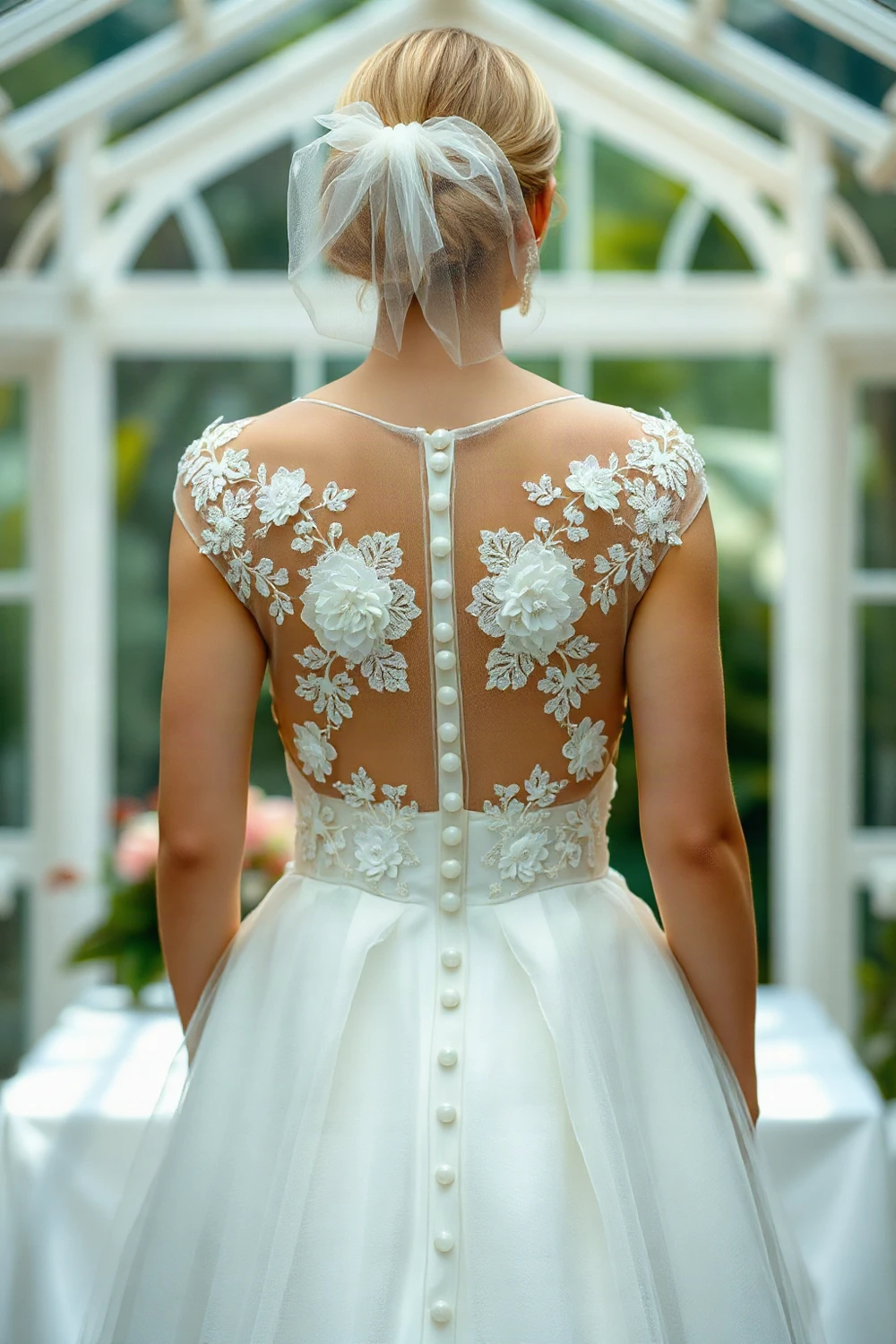
Suggesting openness with a floral illusion panel
The fourth design interprets an open back through a sheer-looking panel, symmetrical floral appliqués and a vertical row of covered buttons. Large blooms sit near the shoulder blades; smaller leaves extend toward the shoulders and waist. This distribution defines the upper body without the uninterrupted exposed area of the plunging examples. Buttons continuing into the skirt lengthen the central line.
When assessing an illusion panel, look beyond colour. Notice where its edges finish, whether it wrinkles as the arms move and how visible it is under different lighting. Because appliqué symmetry will stand out in rear-view photographs, check shoulder and waist alignment carefully. This suits someone seeking airy floral detail and clearly organised upper structure rather than a very deep, empty cutout. Also test veil density so it does not obscure the motif arrangement.
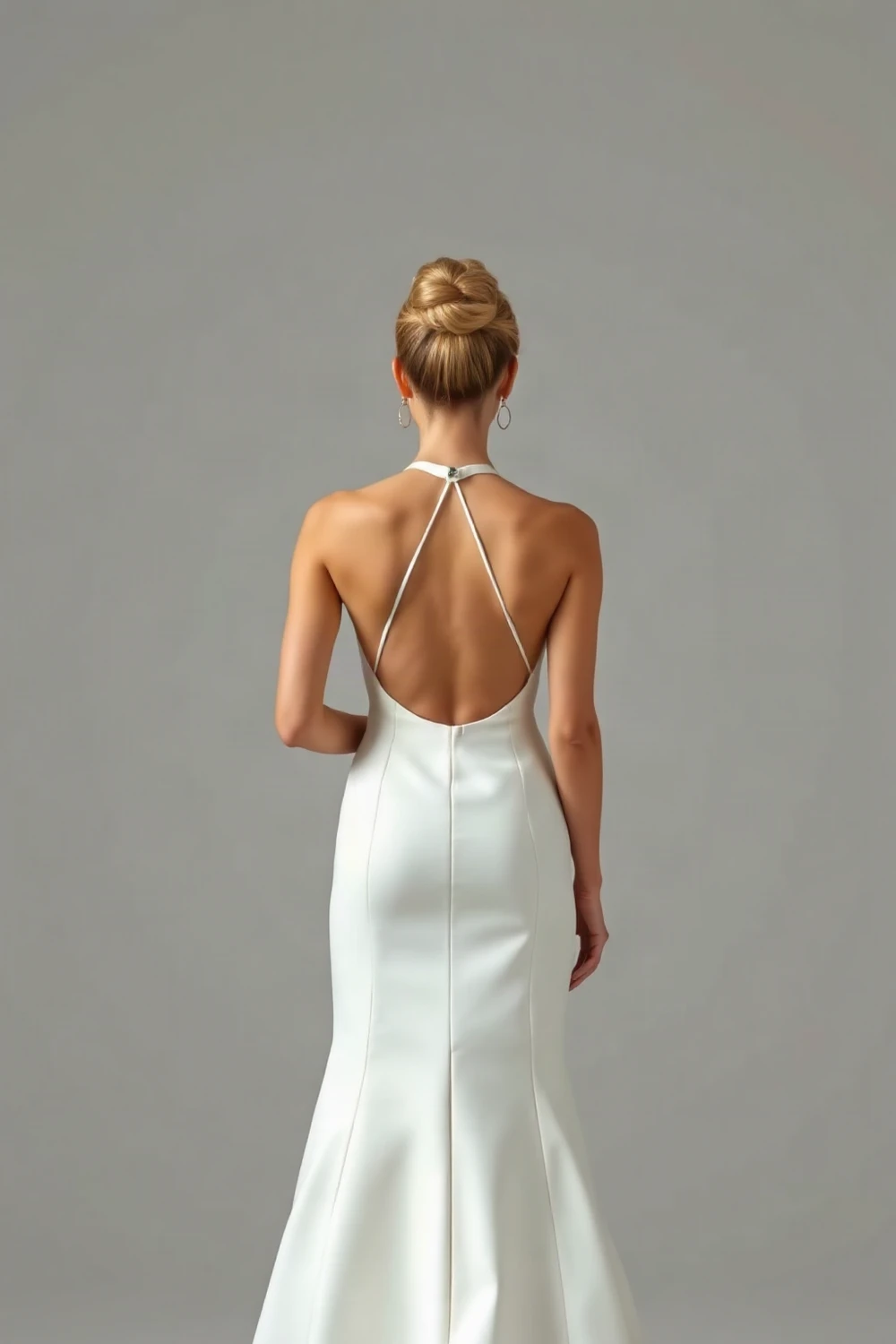
Dividing the open back with geometric halter lines
In the fifth image, two fine lines extend from a halter neckline, drawing a long triangle across the exposed back. A smooth surface and undecorated centre seams let that geometry dominate. The curved lower edge softens the angular straps, while the fitted body releases into a modest flare below. This minimal interpretation has no lace-look pattern, tie or button line competing for attention.
Comfort around the nape is central to a halter fitting. Turn the head, lift the arms and stay seated for several minutes to detect pressure that may not appear immediately. Both fine lines should maintain equal tension and remain untwisted. An updo displays the triangular frame completely, whereas a fuller veil can conceal much of its simplicity. Test accessories from behind, not only from the front, while standing and walking.
Creating a jewellery effect with bead-like straps
The final concept frames a deep V with two rows of rounded, bead-like elements meeting at the nape. Against the smooth dress, their repeated highlights create a clear decorative rhythm. Compared with the plain halter lines in the fifth image, this feels more ornate; compared with the lace-look examples, it remains lighter and more graphic. The low V guides attention from the shoulders toward the waist's centre.
Hair jewellery, earrings and a veil edge should not all compete with this focal area. An updo exposes the nape junction, while loose strands should be checked for snagging on raised elements. During movement, ensure the straps do not rotate, their meeting point does not pull and both sides maintain even tension. If the back carries most of the decoration, a smooth skirt and restrained accessories preserve a coherent hierarchy.
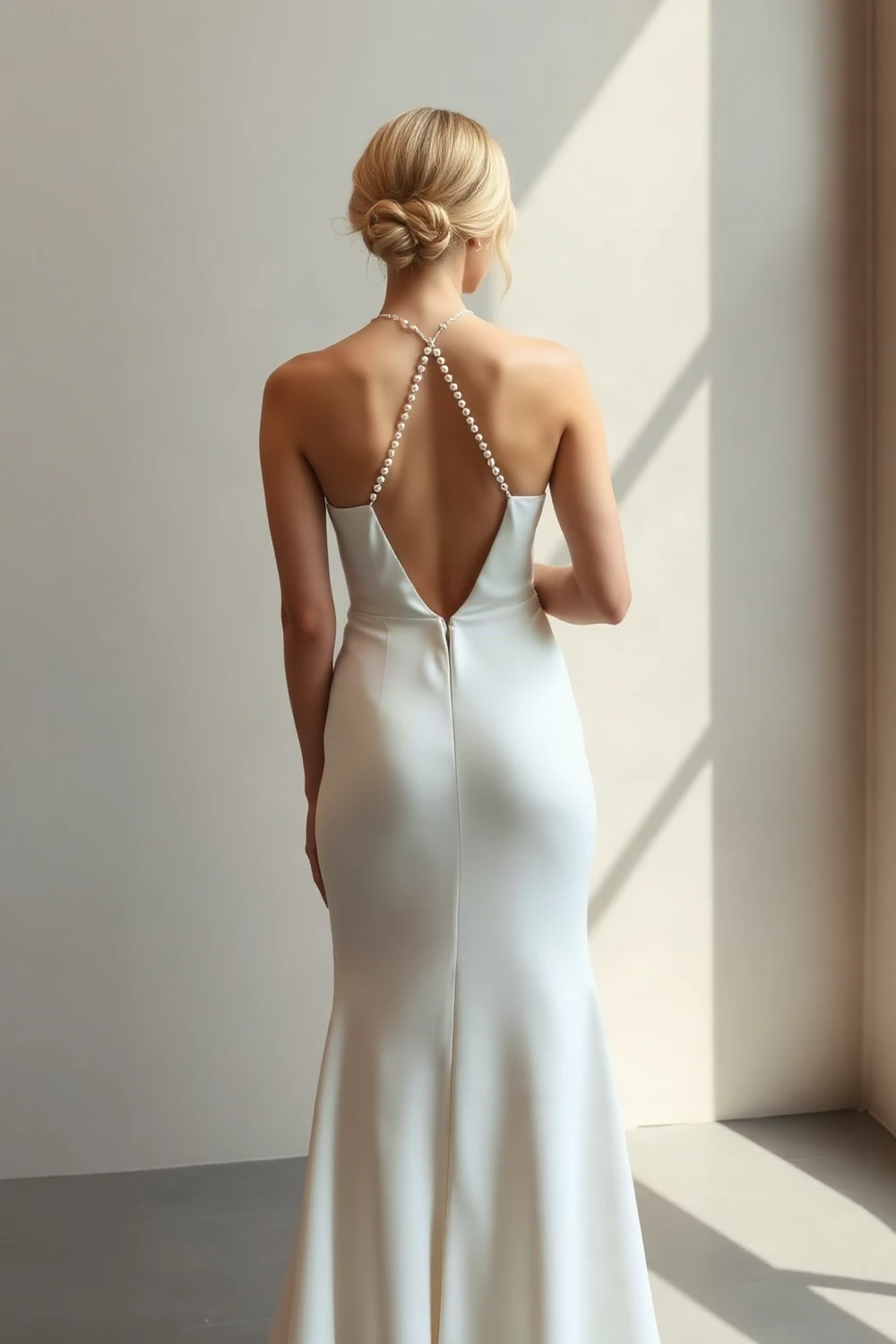
The most striking back detail is not always the most suitable. Long lace-look sleeves provide pattern and a substantial frame; sleek lacing emphasises fit and construction; a floral illusion panel provides controlled coverage. Fine halter lines and bead-like straps both expose the shoulders but create very different levels of decoration.
Build a shortlist by considering venue, expected movement, hair and veil together. Photograph each option from behind in more than one light, then sit, embrace, walk and simulate dancing. Inspect straps, tie, nape closure and panel edges closely. These checks turn an appealing rear view into a choice that stays balanced and comfortable throughout the occasion, without expecting one photograph to show what it cannot.
Compare lace-look sleeves, corset lacing, illusion panels, halter lines and bead-like straps while considering silhouette, support, movement and accessory placement.
Frequently asked questions
How should support be assessed in a very low open back?
Look beyond the visible straps. Test the internal bodice structure, side-seam fit and stability at the waist. The edges should remain flat during movement without placing excessive pressure on the nape.
Which hairstyle keeps an open-back detail visible?
An updo or hair swept to one side usually reveals the back. If the design has a neck tie or bead-like straps, test that loose strands do not catch and that accessories do not press on the closure.
Is corset-style back lacing always adjustable?
No. Some lacing changes the fit, while other versions are mainly decorative. Ask about its working range, how it is secured and whether the knot or crossings create pressure while sitting.
What should be checked on an illusion back panel?
View the panel tone, edge visibility, wrinkling and motif placement under different lights. It should remain aligned across the shoulders and waist when the wearer raises the arms or turns.
Will a veil completely hide the back design?
That depends on its length, density and attachment height. Take rear-view photographs with the veil in place and while walking to see how much of the buttons, tie, lace-look edge or straps remains visible.