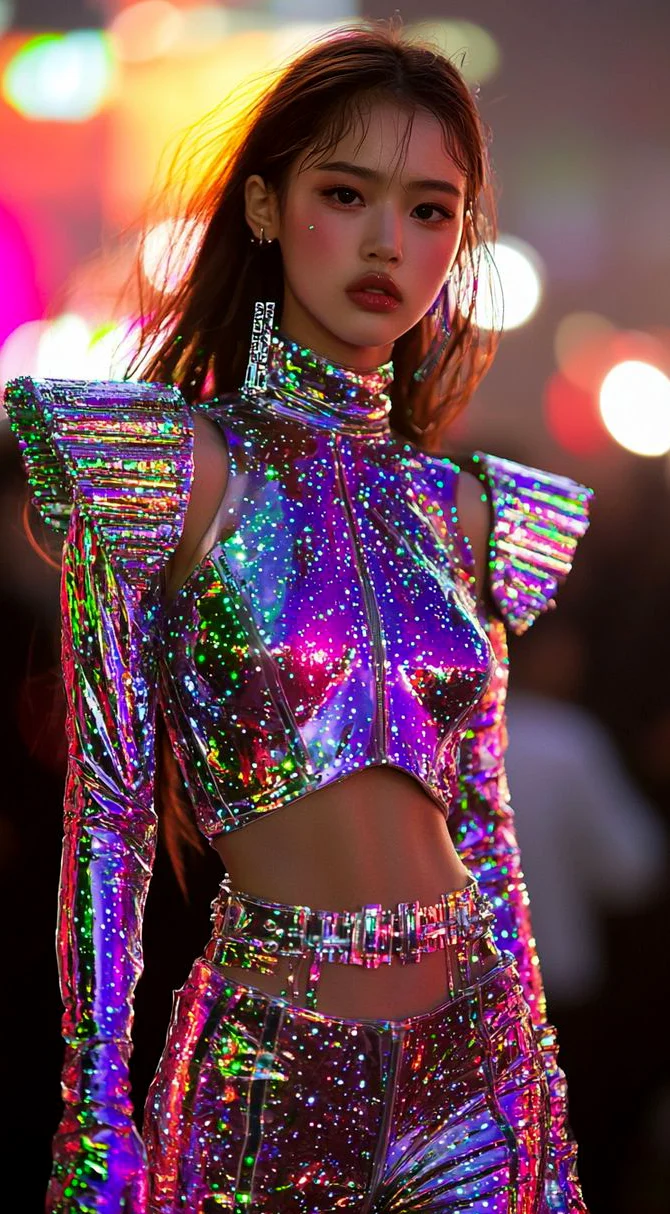
A futuristic club outfit can start with a visible colour relationship or outline without a claim about advanced technology. The main reference combines multicolour reflections, a high neck and larger folded shoulder areas above a bare middle. Other views compare silver-looking separates, a brighter green trouser combination and pale outlined upper forms. None identifies electronic operation, a particular fibre or a shared maker. Choose the part of the appearance you actually want, then establish the real pieces, construction and instructions in the offer rather than treating the whole photograph as a confirmed product specification.
1. Choose one leading colour area
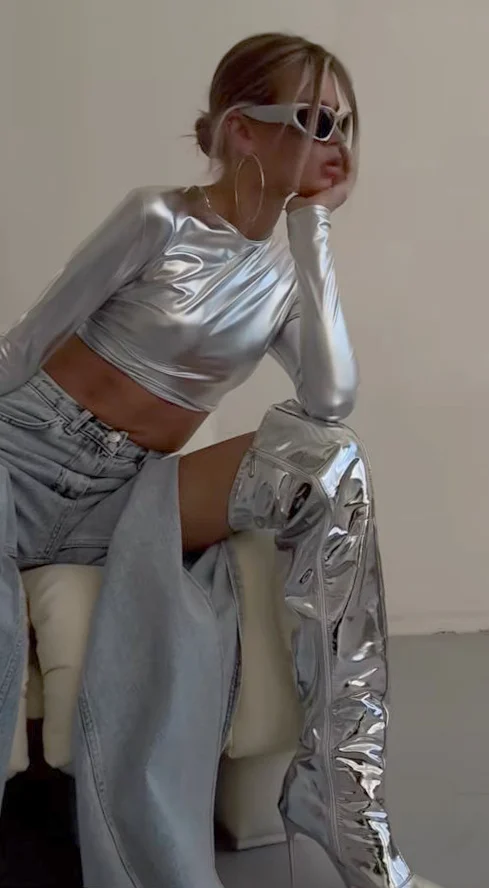
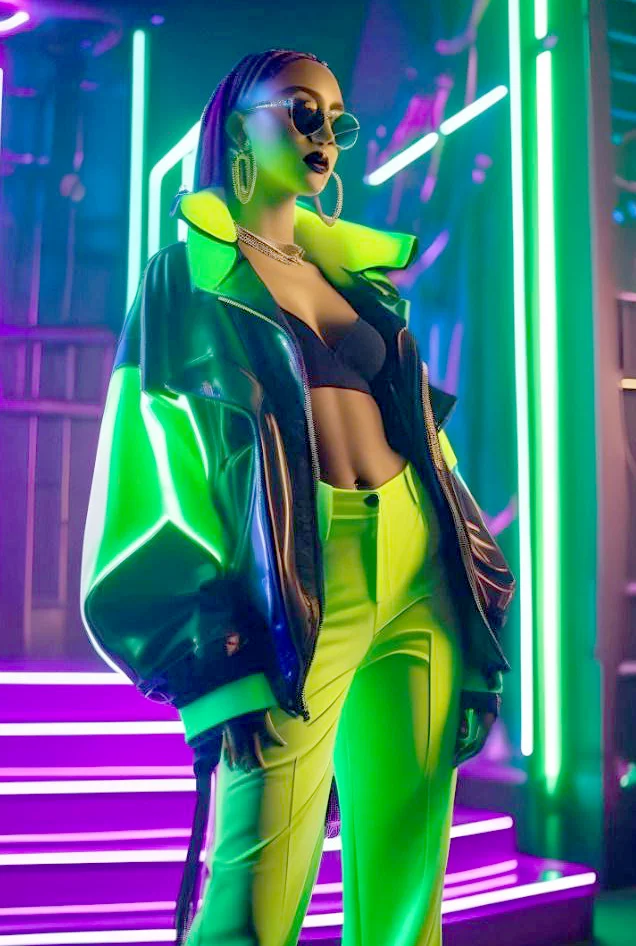
The main view distributes smaller bright points and larger areas of contrasting reflected colour across a short upper piece and the partly shown lower area. The green trouser reference instead puts a brighter block beneath an open darker jacket and dark short upper section. The seated silver-looking reference has a quieter background with reflections concentrated on its top and partial boot. These are different arrangements. You can prefer one colour block or more scattered reflections without assuming a particular coating, metal or technical textile.
Compare the intended main area first. Keep your base garment unchanged while trying another layer or accessory. The statement party dress guide supports choosing a leading focal area rather than copying every photographed accent. Request the actual piece in ordinary light as well as any lighting used in its offer. One dramatic scene cannot explain its appearance in every other setting. Similar colours do not identify the same material or producer across separate images.
2. Separate luminous appearance from an explained function
A maker can describe a specific technical construction directly. CuteCircuit describes changing-colour micro-LEDs in its named Galaxy Dress. That is a different identified project, not one of our archive pictures. It demonstrates the difference between a manufacturer statement about a particular garment and the impression of bright outlines in a photograph. It supplies neither electronic components nor the same operation for the pale outlined jackets, reflective shoulders or glasses shown here.
If an actual offer advertises a function, ask what operates, how the complete supplied version is demonstrated and which instructions apply to that exact piece. Keep that explanation separate from a styling image. A line resembling a zip cannot prove how it opens, just as a bright edge cannot identify a power source. If you only want the colour relationship or border shape, state that preference directly. You need not claim an electronic feature to discuss a visible surface you enjoy.
3. Compare collars and shoulder areas separately
The main reference has a close high neck beside larger folded projecting shoulder areas. The green combination spreads an open jacket around a dark short inner top. Another pale front uses a high collar and a central zip-like line, while the silver-looking seated top has a more rounded upper boundary. These frames create different visible relations with the face and exposed middle. They do not establish support, stretch, warmth or movement room, and a high collar in one front cannot supply another piece’s matching rear.
Try the actual upper section with arms relaxed, then bend the elbows and bring a hand forwards. See its own sides and rear rather than treating the foreground and background figures as matching product views. Ask which areas are joined and which are separate. Have the offered configuration named before planning a different shoulder or sleeve. A projecting fold can be a useful visual reference without proving detachability, adjustable volume or compatibility with an unrelated lower piece.
4. Establish the separate garments at the waist
The main view includes a bare middle between the shorter upper piece and a reflective belt-like waist area above partly shown trousers. The green reference combines a dark inner top, open jacket and brighter trousers. In the seated reference, a shorter silver-looking top sits above light-blue jean-like areas beside a bent leg and partial tall boot. The pictures do not explain every hidden seam or identify each component as independently supplied. Ask what the actual offer includes instead of counting pieces through colour alone.
The party separates guide helps describe the intended upper and lower combination. Request each real component together on the same candidate. Walk, sit and turn before checking the waist relationship again. The seated pose cannot establish the standing top length, and an exposed middle in a photograph guarantees no fixed coverage during your movement. If you want a different overlap, state the desired area and have the real arrangement assessed rather than borrowing another reference’s waist.
5. Complete the missing lower view and footwear
None of these five frames supplies a complete head-to-foot comparison of every pictured outfit. The seated silver-looking reference shows part of a tall boot but not its entire lower finish. Other views stop around the upper legs or higher. Their absent shoes cannot determine what pair is supplied or the lower length on your own body. The short or long party dress comparison helps keep actual length separate from a striking upper photograph.
Request complete front, sides and rear of the real combination with the shoes you plan to wear. Take ordinary steps and sit before comparing the borders again. In the brighter outlined flared form, a longer uneven lower edge crosses the front of the legs; its photographed shape cannot supply every side or rear finish. Ask for those areas on the same actual piece. Discuss a proposed shortening with its border and any decoration together, then arrange another complete trial after agreed work.
6. Add your own accessories and confirm the invitation
Angular and round glasses, large open earrings and longer rectangular ear accents appear in different references. They are neither required accessories nor evidence of a supplied set. Try planned hair beside the real collar first, then add one piece at a time and check its contact with the garment during ordinary movement. Confirm your actual invitation’s clothing requirement separately. For treatment, GINETEX explains textile care information; use directions for the finished pieces and components. A futuristic club outfit becomes a specific choice through the appearance you name, the actual version and your complete trial, not an invented technological promise.
Five styling references compare multicolour reflections, silver-looking surfaces, an open jacket and brighter outlined borders. Appearance alone identifies neither electronic components nor material.
Frequently asked questions
Does a futuristic club outfit photograph prove working electronics?
A futuristic club outfit photograph does not prove working electronics. Ask for a model-specific description and demonstration of any advertised operation; bright lines alone cannot establish it.
Are all the futuristic club references one available set?
The futuristic club references are independent arrangements. Similar colour or shine cannot make their tops, trousers and accessories one available set; confirm each actual offered piece.
Does the archive year date a futuristic club outfit collection?
The archive year does not date a confirmed futuristic club outfit collection or establish a current trend. These pictures are comparisons of visible styling without a shared maker identification.
Can every futuristic club outfit receive the same cleaning?
A futuristic club outfit needs directions for its own finished pieces and components. A reflective-looking surface or an advertised function supplies no common washing or ironing method.