Minimal party outfits start here with a limited selection of visible features. Four independent references show a pale asymmetric front, a densely reflective long dress, a grey jacket-and-trouser combination and a gathered navy front. They are not equally restrained. Their differences are useful: you can choose an upper edge or a continuous colour without taking every decoration with it. The pictures establish neither attendance at a particular party nor a shared brand. Use each reference to explain a specific preference rather than treating the whole photograph as a shopping list.
1. Choose one visible priority
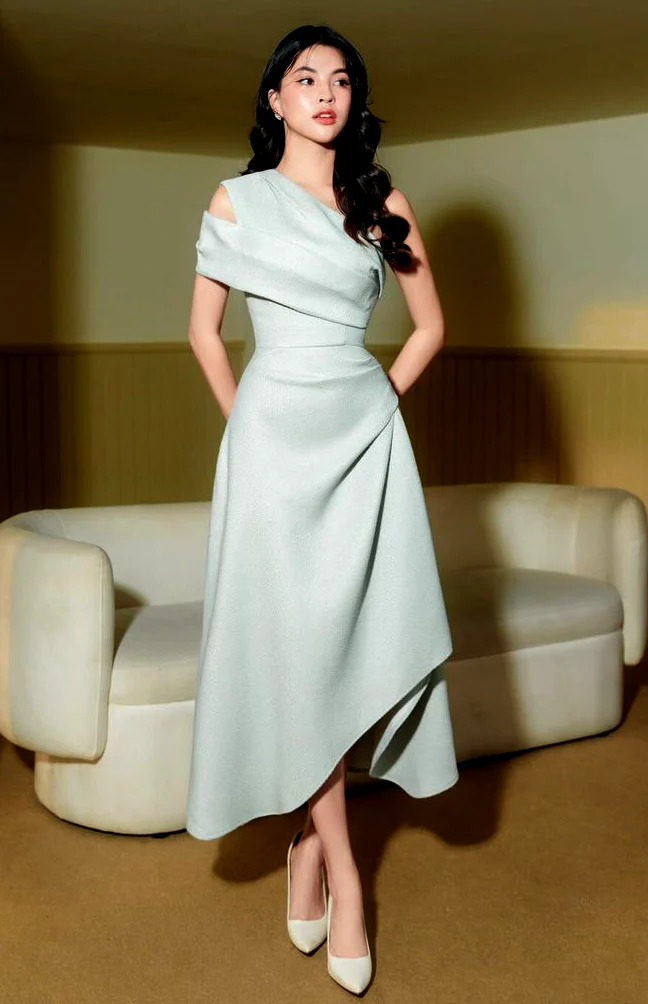
The pale main reference has larger quiet areas and an asymmetric upper outline. A broad folded area crosses the upper body, while diagonal folds gather at the side of the waist. The skirt ends unevenly. Decide whether the continuous pale colour, shoulder line or side arrangement interests you most. Those three qualities need not occur together in the next candidate. Write down the main one and add a second only if it belongs to the same wish.
The navy front is also predominantly one colour, but it includes many horizontal gathers and a high front leg opening. A quiet colour therefore does not prove an entirely undecorated outfit. Compare the number of visible lines too. If the gathers already provide the accent you want, leave additional accessories aside initially. This needs neither a rigid definition of minimalism nor an allegedly universally suitable cut. It needs a preference that someone can understand when you describe an actual garment.
2. Read the invitation before choosing a picture
The Emily Post attire guide distinguishes named dress codes, including Semi-formal and Black Tie. Your preference for little decoration does not replace a stated requirement. Read the actual invitation and clarify unfamiliar wording with the hosts. None of these references establishes which dress code the photographed person meets. The street setting around the grey suit does not identify an occasion either. Keep that open question separate from your preferred colour area.
Record the place, any stated clothing requirement and the pieces you actually want to wear. Clarify whether you are looking for a dress or a jacket-and-trouser combination, for example. You can then ask about real available options within that framework. A long reflective skirt is not automatically the answer to every party; nor is a shorter pale dress. Let the reference explain one feature while the actual offer and your invitation provide the information for the complete decision.
3. Compare dense reflections with a quieter surface
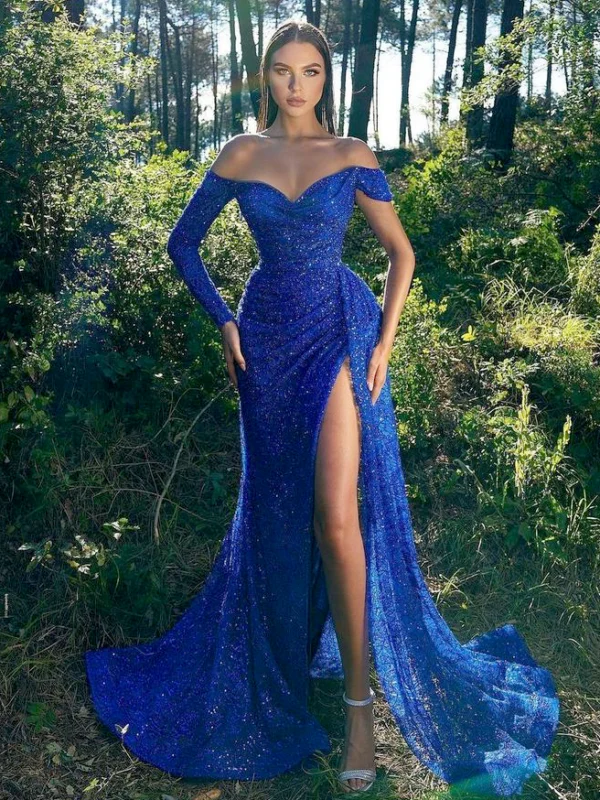
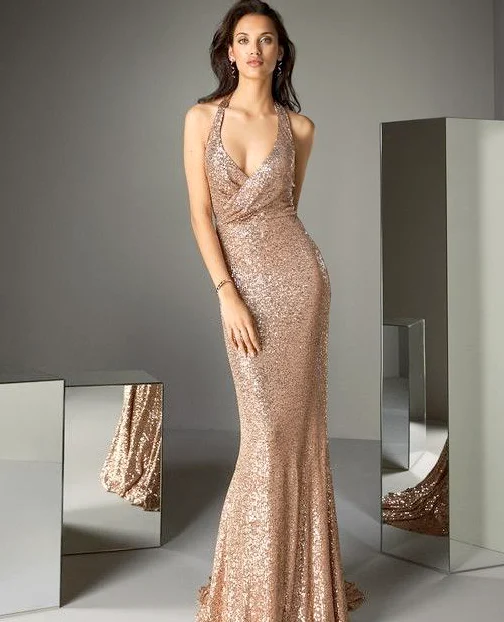
The rose-gold-looking counterexample carries small reflections across almost the entire long front. A deeper V line and apparently overlapping diagonal upper areas accompany the closer middle. Lower down, the shape opens slightly and some cloth rests on the floor. Use this as a deliberate comparison: do you want that dense reflection or the quieter areas in the pale main reference? Name the difference instead of labelling both simply as plain.
The satin evening dress comparison adds questions about a genuinely named surface. It does not identify our quiet pale surface as satin. Ask for the composition and construction of the offered item and see its actual available colour. Mirrors beside the reflective reference supply fragments only. They do not confirm a complete matching rear view. Request that view separately if you continue considering a similar front. A reflection cannot fill in every unseen part of an actual dress.
4. Read jacket, trousers and tie separately
The grey combination visibly includes a jacket and narrower trousers over a pale shirt. A dark tie carries diagonal pale stripes. Brown closed shoes, round dark glasses and a watch complete the view. You can like the continuous grey frame while wanting a different tie. An outfit comparison becomes clearer when you name the separate areas. The photograph proves neither a particular fibre nor the comfort or fit of another available combination.
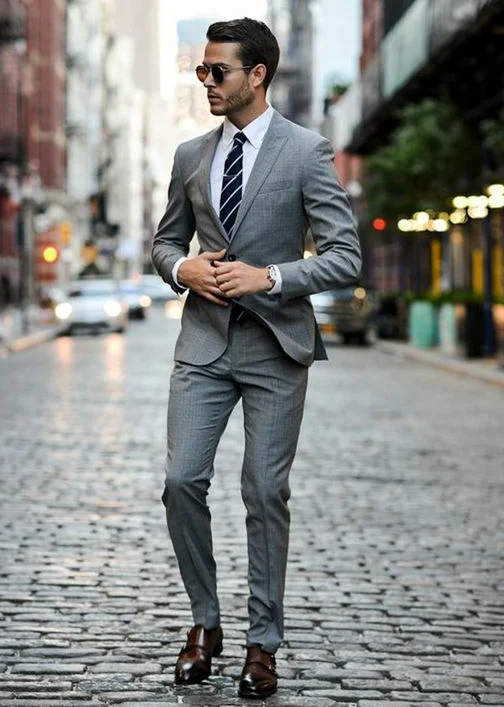
See your actual candidate with jacket and trousers together, then consider the individual pieces. Compare the jacket front with relaxed hands as well, because the photographed hands sit in front of it. Ask which pieces are really offered together rather than reading similar colour as a guarantee of identical construction. If your preference remains a dress, the suit is a separate alternative, not a supposed rear view or another version of one of the dresses. A style aim can accommodate different garment types without merging their identities.
5. Add one accessory accent at a time
The navy front is accompanied by a small pale side bag, a short pale necklace and pointed shoes that appear pale turquoise. Pale bands circle the ankles. The pale main view instead shows pale closed pointed shoes. These combinations offer possibilities, not compulsory sets. Start with your intended shoes on the actual candidate. Add a bag or jewellery afterwards and look again at the upper outline. That makes it easier to judge which accent belongs with your own quiet focal point.
The jewellery comparison for a statement dress extends the question of how much additional detail you want. Consider each accessory beside the real garment. Similar photographic colour does not establish identical material or a matching shade in the room. Also ask whether a visible side item is included in the offer. A bag beside the photographed person is not a promised part of a dress purchase. Keep the visible styling combination and the actual supplied pieces as separate questions.
6. See the complete outfit in ordinary use
The long evening dress guide adds questions about the lower length. Compare your actual outfit with the intended shoes while standing normally, sitting and taking a few ordinary steps. A high leg opening in a prepared photograph does not show how it will appear during your movements. Add both sides and the matching rear of the same offered version. Decide on alterations only after that complete view and an assessment of the real item.
Record model, colour, included pieces and open questions together. Treatment follows the information on the finished garment; GINETEX explains the care symbols. Similar quiet surfaces do not establish a shared cleaning method. Your minimal party outfit can therefore preserve a clear colour, an upper line or a single accessory accent while checking occasion, material and practical use against the actual offer.
Start with one quiet surface or clear line. Four different references help you choose an accent while checking the actual occasion independently.
Frequently asked questions
Are all four minimal party outfit references undecorated?
The four minimal party outfit references have different amounts of visible detail. The densely reflective long front deliberately provides a counterexample to quieter surfaces.
Do the photographs confirm a dress code for my minimal party outfit?
The photographs confirm no dress code for your minimal party outfit. Clarify the actual invitation before applying a reference to a real offer.
Does a quiet party outfit surface prove a particular fabric?
A quiet party outfit surface proves neither satin nor a particular fibre. Ask for the actual composition and construction of the offered garment.
Must I copy every photographed accessory for a minimal party outfit?
For a minimal party outfit, you can compare shoes, bag and jewellery individually on the actual candidate. The photographed combination is neither a compulsory set nor a confirmed list of included pieces.