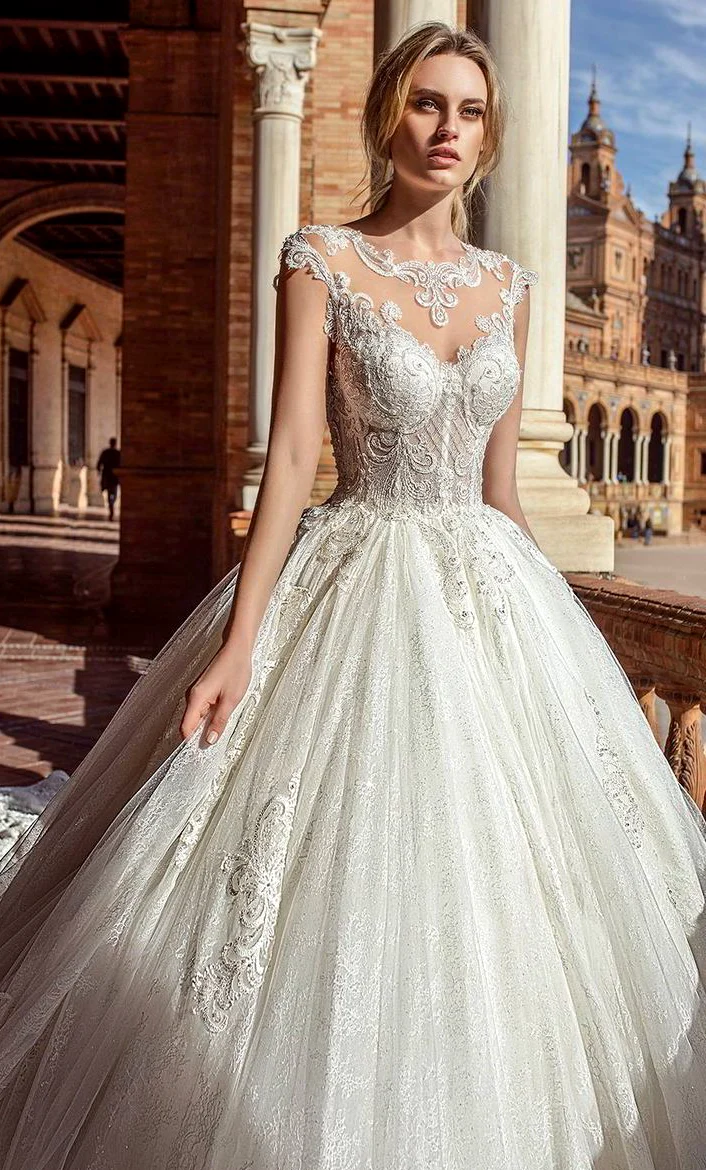
The pale classical form has a higher decorated fine chest area above a deeper, more densely shaped inner contour. Smaller curling and floral forms accompany the upper border and short shoulder areas. The closer waist leads into a broad skirt with individual longer ornaments between quieter pale sections. One arm stays lower at the side; the other is partly hidden. The face and loosely swept-back hair are included. The complete lower skirt edge and shoes are missing. Pale columns and a masonry background form a setting, not a confirmed origin for the dress.
Compare the higher fine chest area with the more densely patterned lower centre first. The top visible decorative border does not automatically explain every layer beneath. Ask about the ground’s continuation and actual inner construction on your favourite if coverage interests you.
Add a normal complete view with your shoes and the same model’s matching rear. The broader skirt is a shape comparison beside the Dirndl-style references. It confirms neither shared components nor a historical or regional attribution.