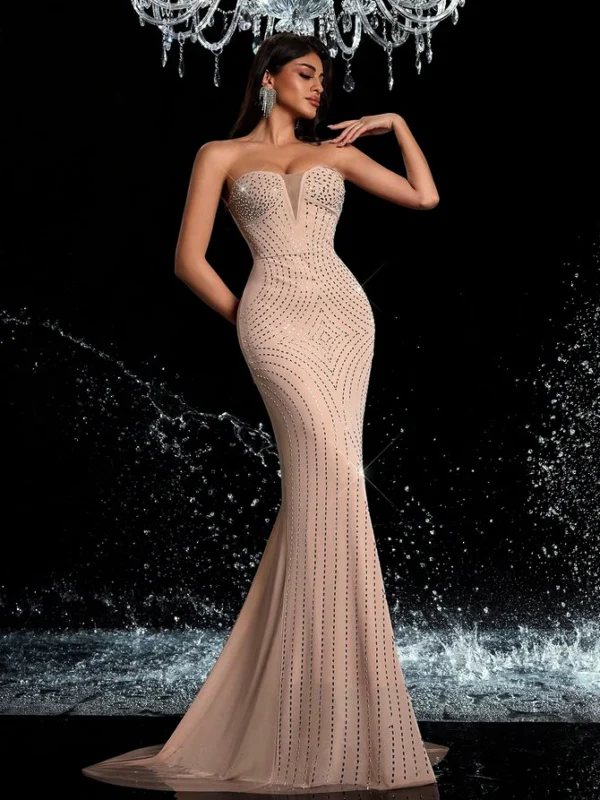
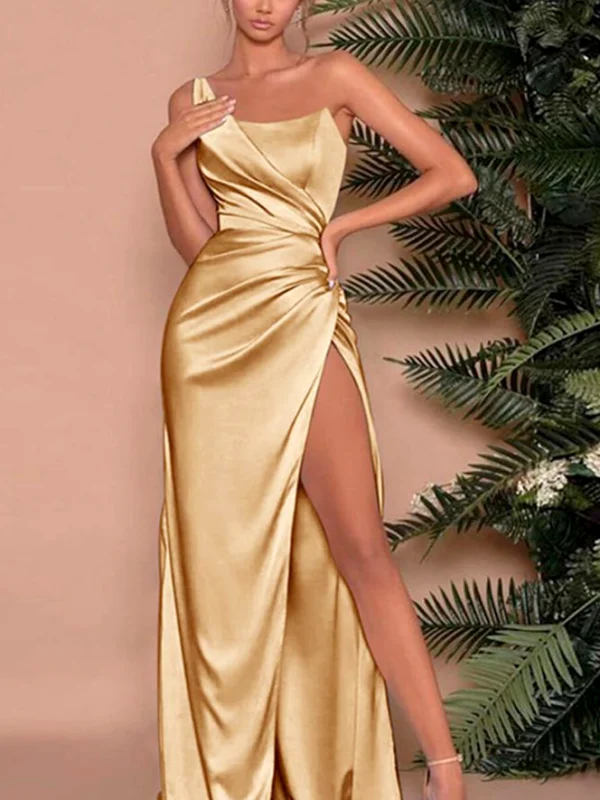
Evening dress trends 2025 is the archived search context for this comparison, rather than a verified collection label on the five photographs. Their visible details offer more concrete choices: a quiet bronze drape, green low shoulder folds, a pink pleated skirt, a gold-looking textured broad form and a closer coral outline. None measures how popular a style was. Use the images to name what you want to compare on a real candidate, then inspect its actual specification and complete outfit.
1. Distinguish broad reflected light from finer points
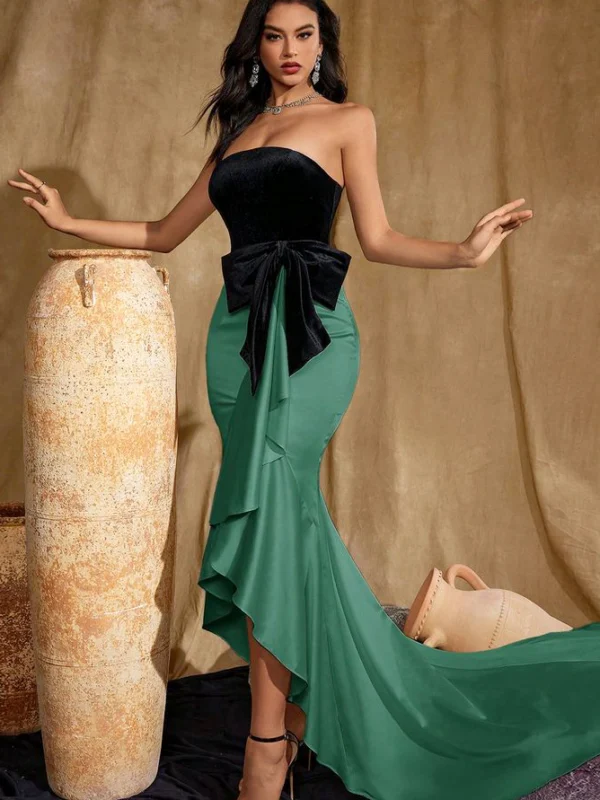
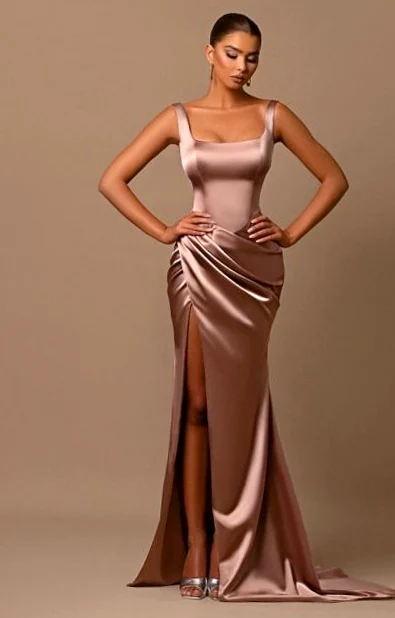
The main bronze-toned reference has larger quiet areas that reflect light across the upper body and lower folds. The green front also has broad reflections, with a different upper edge and more width below the waist. By contrast, the gold-looking and coral photographs carry a much finer reflective texture across their visible surfaces. Those differences can be described without assigning a textile or embellishment material.
Ask whether your priority is a larger unbroken area, many smaller points or the relation between them. The satin evening dress comparison adds questions about the actual surface being offered. It does not identify the bronze or green images as satin. View an actual candidate under the available light before treating a strong photographic highlight as a fixed feature of every angle.
2. Trace where the folds point
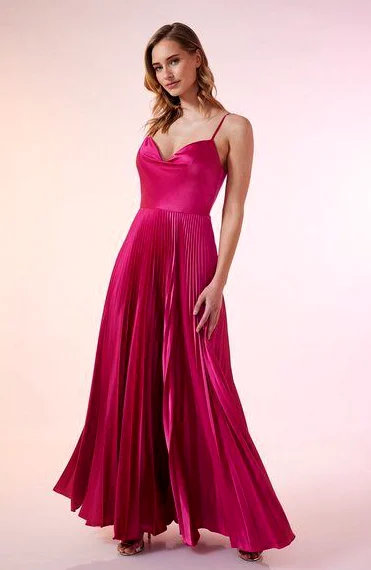
The bronze front has larger folds drawn diagonally across the hip below a closer upper area. A high leg opening interrupts that lower line, while longer fabric continues onto the ground at one side. The fuchsia reference has a different distribution: a quieter upper area above fine vertical folds opening from the waist into a longer skirt. Compare the direction of those lines before deciding on a colour.
A fold in a photograph does not explain how it was permanently constructed or which alterations are possible. Ask to see the actual candidate with the fabric released, then after a few ordinary steps. Note where the larger folds settle. If the pleated appearance is your preference, request an explanation of its actual finish and care, rather than assuming every fine vertical line behaves in the same way.
3. Choose a shoulder edge independently of the skirt
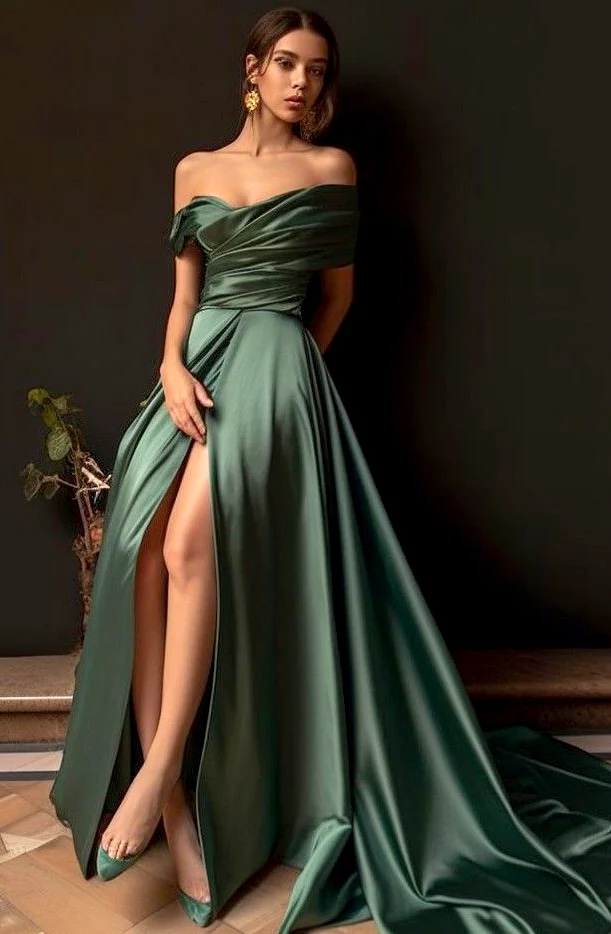
The bronze reference has broader shoulder bands and a rounded square-like front edge. The green front leaves shoulder tops bare above a wider folded low band. The gold-looking front also has a low arrangement, but its folds meet differently around a shaped central edge. The coral image adds shorter low upper-arm areas. The pink reference instead has thin shoulder lines above an inward-draped front.
Decide which boundary you want first. Then ask how it joins your preferred lower outline on a real offered model. Do not assume the wider green skirt is required for every low shoulder edge or that a narrower shoulder line implies a particular support. Inspect the candidate from front, back and both sides with your intended underwear. Those matching views are more useful than combining independent upper and lower details into an invented product.
4. Read the leg opening in a normal stance
Several images show a leg through a high opening, with different foot and hand positions. In the main image, both hands are at the hips. The green reference has one hand lower near the front thigh while the other is hidden behind. The coral front places the arms down beside a closer lower form. A single pose supplies no exact measurement of the opening during every movement.
The long evening dress guide connects the lower edge to the complete outfit. Try your intended shoes on the actual candidate. Stand with both feet comfortably placed, then sit and walk normally. Request a complete rear view too. If you want a different opening or hem, point to the specific area and have its feasibility assessed on that garment rather than relying on a general promise.
5. Add jewellery beside the actual upper frame
The green front has a larger gold-looking ear accent beside a relatively quiet folded upper area. The gold-looking textured dress also has longer bright earrings, while the main bronze image leaves more of the upper frame visually unaccompanied. Those are separate accessory decisions, not a requirement to match every reflective area. Pale or yellow reflections alone establish no particular metal or real stones.
The jewellery with a statement dress guide helps compare the real pieces individually. Begin with your intended hairstyle and one accessory. Look at the upper edge from normal viewing distance before adding another item. Then return to the whole outfit. A close jewellery view should not replace the unresolved question of the lower finish, especially where only part of the footwear is visible.
6. Replace the trend label with verified product information
A precise material description belongs to a named garment. The Metropolitan Museum lists silk and sequins for its Traina-Norell evening dress. Those details concern that museum object, not any image here. They show the difference between an explicit material entry and a reflection that only suggests a decorative effect. Ask similarly clear questions about the actual candidate’s fabric and ornament.
Treatment follows the finished garment’s label; GINETEX explains care symbols. Keep a short record of your preferred shoulder edge, fold direction and lower opening, beside the model and confirmed information. An evening dress trends 2025 search can then produce a concrete comparison without pretending that archive pictures establish a year’s sales, collection identity or your experience wearing a dress.
Turn a trend search into specific questions about the upper edge, fold direction and complete outfit. The images establish no collection date or popularity ranking.
Frequently asked questions
Do these evening dress trends 2025 photographs confirm collection dates?
The evening dress trends 2025 photographs do not confirm collection dates. The year is the archived search context, while the comparison concerns visible details.
Do evening dress trends 2025 images show which style was most popular?
These evening dress trends 2025 images show no popularity ranking or sales evidence. Use them to compare specific shapes and surfaces.
Can a reflective evening dress photograph identify its textile?
A reflective evening dress photograph does not identify its textile or embellishment material. Check the actual model’s product information.
Can the hem of an evening dress simply be changed while keeping its surface?
An evening-dress hem change needs assessment on the actual garment. Have the effect on folds, pleats and any surface decoration explained before including it in your plan.