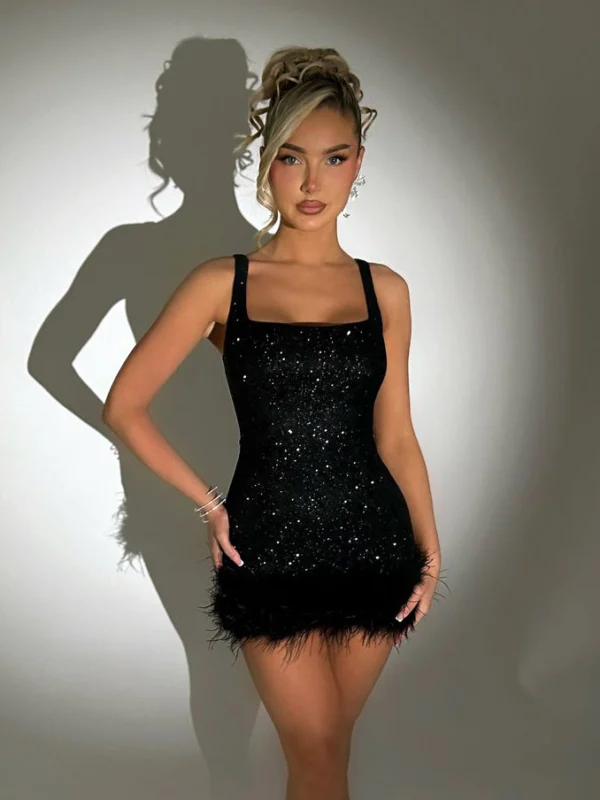
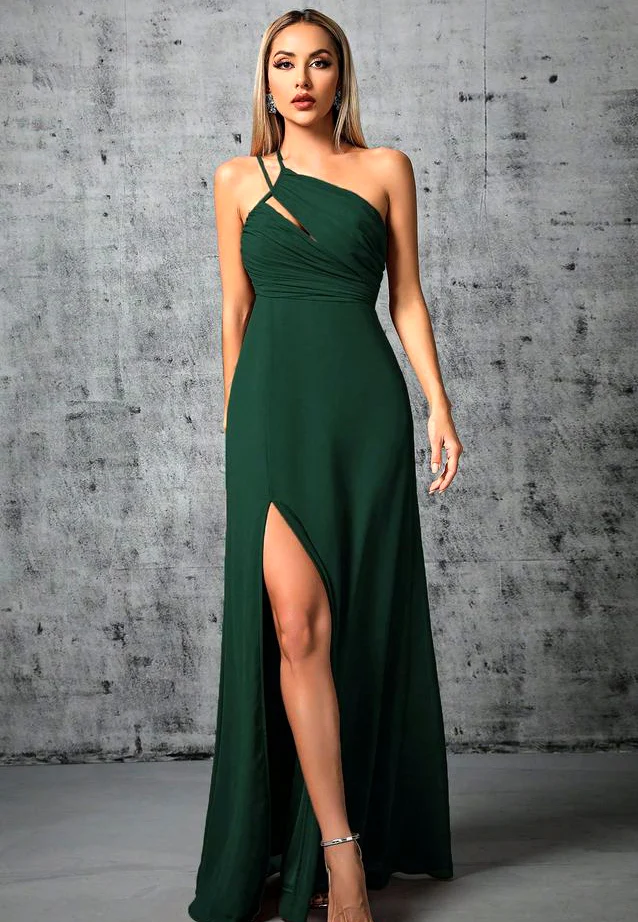
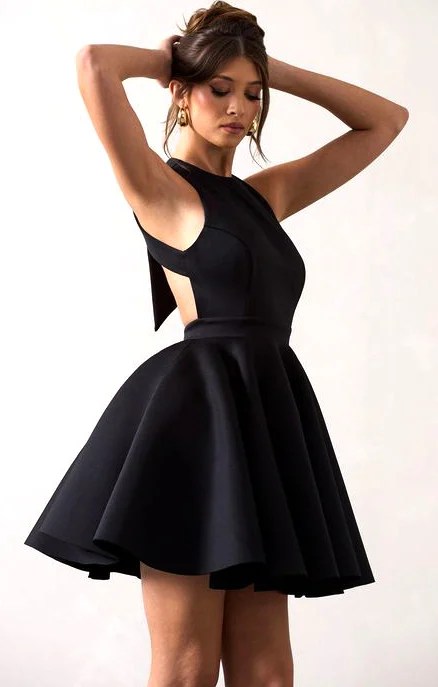
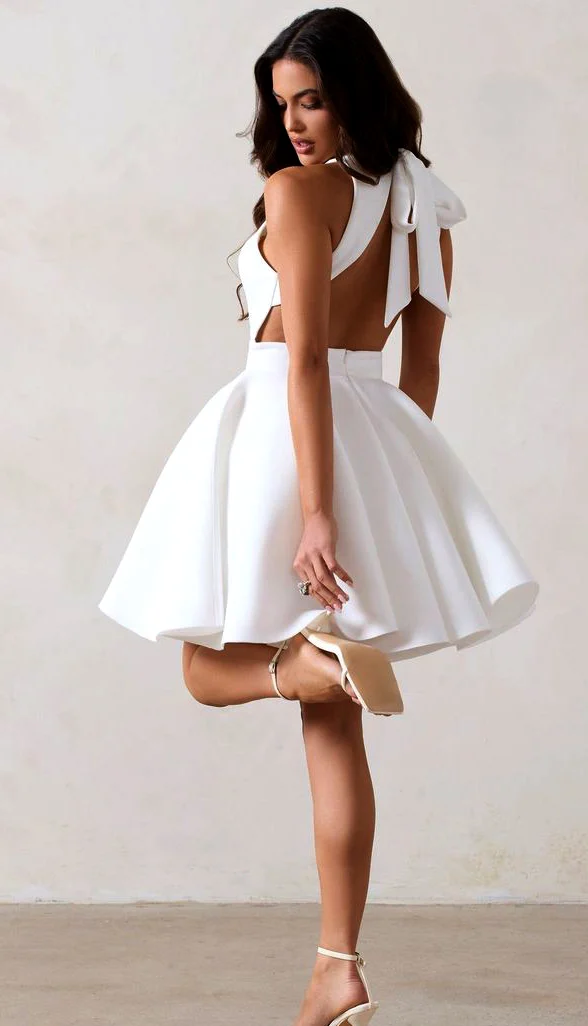
Choose a cut-out party dress more precisely by locating the opening before adding length and jewellery. The long green reference shows a small diagonal gap above and a high leg slit below. A short black form instead places a side opening between bodice and waist band. A white rear view adds exposed back area and a bow. Other pictures deliberately supply smaller central gaps or a counter-shape without an established waist cut-out. Those differences help formulate a specific preference rather than giving every exposed surface the same name.
1. Establish the opening’s position on the dress
Mark just the area attracting you on the preferred view. The green dress places its smaller gap between narrow upper bands and a diagonal front surface. Its slit starts much lower in the skirt. The short black form’s exposed side zone lies between arm starting area and narrow waist. Do you want a small upper interruption, a side gap or a larger open back? The decision need not satisfy a general idea about how much skin a party outfit should show. Name the position you actually prefer first.
A product description can explicitly separate different openings. The named self-portrait Khaki Cut Out Rib Knit Mini Dress separately specifies a shoulder cut-out and an adjustable button opening at the skirt slit. This information belongs only to that model and identifies no archive picture. Use it for clearer questions: which gap is fixed, which function is genuinely offered and which view demonstrates it? Transfer neither adjustment nor material information to your candidate merely because it looks similar.
2. Choose the lower shape independently from the cut-out
The short black reference connects its side gap to a distinctly flared skirt. The white rear also shows a shorter broader lower shape while the green front stays long. One particular opening does not oblige you to choose the same length. Record two preferences: exposed area position and intended lower direction. Establish whether that precise relationship exists on the actual offer. A related upper area cannot automatically confirm your preferred skirt version; decide which property matters most rather than silently combining independent garments.
The short and long party dress comparison supplements the hem question. Assess a shorter shape standing ordinarily and seated, adding intended shoes for a long one. The white rear’s lifted foot and the black front’s overhead arms are poses rather than ordinary starting positions. Their visible breadth cannot explain your movement range. Compare the actual lower line before deriving a wearing property from a particularly arranged photograph. Return to the same area in an ordinary stance on your real candidate.
3. Request corresponding views of the same candidate
The short white rear shows an upper bow with longer ends beside a larger exposed back. A small side gap is visible too. The long red rear instead uses a deep V line and a narrow long strip beginning around the neck. It is not confirmed as the short red front’s reverse. Identical or similar colour names cannot connect photographs into one model. The supplier needs to complete a missing front on its own product rather than letting another picture supply it.
Use the backless party dress guide if the rear line determines your search. Ask for a straight back with relaxed arms and a matching side view. Hair can obscure upper connections and long bow ends can overlap a middle section. Request a clear look at the area prompting your particular question on a real offer. Another appealing back picture cannot replace that product information even when it conveys a similar impression. Return to the preferred detail after seeing the complete actual garment.
4. Assess preferred coverage within your own combination
Include planned underwear and any existing inner layers in the fitting. Examine the opening without an object before it initially. Bring your hands into the position you intend afterwards. A bag at the side, a glass before the body and both arms relaxed create different poses. Recheck that same area standing and seated. An overhead arm position in the archive does not document where your own dress’s gap stays during ordinary movements. Make that observation yourself on the version genuinely offered.
Derive no confirmed side waist cut-out from the smaller yellow central openings. Several little gaps sit between round or loop-like details beside vertical bodice lines there. The wider inner arrangement and actual function need explaining on the product. A translucent surface is not automatically an open gap either. Ask about the complete version and assess that real candidate if coverage matters to your choice. An intended outcome initially remains your question rather than an existing property confirmed by a photograph; record the information still awaited separately.
5. Add hair and accessories beside the selected border
The green dress’s upper diagonal opening sits near narrow shoulder lines. A necklace or another hair arrangement may add a further line there. Try genuinely intended earrings first and another addition afterwards. Keep the garment unchanged between two versions. You can distinguish whether you enjoy the opening itself or mainly the new jewellery surface. There is no need to adopt a universal accessory-count rule to emphasise a particular visible area for yourself. Recheck the result within your own complete combination.
The short red front provides a deliberate counter-reference: a longer front section descends far below its shaped strapless upper edge without showing a confirmed exposed waist zone. You need not carry the same cut-out preference if that extra vertical line mainly appeals. The cut-out evening dress comparison develops different opening positions. Describe fabric surface, border and exposed gap separately before assuming a technical connection or interchangeable pieces. One picture’s line cannot establish the same function on another dress.
6. Confirm the actual version before deciding
Record the full model reference, offered size and intended colour alongside your two visual priorities. Ask about existing fastenings, inner layers and discussed alterations. A band hanging from the neck shows no opened connection; a bow confirms no detachable upper piece. Have functions relevant to your outfit explained on that particular model. Add front, matching rear and the complete view with your shoes before one close-up determines the final selection. Keep unexplained components as questions rather than completing them through another product’s details.
Read material and treatment information on the actual product. GINETEX explains care symbols; dark colour, reflections or a quieter surface prescribe no shared process. Your cut-out party dress ultimately contains a deliberately selected opening, intended lower shape and genuinely confirmed combination. These six references help separate that decision into specific parts. They promise neither a particular attention-getting effect nor universal fit, support or comfort. Assess your actual trial beside verified product explanations for the final choice.
Choose the opening’s position before the skirt shape. Add matching views, intended inner layers and ordinary movements on the dress actually offered.
Frequently asked questions
Is a high leg slit the same as a bodice cut-out?
An upper gap and a leg slit are different visible decisions on a cut-out party dress. The green reference shows both: a small diagonal upper opening and a longer skirt opening.
Do the red front and rear pictures show the same party dress?
The red references in this cut-out party dress comparison are not confirmed as one model. The short strapless front with a long front section and the long open back remain independent pictures.
Can I transfer a cut-out position from a similar dress?
Assess the cut-out party dress’s opening on the actual model. Stance, offered size and version belong to your own comparison; a similar photograph supplies no fixed position on your body.
Does the cut-out label prove an adjustable opening?
An adjustable opening on a cut-out party dress is an offered property only when described and demonstrated for that particular model. A visible gap cannot establish that function.