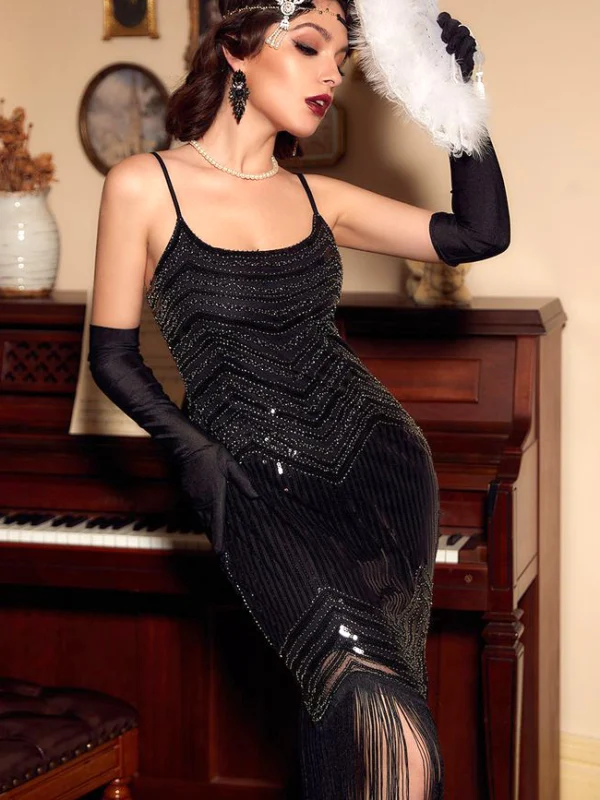
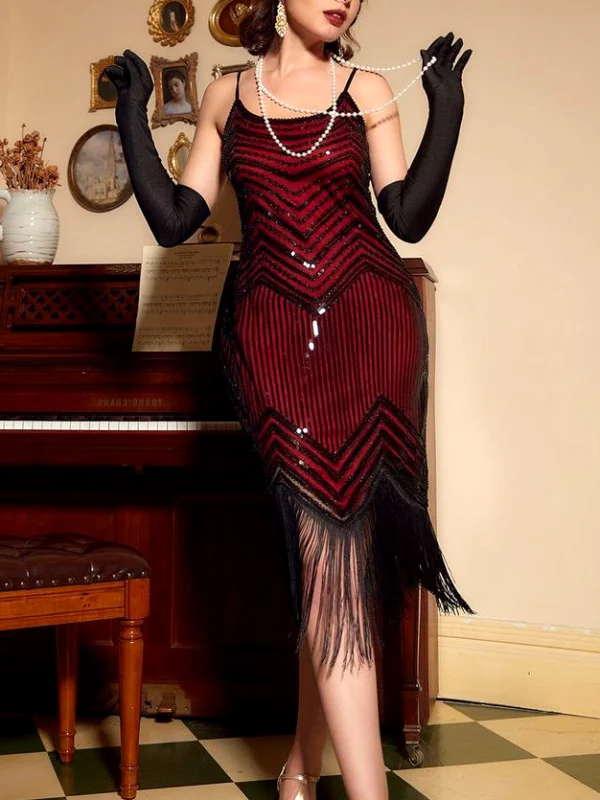
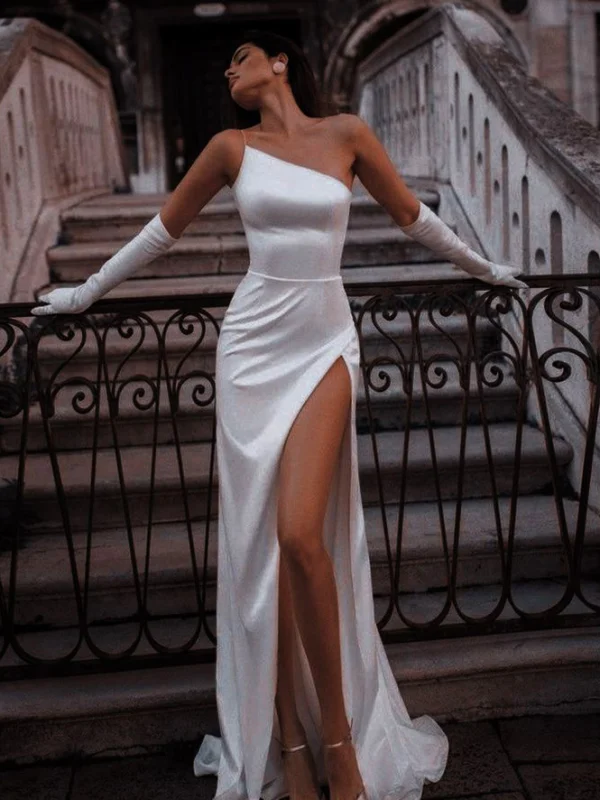
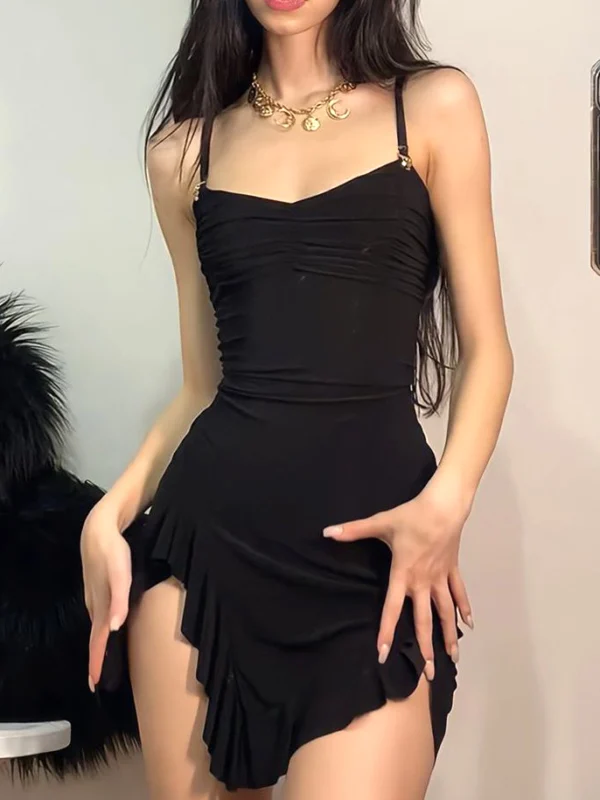
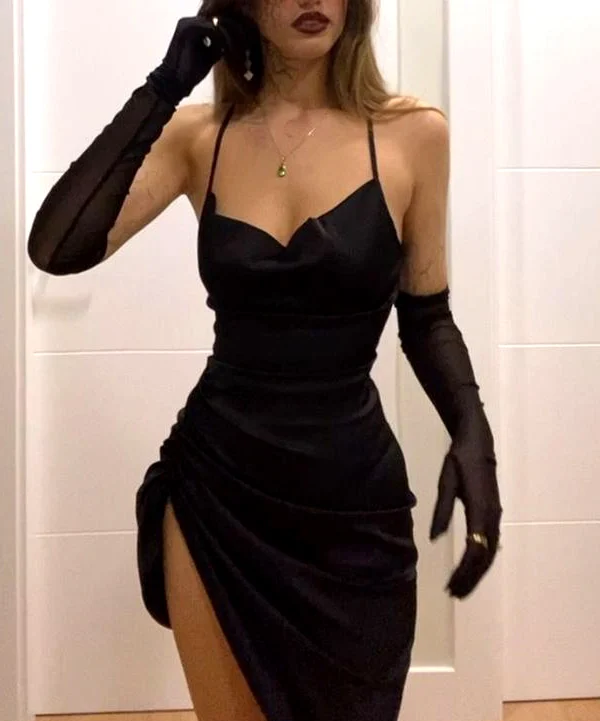
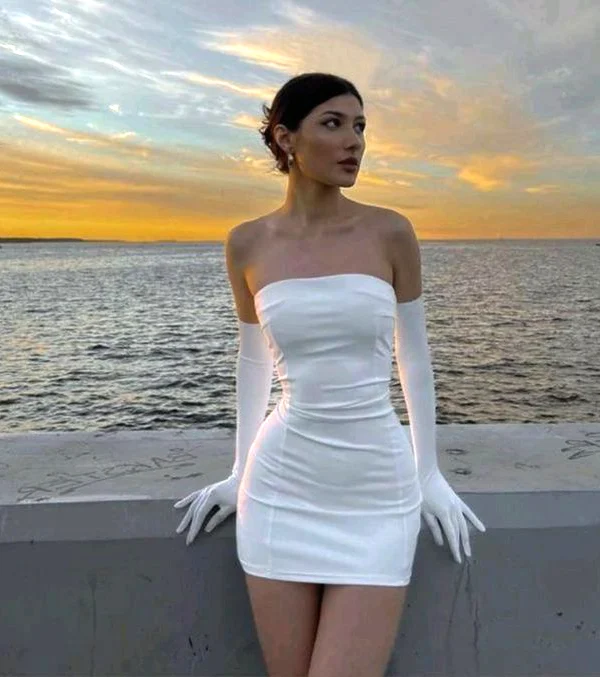
These six references show different ways to distribute detail around an outfit. Two have hanging fringe, two are quiet white forms, and two use closer black shapes with folds. They are independent photographs rather than a sequence documenting one garment. Start with the feature you want to compare and keep the rest of each arrangement separate.
Guide to comparing these images
Look from the face towards the lower border
In the dark fringed reference, the fan and feather-like headpiece occupy a broad area beside and above the face. The burgundy comparison uses a narrower band, bright rows and a long pale round necklace held out by one raised hand. These different arrangements change what remains visible around the upper edge; they do not establish a shared model or a historical date.
The white examples simplify the surface. One has a diagonal one-shoulder edge with folds leading towards a leg opening; the mini has a quieter, nearly straight strapless edge. In both, the pale gloves belong to the arm covering rather than demonstrating long dress sleeves. Compare the uncovered shoulder areas before deciding whether gloves are part of your own plan.
Keep the crop in the comparison
The closer black mini includes its short overlapping border but omits the footwear. The other black folded reference includes a high leg opening yet leaves the complete lower edge outside the frame. The quiet white mini also lacks a shoe view. These omissions matter when the intended decision concerns length or the complete outfit, rather than the upper outline alone.
For a useful next view, ask for the exact offered garment in a complete front view and with a clearer view of the connection you need to understand. Keep the visible fan, gloves and jewellery optional until their separate inclusion is confirmed. A short description of the desired edge and accessory position is easier to act on than treating every detail in a reference as compulsory.