A vintage party outfit becomes easier to plan when you choose what you actually want to borrow from a reference. It might be long fringe below a pointed border, a narrow headband, a quiet pale neckline or long gloves. Those are different decisions. The six photographs here show separate outfits, crops and poses; they are not a documented set from one period. Use them to describe a style idea, then check the actual garments and accessories you intend to wear.
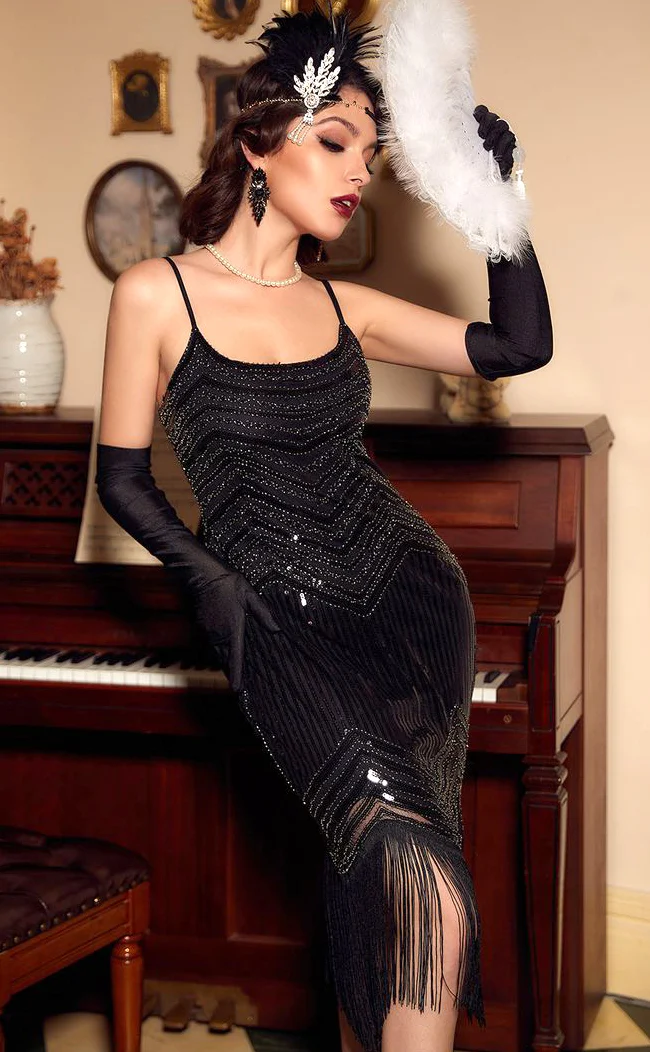
The dark fringed photograph makes a useful starting point because several distinct elements are visible together: narrow straps, reflective rows, long gloves, a feather-like headpiece and a pale fan beside the face. You can select one of these elements without assuming that the whole arrangement is necessary. The quiet white mini and the long one-shoulder comparison show how different an outfit becomes when the surface and upper edge are simpler.
Separate a style reference from documented age
A fringe border or a headband does not establish a garment’s production year. For a concrete contrast, The Metropolitan Museum of Art records a particular French evening dress as dating to 1925, with its own object information. That documentation belongs to that museum object. It does not date the dresses pictured in this archive, establish their makers or turn a similar-looking detail into proof of historical origin.
Decide whether you want a personal vintage-inspired look or a historically documented reconstruction. The first allows you to choose visible elements for your own combination. The second needs evidence about the particular pieces and the intended period. If a seller makes an age or provenance claim, ask for the information supporting that claim before treating it as part of the outfit’s identity. A photograph alone cannot answer it.
Choose what the lower border contributes
In the burgundy comparison, pointed reflective rows lead into hanging strands, while the black example has a different arrangement of bright marks and a pointed lower border. Compare where the hanging strands begin and how much of the quieter area above them remains visible. The photographs show their positions in a still pose; they do not establish how the strands move, catch on other pieces or behave during an evening.
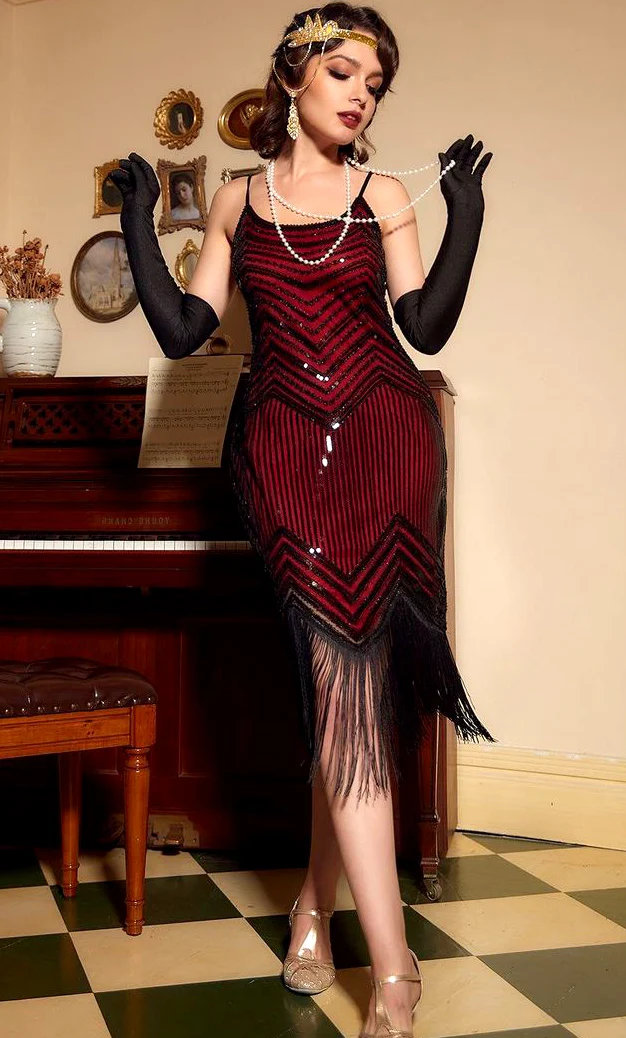
The fringe evening dress guide helps keep a hanging border separate from a folded or feather-like edge. If fringe is the detail you want, request a clear view of its connection to the actual dress. That is more useful than asking for a generally more vintage appearance, which could produce a completely different neckline or accessory arrangement.
Compare the upper outline before adding accessories
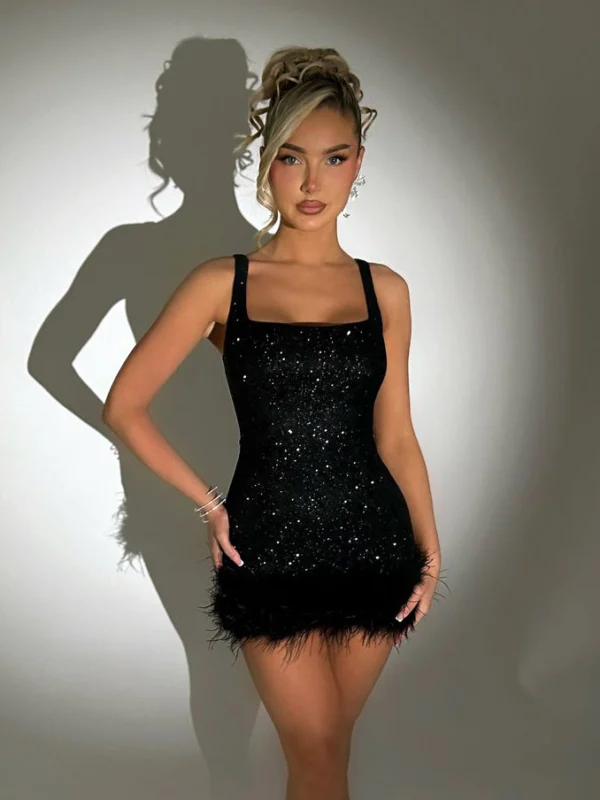
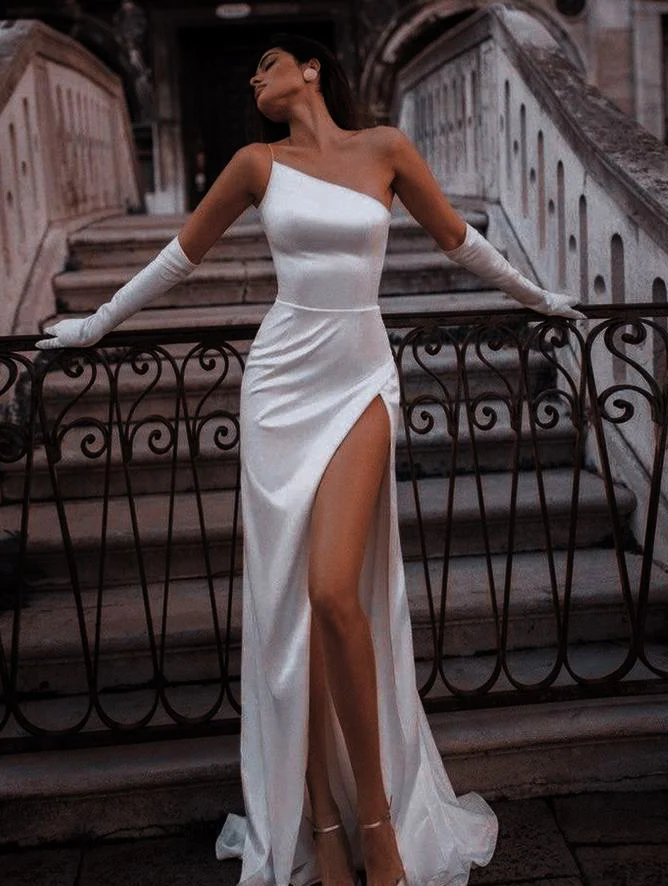
The six upper outlines are not interchangeable. Narrow straps frame the two fringed examples; the long white dress has a diagonal one-shoulder edge, and the quiet white mini leaves both shoulders bare. The black mini has small ring-like strap connections and a softly shaped front. In the other black comparison, folds lie below thin straps and the visible front opening begins much lower than the neckline.
Choose which upper edge you want to keep clear in your own outfit. A necklace, headpiece and fan can all pull attention towards the face or neckline, but you need not add them together. The shimmering party dress comparison is useful when the distribution of bright marks matters more to your decision than an unverified period label. Ask for a separate close view when a small connection is important.
Treat gloves and jewellery as separate pieces
The long pale areas on the arms in the white comparisons are gloves; the photographs do not show long sleeves growing from those dresses. Likewise, the dark gloves in the fringed and folded references should be considered separately from the dress straps. If you want a similar division between uncovered shoulder and covered lower arm, check the actual glove length alongside the garment rather than ordering a long-sleeved dress by mistake.
Colour also needs a precise description. A gold-toned headband or a pale round necklace in a photograph does not establish a particular metal or genuine pearls. Start by comparing visible size, spacing and position. Then ask about the actual accessory’s composition and fastening. Keep any claim about the material attached to the offered item, not to the general vintage style you are assembling.
Add the pieces you will actually use
Build the outfit around your own requirements for the occasion. Put the actual dress beside the shoes, bag and optional outer layer, then see which upper and lower details remain visible. The party outfit with a blazer guide offers another way to think about an added layer. None of these photographs establishes a dress code or shows every outfit with an outer garment.
A full view and a closer upper view answer different questions. The quiet white mini shows its hem but not the footwear; the one-shoulder long dress includes only part of the shoes. Do not use one reference to complete the missing parts of another. Request the missing view of the exact garment you are considering, especially when the lower outline or a connection behind the neck affects your choice.
Confirm care on the actual item
Read the information attached to the garment and its separate accessories. The GINETEX care symbols explain the meaning of textile care markings; they do not identify the unseen labels of these dresses. A visual resemblance between two fringed outfits is not a reason to apply the same cleaning method to both.
Finish with a short, concrete description of your intended combination: the chosen upper edge, the lower border, the optional gloves and one accessory near the face. Ask the seller to confirm what is included and what is separate. This gives you a usable vintage party outfit plan without claiming a date, fibre, maker or performance that the reference photographs cannot establish.
Choose particular details for a vintage party outfit rather than an unverified decade. Compare fringe, upper outlines, gloves and accessories before checking the actual pieces.
Frequently asked questions
Do these photographs prove that the clothes are historical vintage?
The vintage party outfit photographs do not prove a production year or historical provenance. Use the visible details as style references and verify any age claim on the actual offered piece.
Does my vintage party outfit need to recreate a whole decade?
A personal vintage party outfit can use selected visible details. A documented historical reconstruction is a different task, and these independent archive photographs do not establish one.
Are the long white arm coverings automatically dress sleeves?
The white vintage party outfit comparisons show long gloves. The photographs do not establish long dress sleeves or permanently attached extra pieces.
Does a gold-toned reflection identify the metal in vintage-style jewellery?
Gold-toned jewellery in a vintage party outfit photograph does not establish a particular metal. Ask about the composition of your actual accessory and compare its visible colour and shape separately.