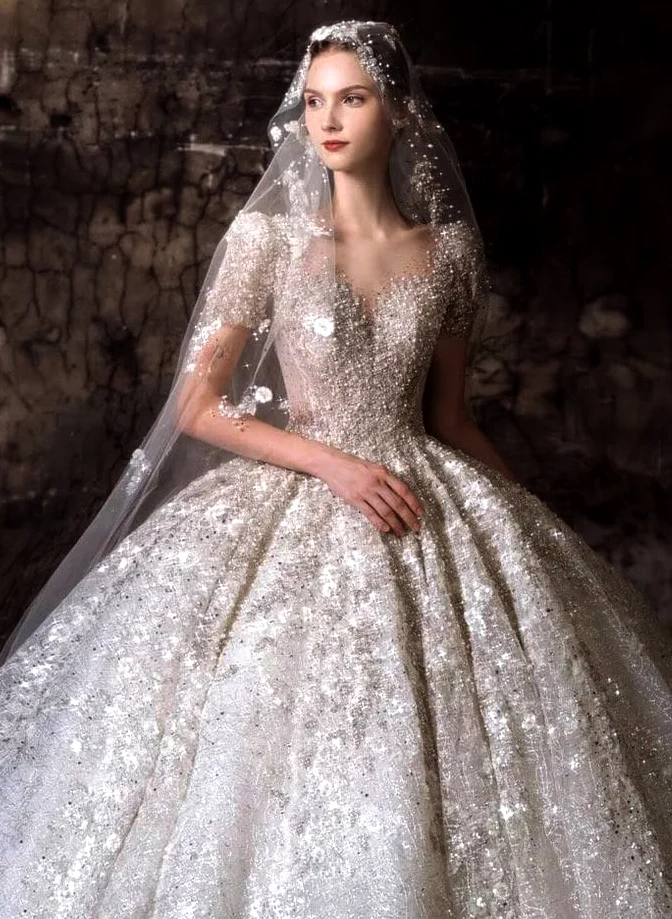
A beautiful wedding dress becomes more specific when you can explain what you enjoy about it. Perhaps larger flowers at the upper edge, a broad quieter skirt or many small reflections beside a veil attract you. These six references show those ideas in different combinations. They establish no common maker, age or actual experienced wedding day. Use them as starting points for your own selection of visible properties. Add confirmed information and observations on the real dress afterwards without assigning the pictures an effect that must apply to everyone.
1. Begin your own assessment at one area
Choose an area you would want to find again on another dress first. The closer floral front places larger flowers and leaves at the upper border. The complete quieter front instead distributes large lightly patterned surfaces across a broad skirt. The original featured picture concentrates reflections across bodice and lower area. Which location interests you first? Record it with its position instead of saving only a generally beautiful overall picture. A second preference can follow. Keep why each matters clear through a short specific description.
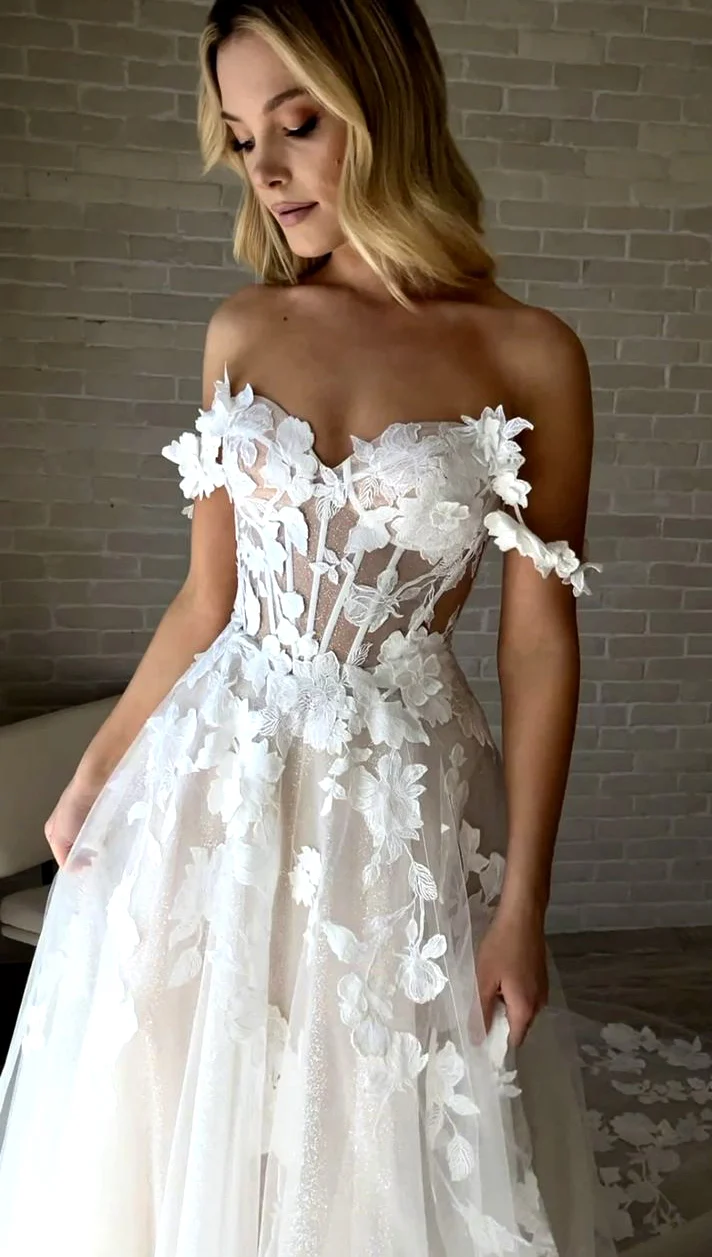
Separate those preferences when they appear on different pictures. A flowered upper border and quieter skirt are initially search criteria rather than an established common model. The wedding dress buying guide supplements questions for a specific offer. Seek the complete real version possessing both properties there. If a suggestion shows only one, decide deliberately which matters more instead of supplying the missing area from another photograph. Record which difference you accept beside the line you want to retain.
2. Separate drawing from outside form
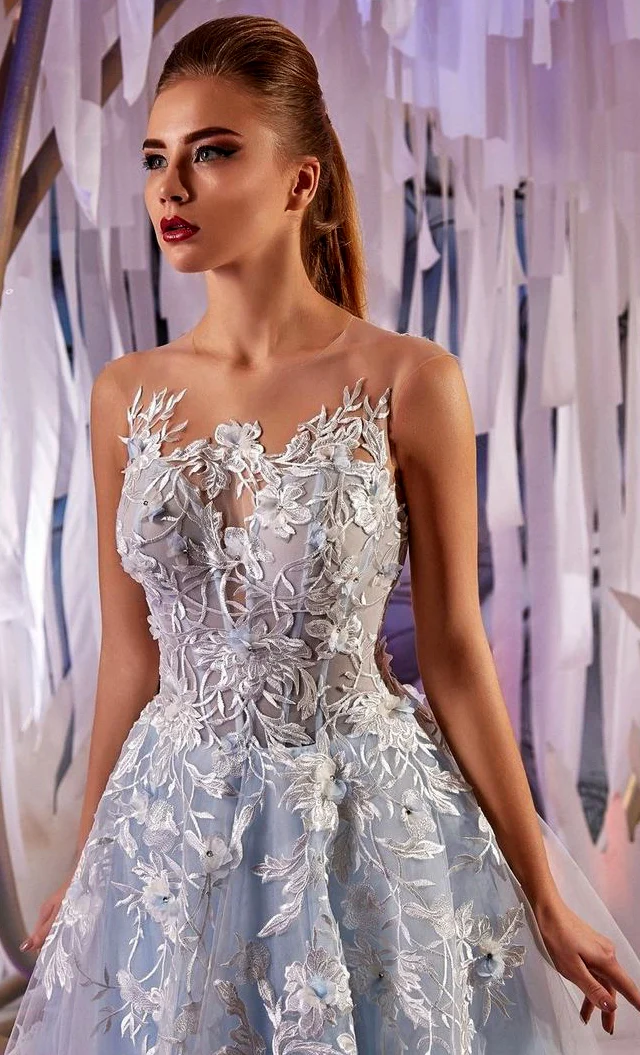
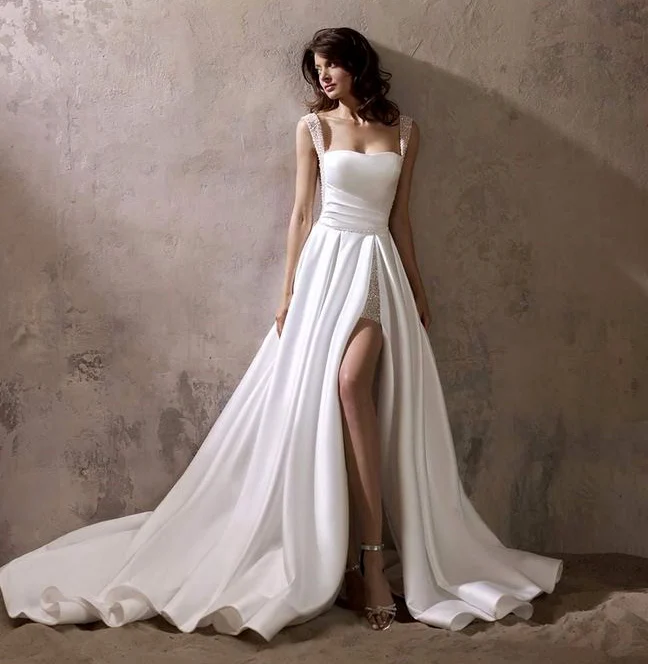
Larger flowers, finer branches and small reflective points distribute differently. The bluish-grey-looking closer front continues floral lines onto the lower area. The quieter pale front mainly uses folds and broader open surfaces. Those visible differences prove no common fibre or quality ranking. Compare one surface first, then its outside breadth. An emphatic bodice does not oblige you to choose the photographed skirt line below it. Ask the same two questions in that order on another real candidate rather than allowing one feature to decide both.
One manufacturer overview also presents different forms. The official Justin Alexander Signature page places the closer Lucida shape alongside Rosalind with a broad ball-gown skirt, for example. This identifies no reference and supplies no objective beauty standard. It presents differing offered arrangements as a named example. Use such a comparison to explain your specific preference. Your candidate’s own product description must explain its actual components afterwards. Another model name cannot supply information missing from that particular offer.
3. Choose the upper edge through its visible levels
A larger floral border can sit lower than a finer higher boundary. The bluish-grey front shows a higher fine rounded area above its denser drawing. Shorter floral sections sit beside the upper arms in the larger-flower picture. Mark highest and lower lines separately. Which do you want to retain? A general neckline name cannot explain that relationship completely. Ask about the real arrangement on your candidate before assuming a particular construction. Describe the two boundaries without treating them as one visible line.
The V-neck wedding dress page supplements the central-line choice. Examine the edge with arms lowered, then during an ordinary arm movement. Both hands rest on a window boundary in one reference; another holds outside skirt areas. Such poses change the visible outline. They prove no support. Record which section you still want to see in an additional relaxed view of that same actual dress. The pose’s presentation and your personal trial observation remain different information.
4. Add the complete lower line
The quieter long front shows a broad skirt with a high opening and visible shoe. The closer floral form instead continues its drawing along a nearer long line and rear surface. Choose opening, pattern and width as individual questions. The full-skirt wedding dress comparison helps assess the lower outside contour. A visible leg cannot establish the opening’s position during every movement. The offered version needs trying with your intended shoes rather than adopting the photographed foot position as that trial.
Check length and opening standing, seated and after an ordinary step. Inspect a rear area in its post-movement position before someone redistributes it. The original featured picture lacks the complete lower finish. It can therefore show reflection distribution without determining the entire hem shape. Add a matching overall view instead of mentally borrowing missing length from another photograph. Describe exactly which angle you need for the decision. That preserves a detail picture’s usefulness while keeping its limits clear.
5. Treat veil and shoes as individual additions
The featured picture shows a finer veil above the head and beside the upper body. Other references expose loose hair and arm areas. Compare those distributions without treating every photograph as the same dress with substituted accessories. Try one genuinely intended piece on the real candidate first. Examine the upper line with and without it where both states can be shown. A general rule about correct jewellery quantity cannot replace your own decision. Observe which addition frames the preferred boundary differently on that same dress.
Add intended shoes for the length check. The pictured open styles differ in front arrangement and visible height; a photograph supplies no fit information for your foot. Decide on the real pair and observe the hem’s position with it yourself. An especially bright shoe detail or densely reflective dress area confirms no particular material. If that information matters to your selection, request existing product details instead of deriving them from picture brightness. A visible form and confirmed material answer different questions.
6. Connect preference, observation and product information
Finish with three notes: preferred upper line, intended lower contour and one personal observation on the real offer. Add materials, existing connections and discussed alterations only to the extent actually explained. An attractive photograph establishes neither removability nor technical alteration possibilities. Ask about real extent and the next check. An unanswered request can stay specific without prematurely treating it as an existing dress property. Record which information will complete it at the next conversation rather than replacing an open question with an assumed result.
Treatment follows the real product label. GINETEX explains care symbols; larger flowers, fine surfaces and reflective points prescribe no common care. Finally, read your original marked preference again. Is that exact area visible on the candidate, and do you still enjoy it in an ordinary stance? What else needs confirming? These questions make a beautiful wedding dress your reasoned personal choice. Origin, cloth, comfort and effects on other people are not invented from the photograph. Combine confirmed explanations with your actual trial for the final decision.
Name what you enjoy about the dress. Six independent references help connect personal preferences to confirmed product information and your own observations.
Frequently asked questions
Is there one wedding dress that is beautiful for everyone?
A beautiful wedding dress is a personal selection here. Establish the visible properties you want to retain rather than applying a universal standard to every person.
Do these references show only white wedding dresses?
The beautiful wedding dress selection also includes a bluish-grey-looking floral front. Exact product colour needs confirming on the real offer.
Does strong reflection confirm a particular decoration material?
Reflections on a wedding dress establish neither real pearls nor sequins or a particular fibre in a photograph. Ask about the offered dress’s actual material and decoration information.
Can I combine the references as views of the same model?
These wedding dress references are independent pictures without an established common model identity. Request matching views of the same version on the real candidate.


