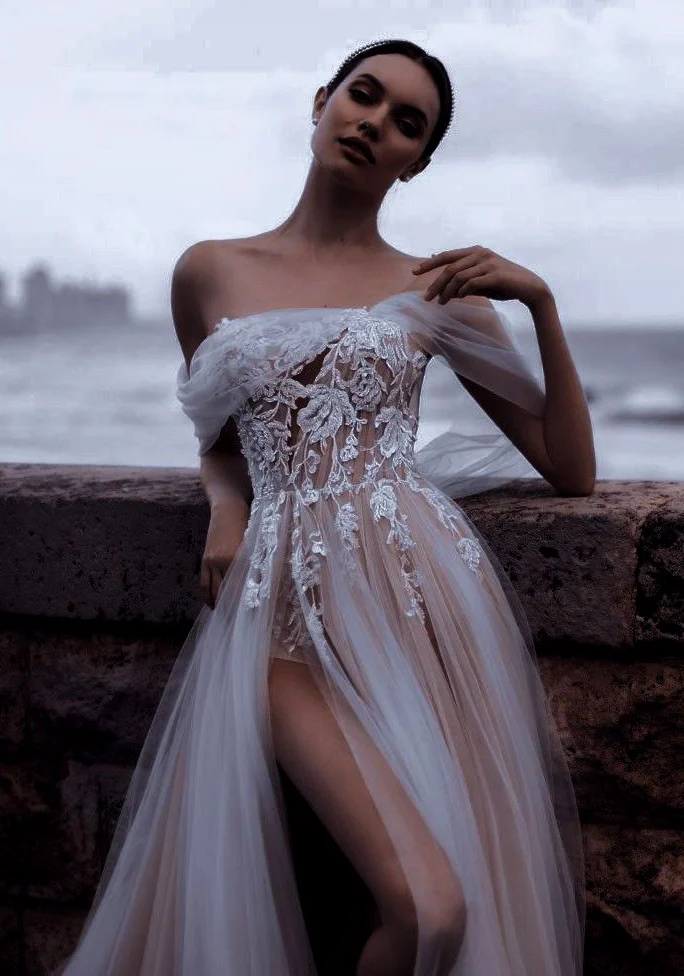
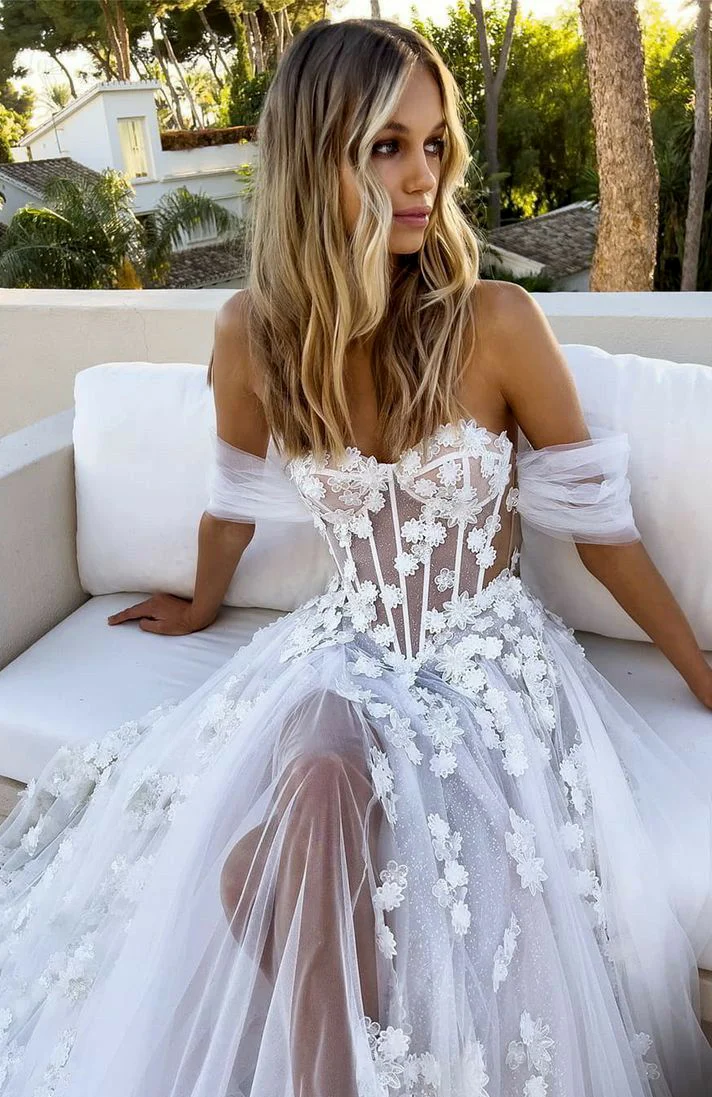
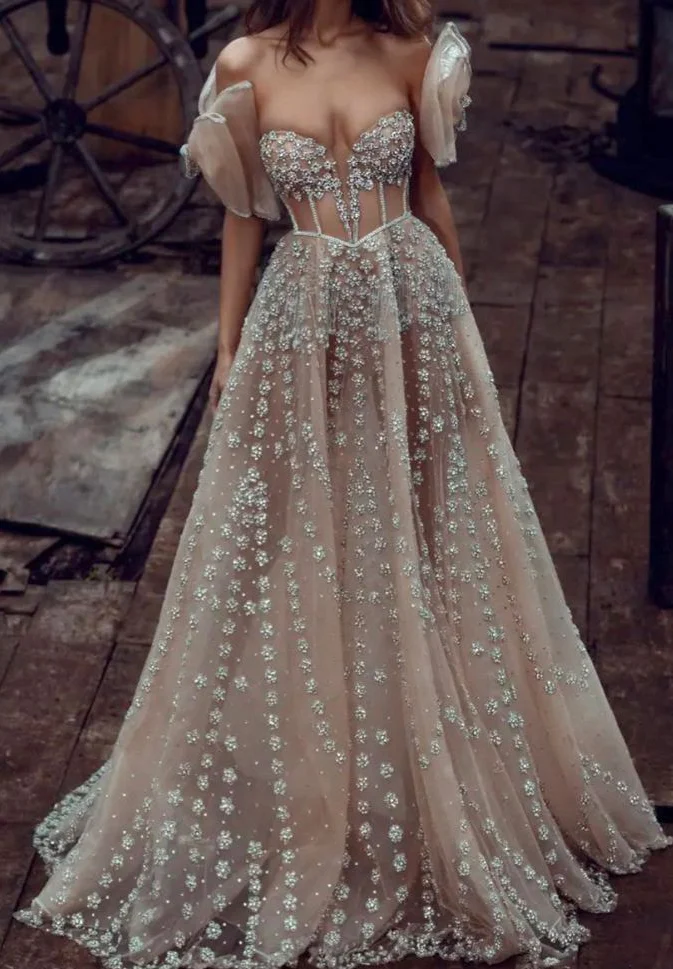
A wedding dress fitting becomes more specific when you begin with a few concrete questions rather than demanding an immediately perfect overall picture. These five references show floral centres, draped shoulder areas, a quieter strapless front and a squarer upper line with broader straps. They document no actual fitting appointment. Their different poses help name the next view you need. Observations made on the real candidate then belong in your own notes. Visible preference, offered version and unanswered product information can stay distinct instead of treating an attractive picture as a personal trial.
1. Prepare the actual appointment
Ask beforehand which samples and versions can be shown and what information the shop needs for your appointment. Clarify local rules for guests and photography too. You need not assume a fixed group size or universal appointment length. Take a short selection of your own image preferences and mark the relevant area in each. A photograph can explain an upper line without requiring every detail of that dress. This makes a specific question about the available offer easier to formulate. Record which area you consider the priority as well.
The official Maggie Sottero shopping preparation guide suggests shoes at your intended height and already chosen accessories, and recommends checking boutique requirements. These are named preparation suggestions rather than a guarantee of a particular process. Consider what supplements your actual combination. The wedding dress buying guide helps with questions about a specific offer. Record which decisions you prefer to make after trying it. An appointment need not settle every area simultaneously.
2. Select one comparison area at a time
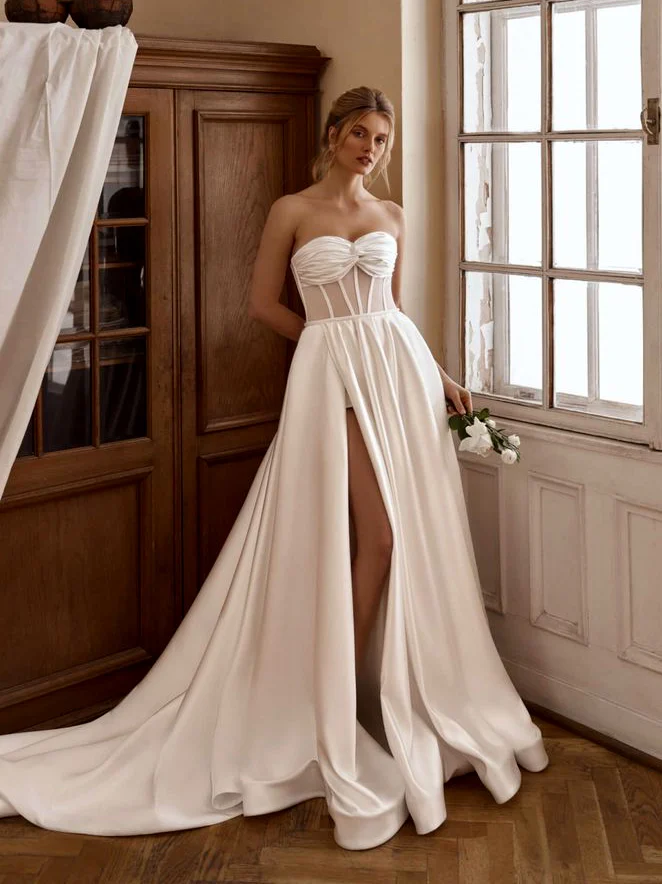
Start with one region on a dress: upper border, waist or outside skirt line. The quieter strapless window front shows a folded upper centre above finer vertical lines. A floral front with a squarer upper boundary adds broader straps above it. Which relationship do you want to examine? Name the visible line before ranking several dresses through an undefined overall impression. A reference picture’s particular skirt is not automatically part of wanting its upper edge. Choosing them separately makes the comparison more precise.
Keep the same question for each candidate. The wedding dress straps page supplements individual choices between straps and exposed shoulder areas. Assess only connections actually offered, however. Another photographed dress supplies no interchangeable second version. If you want to see two states, explicitly ask whether those particular versions exist and can be demonstrated. Describe a preference as a request while the actual version remains unexplained. A visible form and confirmed product information are different parts of your assessment.
3. Examine the upper line in an ordinary stance
Let both arms relax down first. One reference has a person braced against a seat; another rests an elbow on a boundary with the hand raised nearer the shoulder. These poses change what is visible beside the upper edge. They show no tested holding effect. View your candidate from front and side in an ordinary standing position. Mark where the centre sits and how the border continues beside the upper arms afterwards. Observing that line between poses supplies more specific information than recording a general neckline name alone.
A translucent-looking centre with vertical bands is a visible arrangement initially. The corset-look wedding dress comparison separates those lines from confirmed internal properties. Ask about material, inner version and existing connections on the actual dress. The picture establishes no particular support. Another offered inner version needs specific assessment too. Base your impression on that real arrangement instead of only the patterned front. Wait for the product explanation before converting a visible detail into a technical conclusion.
4. Add shoes and ordinary movements
Add the intended shoes where the appointment allows and check length on the actual dress. One reference places a foot on a raised step. This is no ordinary stride. Its high front opening and visible shoe describe a design rather than the position during every movement. Try a normal step, small turn and sitting yourself. Observe the areas you originally recorded questions about. Recreating one prominent pose cannot establish every movement; consider the real transitions your own plans require as well.
Recheck upper edge and lower outline after each action. Leave a longer area in its post-movement position before someone spreads it again. Ask about an existing solution if you want to handle the rear differently later. A surface arranged across the floor proves no fastening-up connection. Keep personal observations apart from the explanation of the offered function. Both belong to this candidate’s assessment. Record where another view or clarification is needed once the movement is complete rather than replacing that question with a general suitability claim.
5. Choose image distance and additions deliberately
A closer crop may show flowers or vertical lines clearly while leaving the complete hem unanswered. The seated view describes another stance from a standing front. If photographs are allowed, add an overall picture and a detail addressing your particular question. Keep distance and position reasonably similar across candidates. Use the picture later as a reminder of an observed area without deriving exact colour or fibre from it alone. What you saw on the real product and the screen impression can remain separate information.
Add already intended accessories individually. A bouquet low at the side leaves the upper centre visible differently from an object before the waist. Choose which hand position belongs to your own plans and try it on the same dress. A photograph proves neither general movement freedom nor comfort. Your personal impression is distinct information. Record it without making a judgement about every dress with similar form or visible details. Keep the rest of the combination unchanged to see what adding one piece actually changes.
6. Record the candidate and open questions precisely
Finish with a clear description of the version actually shown. Note model information, size and discussed pieces to the extent explained. Record a requested alteration with its particular area afterwards. Have real possibility, extent and next steps clarified. A suitable sample does not already show the later result. Add when and on which actual version the discussed points should be checked again. Keeping an unanswered item as a question rather than a completed decision makes the next conversation clearer too.
Treatment needs the actual label and product information. GINETEX explains care symbols; translucent appearance or dense small reflections cannot supply shared care instructions. Finally, read your original question again. Have you seen the area on the real dress, tested a personal movement and obtained the necessary product information? What is missing stays as a specific follow-up. A useful wedding dress fitting need not decide every detail immediately; it makes the next comparison and its limits understandable.
Take a few visible preferences to the appointment. Assess the offered version in an ordinary stance and record personal observations separately from open product questions.
Frequently asked questions
Do these references show actual wedding dress fittings?
The wedding dress fitting photographs show different views and poses but no established fitting appointments. Use them for questions about your own actual candidate.
Does a suitable fitting sample prove the later dress’s fit?
A wedding dress fitting sample cannot replace checking the subsequently offered version. Record model, size and discussed changes, then examine the actual result again.
What should I bring to a wedding dress fitting?
Clarify your wedding dress fitting’s requirements with the shop. Intended shoes and already planned additions help compare that combination without creating fixed rules for every appointment.
Can a photograph confirm a requested alteration?
A wedding dress alteration needs discussing on the actual candidate. A reference shows a preferred shape without confirming technical possibility, cost or outcome.


