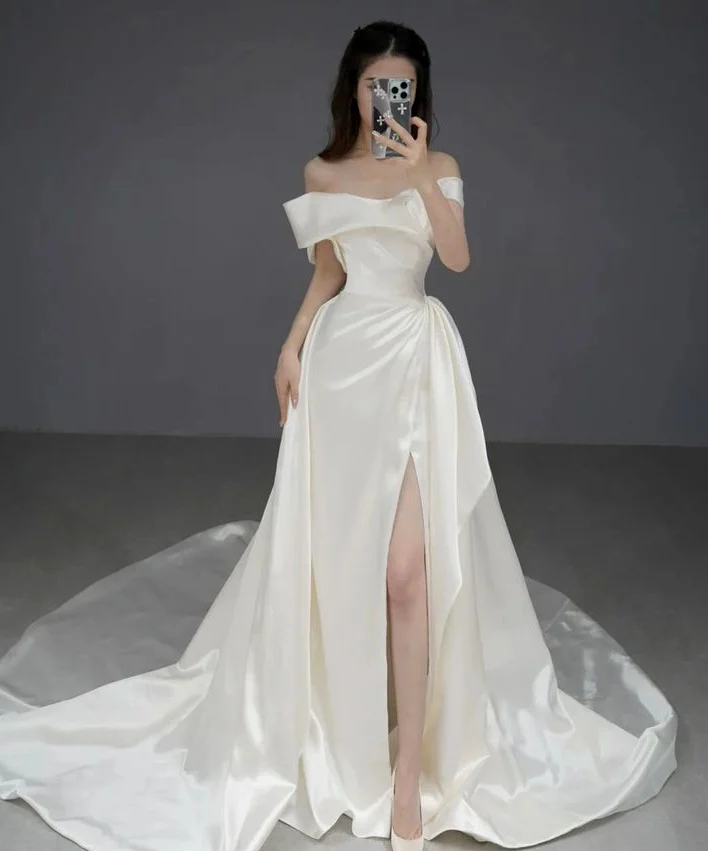
The white glossy-looking long form carries a broad folded off-shoulder upper area. Larger diagonal folds lead towards a hip point. The front skirt opens over one leg below. Longer fabric spreads behind and beside the body across the floor. A phone conceals the central face area while longer dark hair remains visible beside it. Open surfaces and larger drapes provide a quieter shape comparison alongside the more angular reflective references. Select those effects without assuming shared material or production.
Use this view if you want gloss beside softer directed lines instead of many small angles. The surface establishes no particular fibre. A raised photographic arm is not your ordinary standing position either. Add a complete view of the actual candidate with relaxed arms and intended jewellery to compare the folded top in your own stance.
Assess the real hem with your shoes and corresponding rear. Have front opening and rear fabric assessed while walking and sitting. Wide photographic spread supplies no particular length for you. This counter-reference can clarify preferred draping without claiming a technical process or fixed style category. Complete selection on your own whole garment.