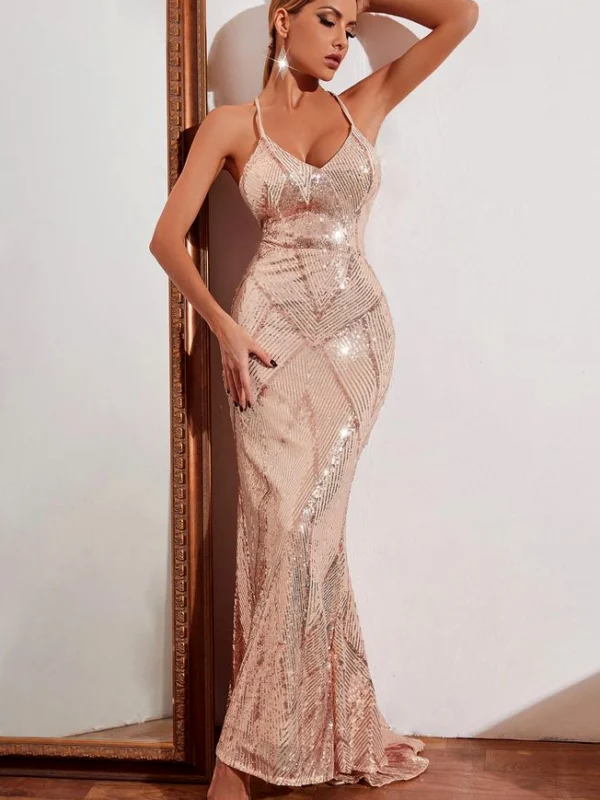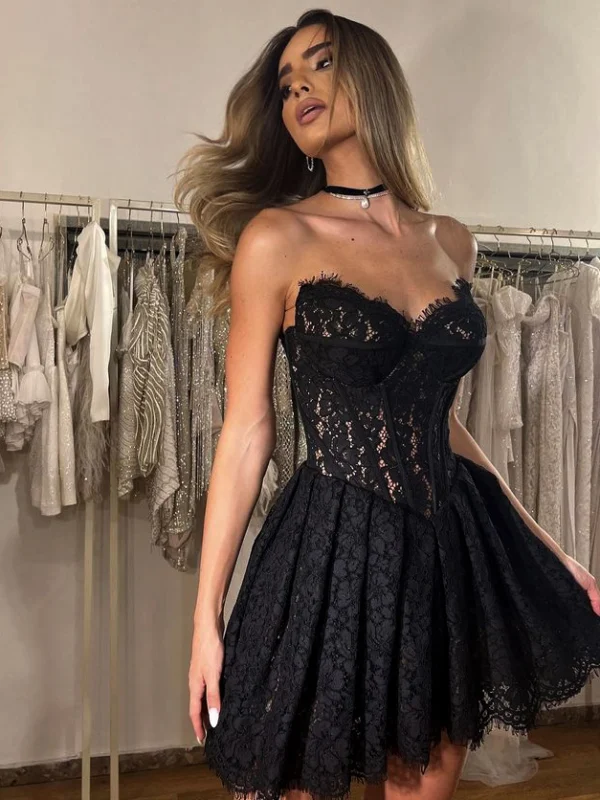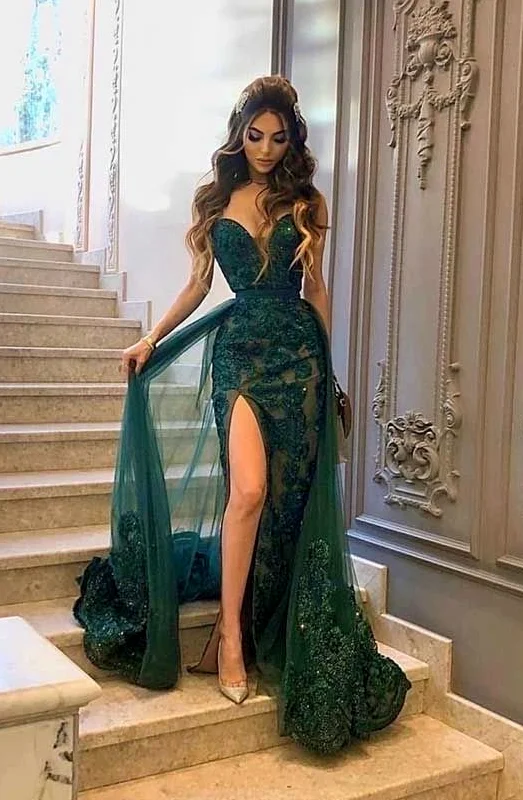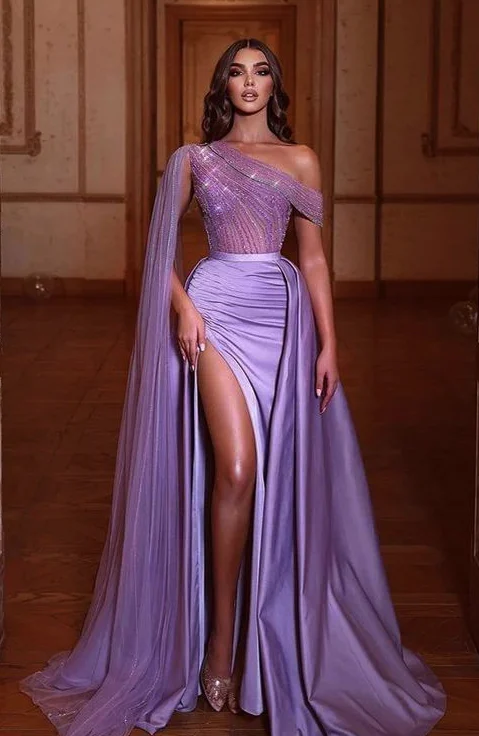
A sparkly evening dress need not carry the same reflective drawing from neckline to hem. These six references help locate the area you want: a dark red upper section over a quieter full skirt, a diagonal violet front and a narrow pale reflective border appear beside floral, geometric and ruffled alternatives. Start by asking where small bright points should register. The photographs establish no particular sequins, crystals or fibres. They supply a visible distribution to seek and check on an actual offer rather than a complete product specification.
Locate the reflective area on a sparkly evening dress
The dark red example concentrates small reflections on the bodice, with a broader quieter area beginning below. In the violet front, bright points follow a diagonal upper shape while the gathered skirt carries less small-scale drawing. Both emphasise the upper area but connect it with different necklines and side surfaces. Decide only whether this concentration appeals initially. You do not need to choose the same photograph’s colour and skirt opening at the same time. A related upper distribution may exist on another real garment with other features you prefer.
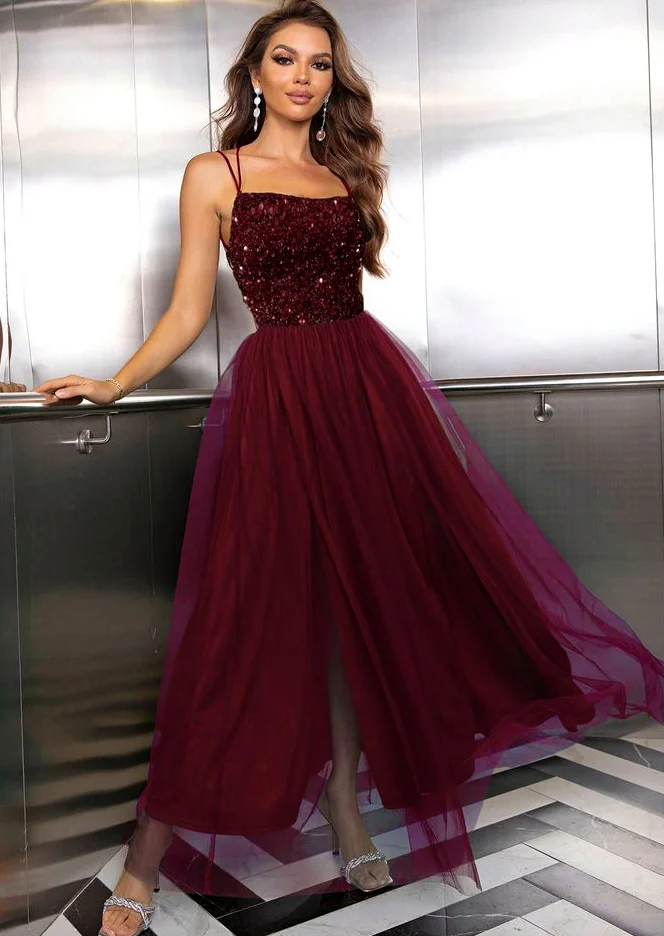
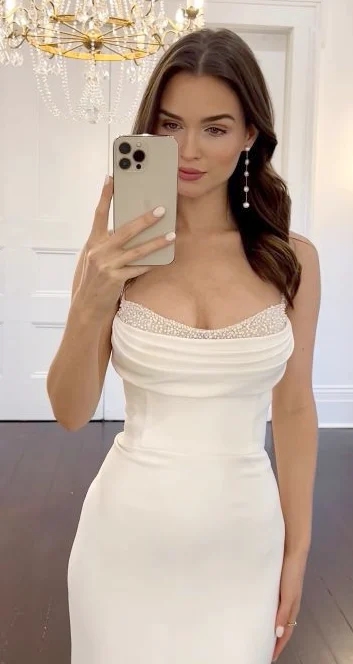
Mark the area you particularly want on a complete view. Is it the entire bodice or a narrow line immediately at the edge? The closer pale strapped dress demonstrates the latter idea: a small bright border sits above several soft folds. Assess a corresponding actual candidate from conversation distance. A greatly enlarged picture makes a small decorated section appear larger than it does on the complete worn garment. Describe where the preferred area should begin and finish before choosing its material or quantity.
Separate small bright points from large shiny areas
The violet skirt shows broader light and darker folded areas. These perform another role from the small points above. Name both properties separately if the complete outfit appeals. You might want a similar quiet lower surface with fewer neckline reflections, or particularly enjoy the upper fine lines while preferring another skirt. The satin evening dress guide extends the surface question without identifying the cloth of this violet reference. Retain the distinction between a visible preference and confirmed product information.
Move slightly in the actual model and reassess from the same distance. Which zone stays distinct and which becomes prominent only at one angle? Request another evenly lit view for a remote order. One bright point cannot explain its attachment, weight or feel against the skin. Those questions need product information and, where appropriate, your own trial. Record the preferred visible pattern separately from those unresolved properties instead of expecting an appealing picture to establish every aspect of using the garment. Compare each candidate against its own actual description.
Use floral and geometric alternatives purposefully
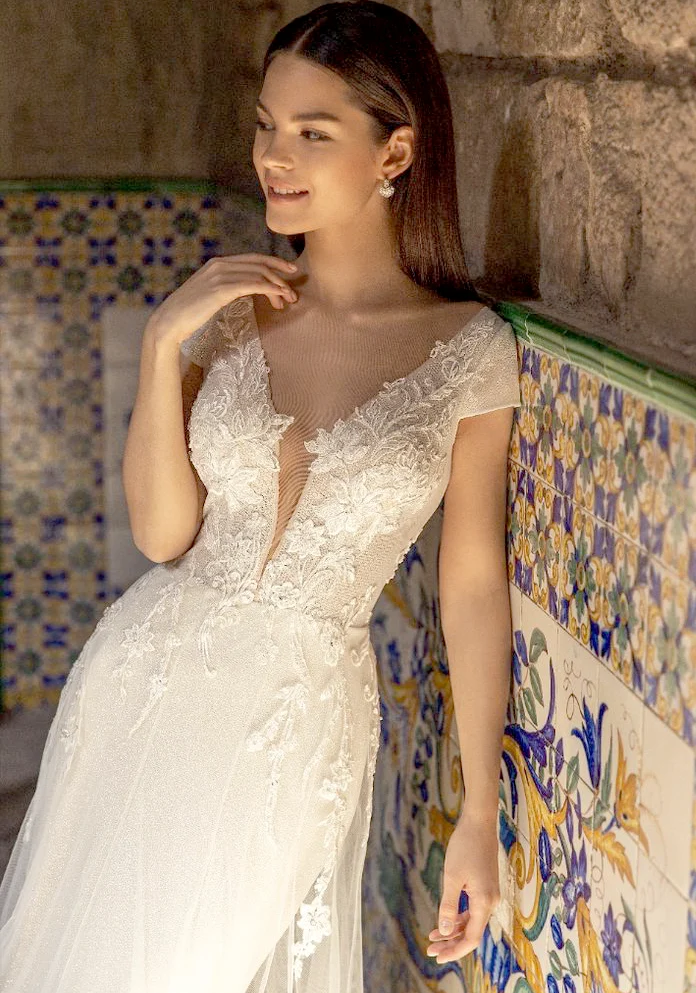
The closer pale front frames a deep central notch with larger flower and leaf forms. Its complete lower hem is absent. The other pale strapped view spreads geometric and floral-looking shapes across a widely held skirt. Use them to compare pattern scale and position. A clearly readable flower is not automatically a small sparkling point. You can enjoy a decorated surface without having chosen any particular reflective intensity. Identify how much of the larger motif should remain above or continue below the waist on your actual offer.
The pale ruffled dress emphasises larger projecting edges instead. Its lower divisions differ distinctly from the quieter red skirt. It is a useful alternative if contour movement interests you more than further bright points. The evening dress with ruffles guide develops their placement. Ask what the real model includes; a side shoulder ornament does not establish removable construction. Its visible shape can contribute to the comparison without receiving an unconfirmed function or being called proof of sparkle.
Try jewellery together with the neckline
Long pale earrings accompany the red example. A longer ear ornament also appears beside the narrow pale reflective border, but with a substantially quieter dress front. Several areas therefore contribute together. Begin with the planned hairstyle and one jewellery piece on your candidate. Should earring and upper border remain jointly distinct or should one lead? Another necklace is an independent choice rather than the required completion of every exposed neck area. Inspect the dress’s own upper line before adding a new piece to it.
Hold the bag beside you and then before the body. It may cover the precise transition between patterned upper area and quieter skirt that you selected. Compare without the bag too. The jewellery with a statement dress guide extends the comparison beside the diagonal violet line. Assess the size and position of real jewellery pieces on the actual garment with the same additions. Request its own complete front and side instead of joining an appealing shoulder from another photograph to this skirt in your imagination.
Check opening and length independently of sparkle
One leg remains visible through the violet front opening. In the red reference, a stepping position and spread lower area also expose more of the shoes. These are different arrangements rather than measurements of normal hem height. Put both feet comfortably on the floor in the real dress and release the sides. Walk and sit afterwards. Choose the opening you actually want while retaining your selected upper reflective area. A photographic stance need not become the position required throughout your evening. Check the skirt again after ordinary movement.
Neither closer pale picture can answer that length comparison. Request a complete view of that same dress instead of supplying its missing lower shape from another reference. If considering alterations, show the intended new edge and ask how pattern, ruffles or additional rear area would be affected. A professional needs to explain what is possible on the offered piece before the alteration becomes part of your completed outfit. Record the visible finish to preserve as well as a measurement, then reassess it with the final shoes.
Connect description, fitting and preparation
A confirmed material entry gives more specific information than a photographed reflection. The Metropolitan Museum identifies silk and sequins for its Traina-Norell evening dress. Those details concern the museum object; they identify none of our references. Request equally clear fabric and decoration information for your own offer instead of deriving the same execution from a small bright point. Choosing a visible area and learning how it is made can remain separate steps.
Finally record the leading reflective zone, preferred pattern scale and quieter area beside it. Add the tried neckline and ordinary hem with your own shoes. Cleaning and finishing follow the actual label; GINETEX explains care symbols. Pale decoration does not reveal a permitted treatment. Have the finished garment’s preparation explained and assess the complete outfit again with jewellery and bag. Your choice then rests on specific visible and confirmed properties rather than whichever photograph appears brightest. Later additions can be compared individually against that established reference.
Choose whether small reflections should define an upper area or only a narrow border. Check skirt shape, jewellery and actual execution separately.
Frequently asked questions
Must a sparkly evening dress sparkle all over?
A sparkly evening dress can connect a larger upper reflective area or only a narrow bright border with a quieter surface below. Choose the zone you want first.
Are the small reflections definitely sequins?
Small reflections in these evening-dress pictures establish no particular decoration type. Fabric and embellishment need to be stated for the actual model.
Why include floral and ruffled dresses too?
The floral and ruffled comparison dresses separate readable pattern scale or projecting contours from small bright points. They are not all identified as sparkly dresses.
Can the closer pale border image determine length?
The closer pale reflective-border image omits the complete hem. Length needs a full view of the same dress with your actual shoes.