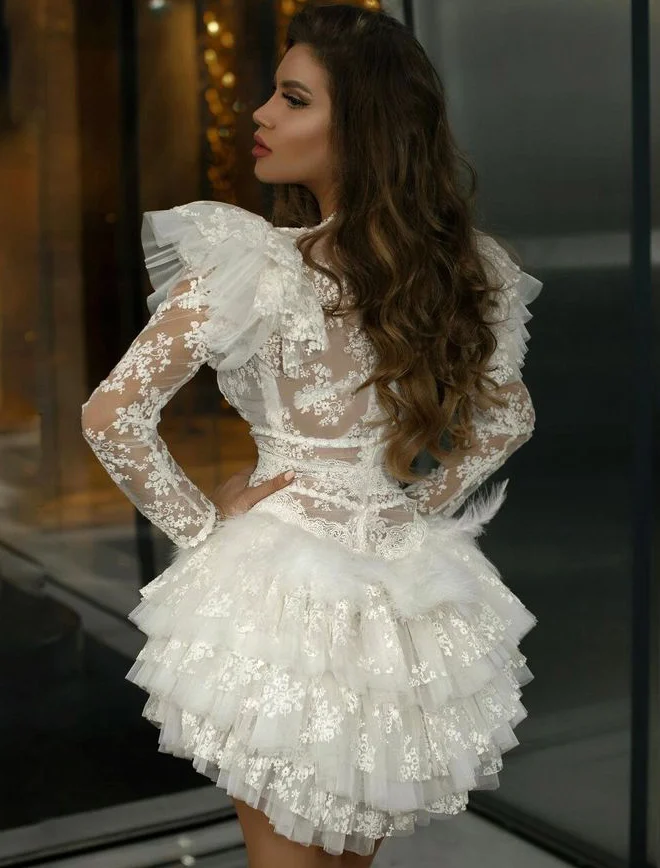
The pale rear view with patterned sleeves reveals details that a front photograph can leave unanswered. Ruffled sections sit at the shoulders. Between them, skin is visible through parts of the patterned back. A horizontal band marks the waist, and several short layers create different lower edges beneath it. The long sleeves widen near the wrists. Treat this as a separate reference. It is not presented as the verified back of the other pale dress with the low front neckline. Similar colour and sleeves are insufficient to establish that two photographs show the same product.
Ask for the corresponding rear view of your actual candidate and compare it with that dress’s front. Which area do you want visible, and where will your outer layer sit? Try the intended underlayers with that specific garment. Look in ordinary light from a normal conversation distance. Then observe the waist band and lower layers while walking and sitting. Several visible edges do not explain how the offered piece will move on you. Record the feature you like separately: the patterned arms, the back area or the tiered lower form. That preference remains useful even when its matching front is unknown.