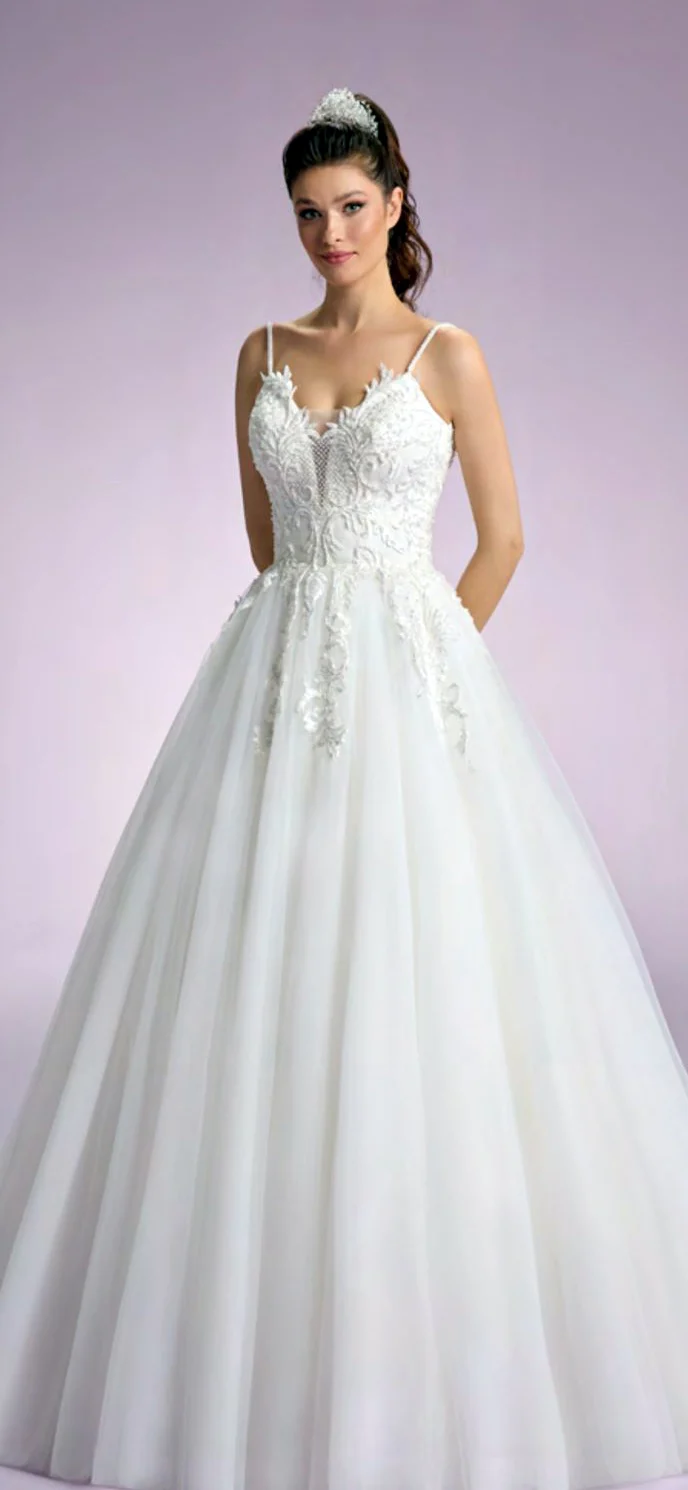
A leaf-pattern wedding dress has finer straps, a V neckline and pointed leaf-like motifs rising along the upper edge. Larger curved and floral shapes continue across the bodice. Further motifs reach into the upper skirt, leaving a larger quiet area beneath them. A smaller tall crown sits above the hair and the hands rest behind the body. The front hem is visible while the skirt covers the shoes. This reference is particularly useful for choosing between a distinct motif-defined edge and a pattern remaining within the fabric surface, without assigning a botanical species to every pointed shape.
Point out the individual tips whose outlines and spacing you prefer at a fitting. View the same area without hair or flowers obscuring it. Then choose how far the motifs should continue below the waist. If you want another underlayer, have it shown beneath the actual pattern. A photograph confirms neither plant identity nor whether individual motifs can be rearranged. Add jewellery after choosing the edge and try the complete dress with your shoes. This relates the smaller leaf contour to the silhouette you would actually wear rather than selecting the neckline detail in isolation.