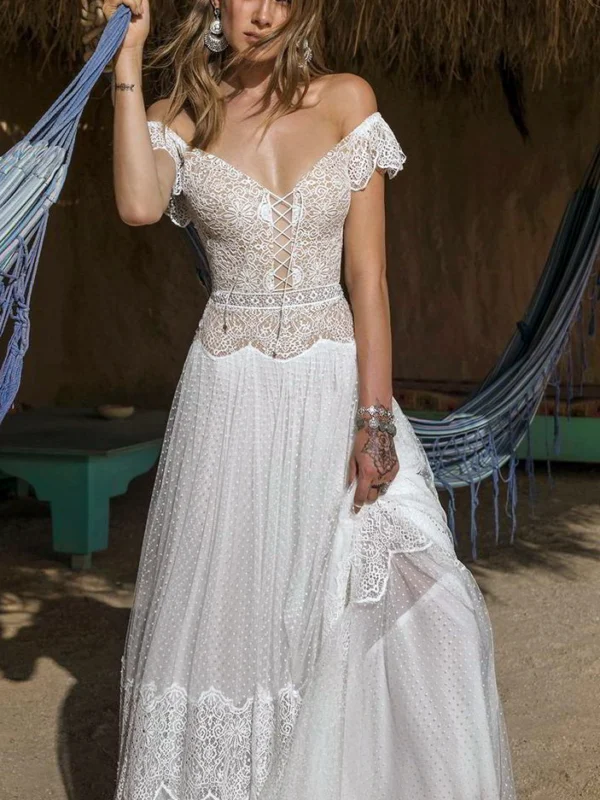
Front lacing is clearly visible in the first example as a repeated pale crossing down the centre. Compare the spacing of those cords with the small pattern beside them and the narrow boundary at the waist. The photograph answers a question about visible arrangement, but not about the actual fastening sequence of the offered garment.
Guide to comparing these images
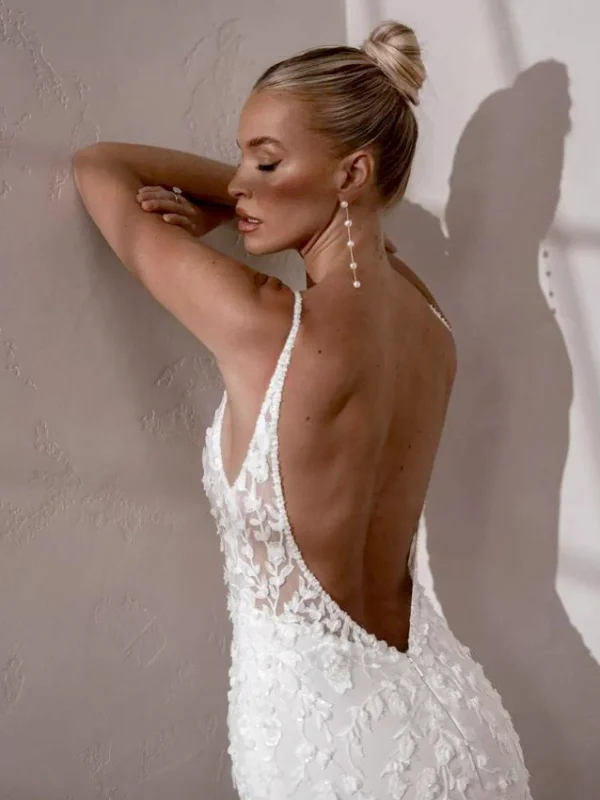
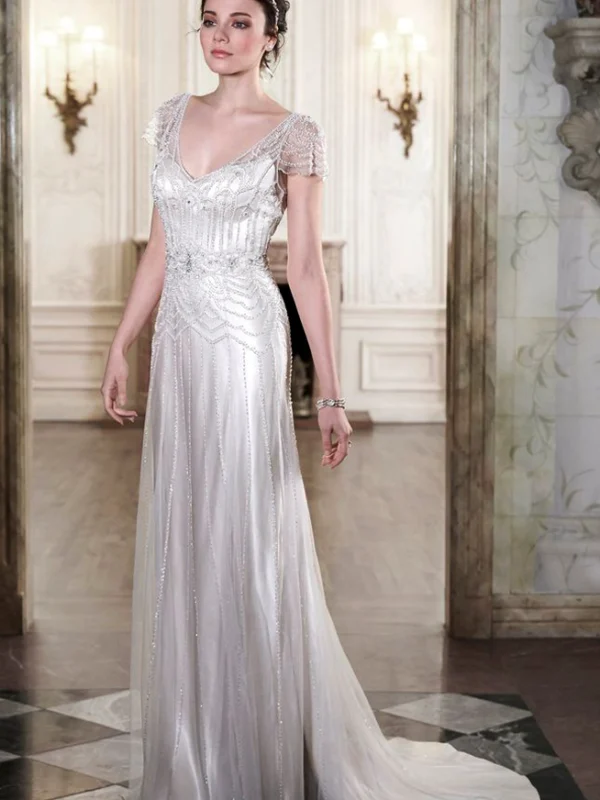
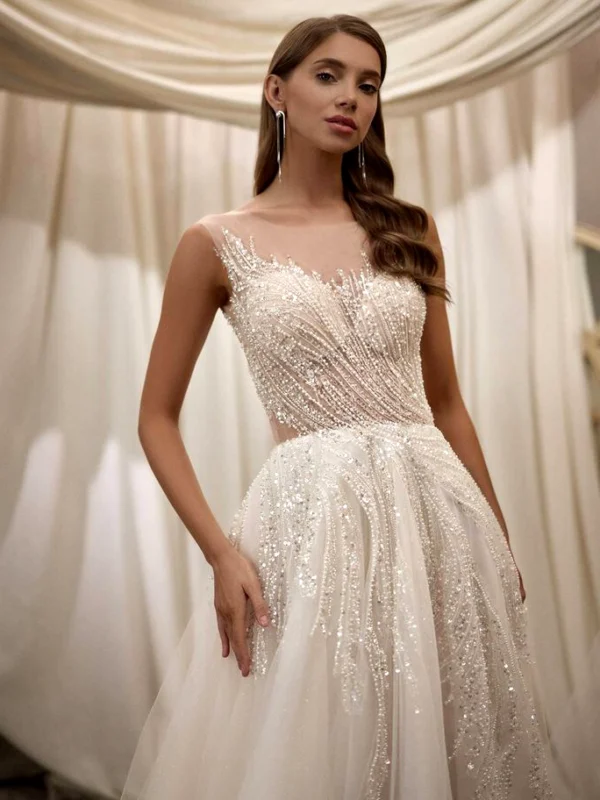
The back photograph follows as an independent view. It shows an open contour with decorated edges but no visible crossing cords. Its relationship to the first dress is unconfirmed. The remaining front views create a marked centre through other means: orderly rows, diagonally reflecting lines and floral forms beside a narrow notch.
Choose the front line you actually want from this sequence. It might be explicit readable cords or a quieter continuous row. Take the operational question to a fitting afterwards and ask for the entire dressing and fastening process to be demonstrated on the real model. The gallery supports a precise shape decision without presenting decorative details as unproven fastening or adjustment functions. Use the independent references for comparison rather than combining them into one assumed product description.
Distinguish crossed cords from other central patterns
Follow one pale connection from side to side in the leading image. Several diagonals create the crossing sequence, beside a different small-scale patterned surface. Below the waist, dots and a larger decorated skirt zone continue the drawing. Decide whether you want to read the crossings themselves or mainly see an emphasised front centre. The other front views help make that specific distinction.
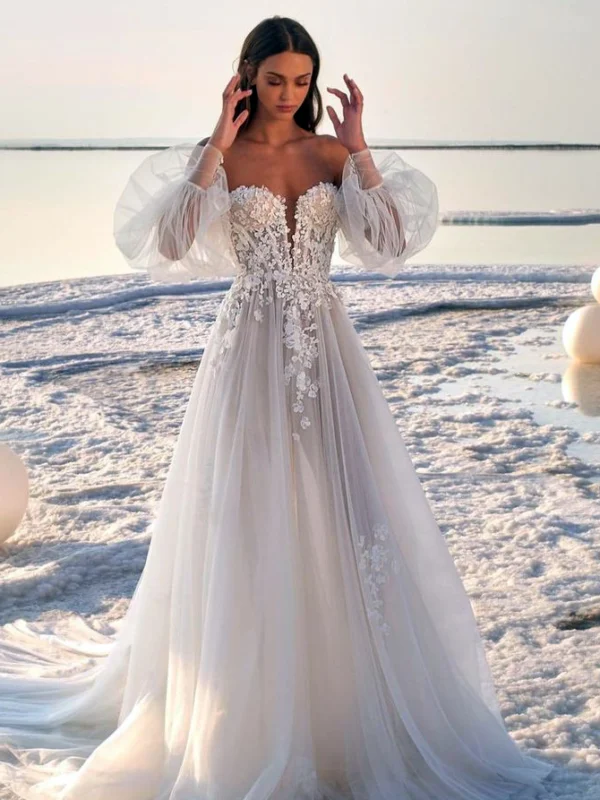
The short decorated sleeves sit beside vertical rows, whereas the more reflective bodice brings many diagonal directions together. The floral model frames a narrow notch from the sides without bridging it with readable cords. None becomes a laced version of the main dress. The back photograph adds a different question: a raised arm and close framing limit assessment of the complete outline. Request matching front and back views of your own candidate with relaxed arms. Keep the desired shape and outstanding operational question separate in your picture notes. A visible crossing can explain the first preference while the real fastening route still needs demonstrating on the offered product.