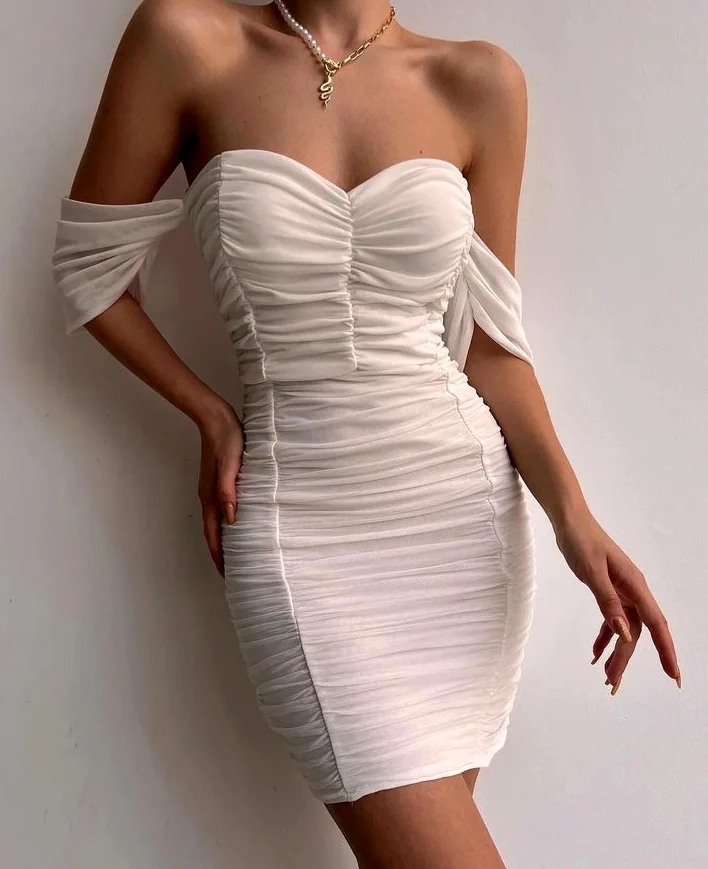
Quiet dress folds lead this short pale comparison. The upper edge curves towards the centre, while side fabric areas sit against the upper arms. Repeated small folds run across the close-fitting body and skirt. Large floral drawing comparable to the other examples is not visible, which makes this a deliberate alternative rather than evidence of embroidery.
If the upper contour is what attracts you, separate that preference from your interest in floral motifs. Compare an actual garment with a similar front edge in a quieter arrangement and with conspicuous additional decoration. This helps you decide whether the shape already provides the focus you want or whether an individual flower feels like an essential missing detail. Keep the accessories similar during that comparison.
The short model does not establish how a long garment would fall or what alterations could be made to it. Use only the clearly visible shape idea as a starting point. The necklace also adds drawing above the dress. Leave it aside initially in your own trial so that the difference between a quieter surface and a decorated upper section remains easier to judge.