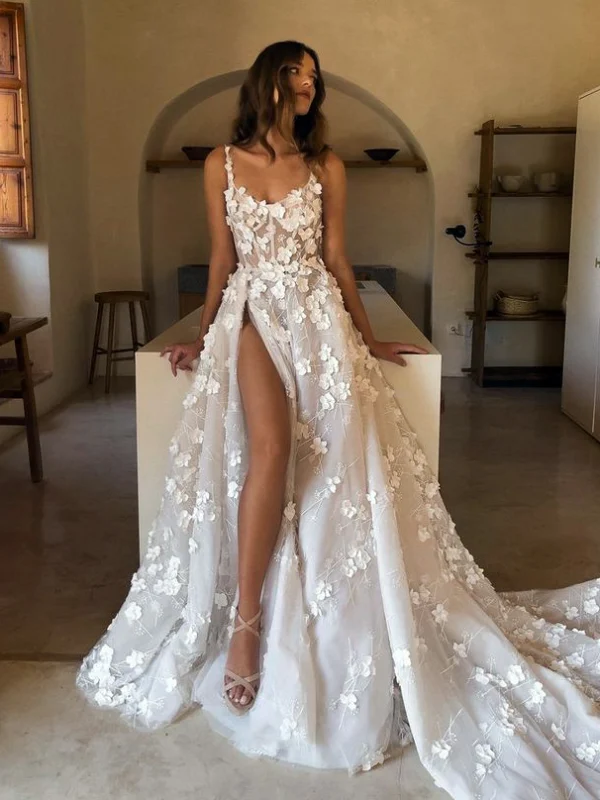
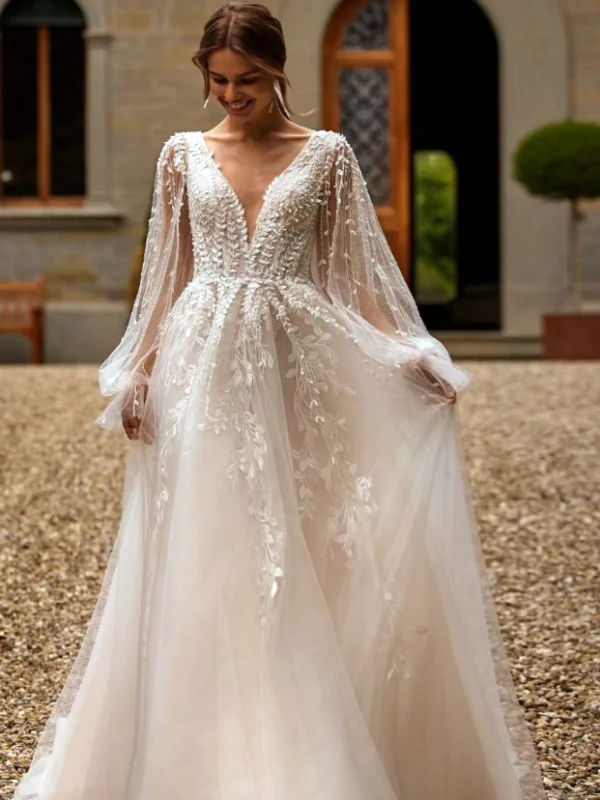
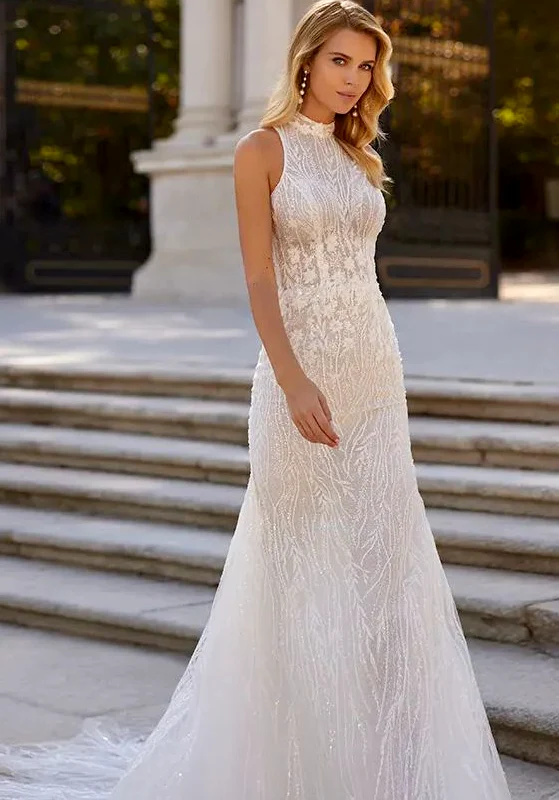
Embroidery motifs are considered here first as visible shapes. The first example spreads large separate flowers across the bodice and outer skirt. The second combines floral drawing with long, broad-looking sleeves. In the third, fine connected lines create a more continuous patterned surface. You can compare these differences without assigning a manufacturing technique to the pictured garments.
Guide to comparing these images
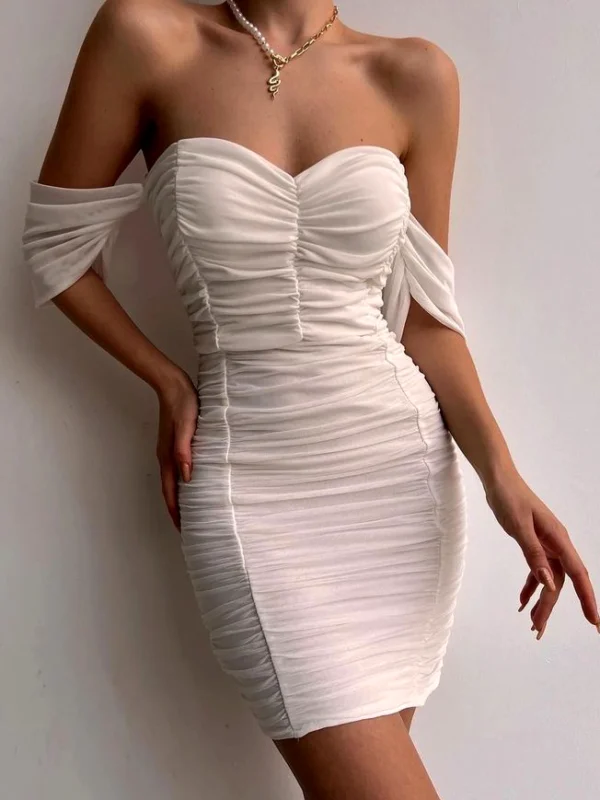
The short pale dress adds a deliberate alternative. Its folds and curved upper edge lead the appearance rather than large flowers. Use it to test whether you are drawn to the motif itself or mainly to a dress outline. These are not presented as a verified product range or matching views of the same execution.
For a consultation, begin with a clear preference: large separate flowers, fine dense lines or a quieter surface. Add the places where your accessories may approach the decoration. A confirmed description and suitable real sample explain the specific execution. The gallery helps name the appearance you want; it cannot replace that sample, an alteration agreement or examination of the finished garment. Treat each image as evidence for a particular design choice rather than expecting it to answer every product question.
Read motif spacing in relation to the pose
In the large-flower example, follow the area beside the front opening: separate motifs and the spaces between them are easy to see there. However, the supported pose and forward leg open the skirt. Use that surface as a motif reference and request a relaxed standing view for a real comparison. A particularly open pose should not alone determine how much quiet ground you expect on the worn dress.
The long-sleeved example adds another task. Trace the drawing from the dense bodice across the waist onto the skirt, then onto the neighbouring sleeve. Decide which of those connections should remain prominent with the arms relaxed. In the high-neck alternative, much of the effect comes from many fine lines rather than separate large flowers. Compare that drawing first; the simultaneously narrower dress outline is a second decision. Finally, the short gathered model tests whether its upper contour already gives you enough interest without large flowers. This creates a choice based on motif, spacing and distribution rather than an unspecified request for decoration.