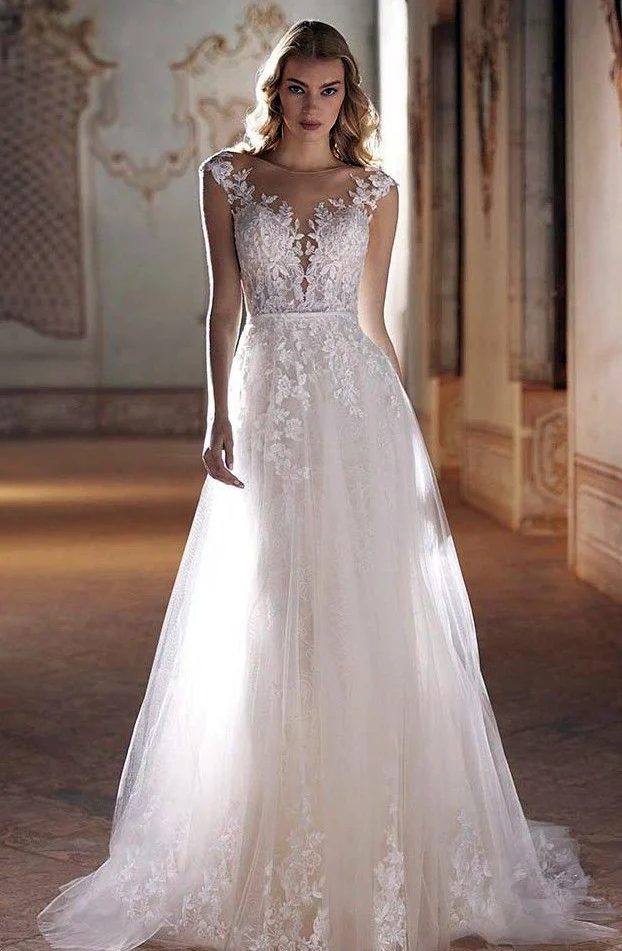
The floral bridal bodice has a deeper V-shaped motif arrangement beneath a finer higher outer edge here. Leaf-like forms cover broader shoulder areas and the chest section. Skin stays visible between them. A narrow patterned waist band joins the long widening skirt, where individual motifs continue below. Arms remain bare and hang beside the dress. This is therefore no evidence of special sleeve openings, but a specific comparison between visible decoration and the actual outer neckline.
If the higher edge appeals, name it separately from the deeper decorative shape. Ask about existing layers on the actual dress and see it with your intended underwear. Compare the more angular white frame afterwards. You can then distinguish seeking another line from seeking more coverage, inspecting the intervening area rather than treating dense decoration as automatic opacity.
For a necklace, assess the space between neck and real fabric edge. Begin without added neck jewellery and introduce your actual piece individually. A pattern that already outlines the upper chest can look different beside the same necklace from an openly cut front frame. Make that decision wearing both items rather than only holding their colours together.