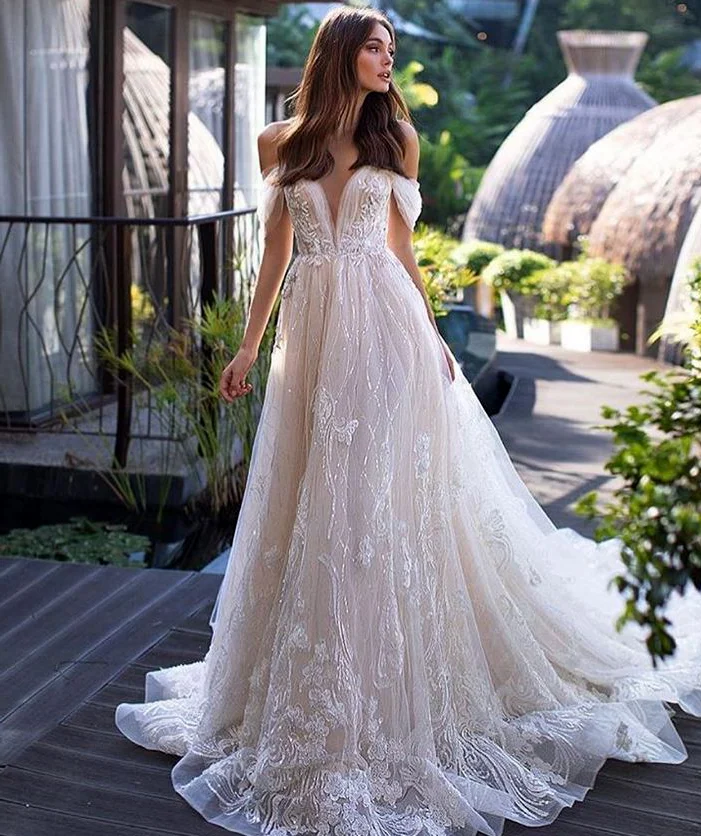
A wedding dress with an all-over pattern adds a more widely distributed skirt design to the comparison. Pale markings begin at the deep V-front and remain visible below the waist. Finer lines run between larger motifs through the long, wider skirt. A broader patterned border stands out at the lower edge. Short off-shoulder bands frame the upper arms. Unlike the closer bodice photograph, this view reveals much of the front hem on the wooden walkway.
Compare that distribution with individual trailing flowers and the more clearly bounded bodice. Should the eye pause at the waist or follow the pattern farther down? Hold a bouquet at your intended carrying height during a fitting. Then examine the whole skirt rather than only the middle. A hand can hide the junction while the remaining pattern stays visible. Relaxing the arms provides another way to assess the overall arrangement.
Choose an additional belt after this comparison, since it introduces another visible boundary. Look at the dress with your planned veil too; two patterned surfaces can overlap. The photograph explains motif distribution rather than how it was made. Discuss hem changes and motif placement together on the actual offered garment.