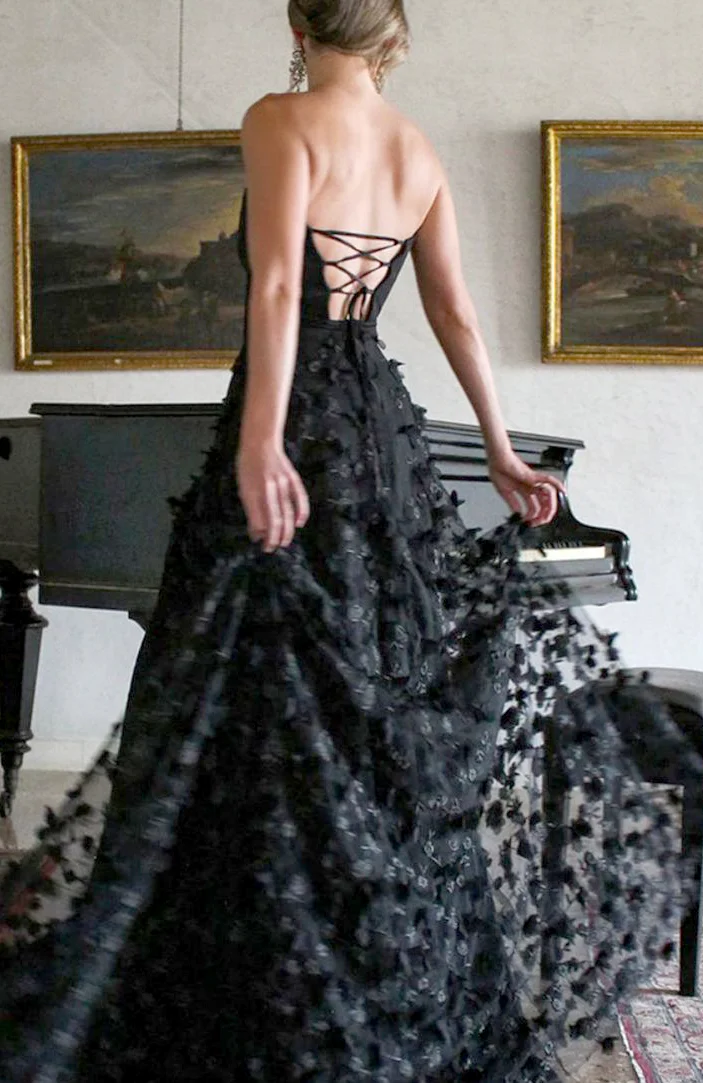
A lace-up back evening dress creates a distinct feature behind the shoulders. In the black rear view, narrow dark cords cross an open area and meet tied ends lower down. That differs from the pale Y-shaped line in the comparison photograph. Start by choosing between a crossed-cord pattern, a quiet edge and added back decoration rather than asking for any open back. The other dresses show separate front arrangements; they are not verified front views of the black rear model. Use them to describe preferences while requesting the actual garment’s complete views.
Lace-up back evening dress: distinguish cords from decoration
Look first between the garment’s side edges. The dark cords form several crossings, with a smaller tied section beneath them. Their similar colour produces a quieter relationship than a pale line against exposed skin. If that distinction matters, compare darker and more contrasting cord colours on the actual garment where such options are offered. Keep the rest of the outfit unchanged so you are not simultaneously judging another opening, another colour and a different group of accessories.
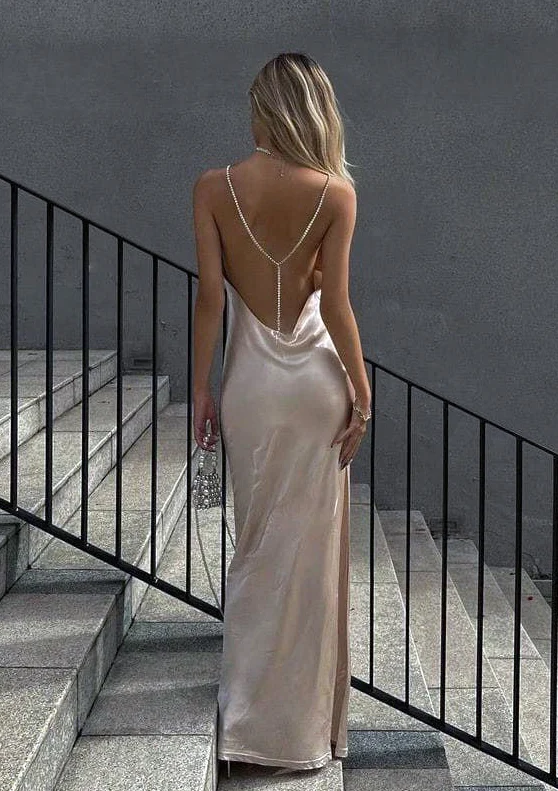
The pale rear photograph adds a chain-like line meeting in a Y between the shoulders, above a softer draped dress edge. It does not form repeated crossed spaces. Use the difference to describe your preference: rhythmic crossings inside the opening or a single additional line above it. The dress back chain guide develops the jewellery question. This comparison does not turn dark cords into a jewellery fastening or the pale line into lacing.
Choose the opening separately from crossing density
The width of the exposed back and the density of its crossed lines are separate decisions. A narrower opening can contain clearly visible cords; a larger open area can have quieter drawing. Show the desired outside edge first during a fitting discussion, then identify the cord route. If you have one reference picture, mark those areas separately. That makes it clearer which shape you want retained and which part you would like changed instead of describing the entire back only as more open or more covered.
Request a rear view of a real favourite with arms lowered normally. A turned shoulder or a skirt held to the side can alter the apparent opening. Look from the side afterwards to see where its edge continues towards the front. Assess the transition with the underlying pieces you intend to wear. The backless party dress guide supports the broader coverage question; the main choice here remains the relationship between the opening and its crossed-cord pattern on your particular candidate.
Compare the crossing with the beginning of the skirt too. Below the narrower middle in the black picture, larger dark motifs appear over a broader outer surface. You can enjoy the upper cord pattern without adopting that fullness underneath. A quieter skirt leaves a different area beside the cord ends, while a more patterned skirt continues the decoration. Decide whether the back should provide a contained accent or begin a pattern that extends through the dress. A complete view explains that relationship better than an isolated close rear crop.
Ask to see the actual fastening work
A visible cord end does not explain how the entire garment closes. Ask which pieces open, how you enter the dress and how its intended wearing position is established on the offered model. Request a demonstration before undoing anything yourself. If you want to dress without assistance later, try that precise sequence. Choose through the actual version rather than assuming every decorative lace-up arrangement operates as an adjustable closure. A feature you enjoy visually should also be understood within your own preparation plans.
If you need another width or a change to the back edge, explain the target while wearing the garment. Ask what can actually change and where the crossings would sit afterwards. Avoid assuming longer cords alone will solve the issue because they look simple in a photograph. Different connected components may be involved. Clarify the scope and cost of a proposed alteration, then compare its result at another fitting with the back shape you originally wanted rather than checking a measurement in isolation.
Add the corresponding front of the same dress
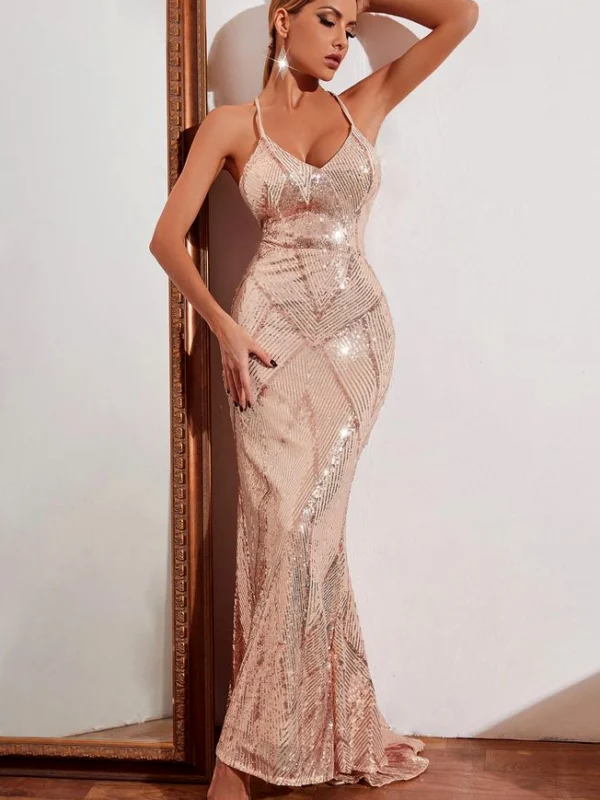
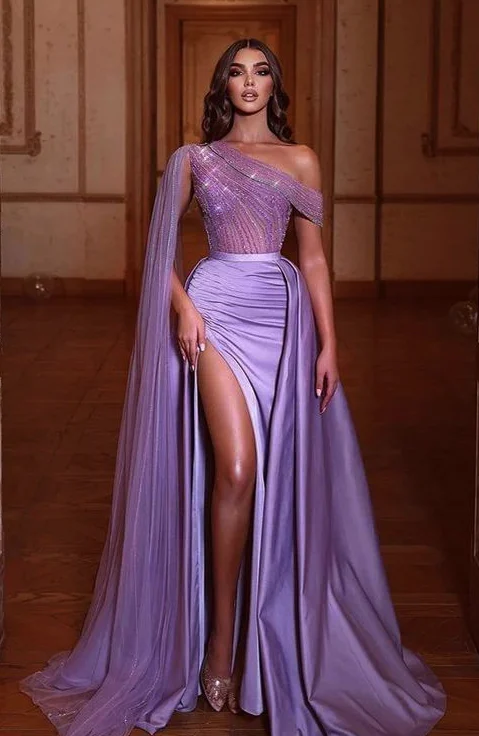
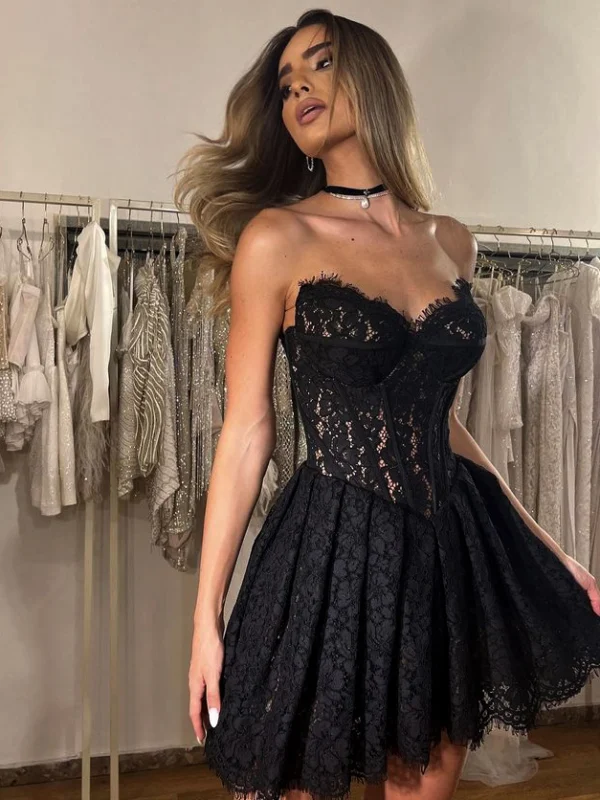
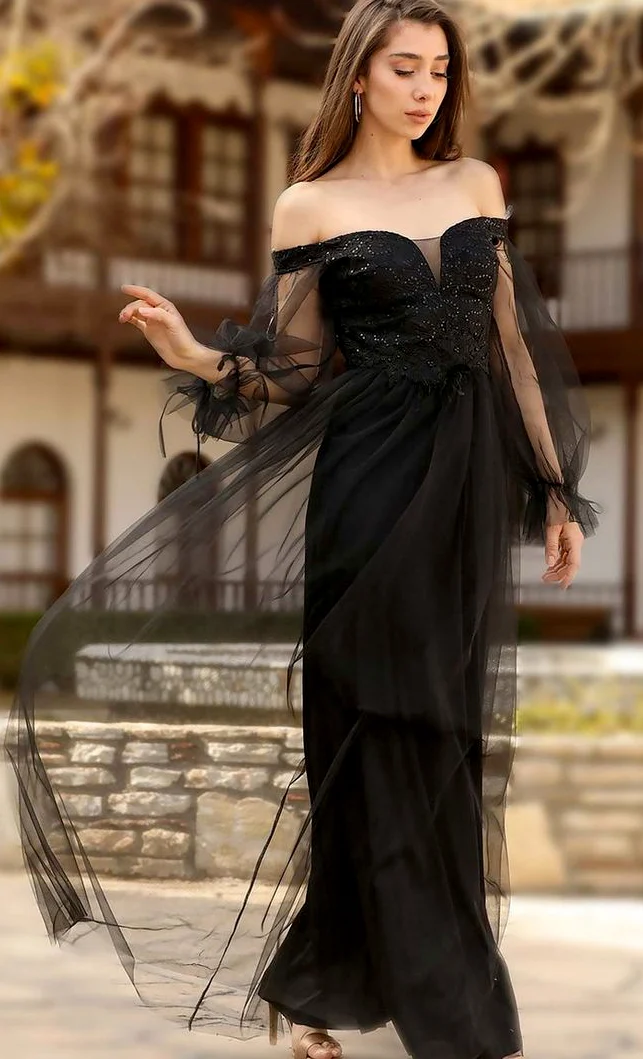
The black front view with translucent-looking sleeves has an open shoulder line and shaped upper edge. The short blue outfit uses fine straps; the dark blue long dress shows broad side sections with arm openings. The red version emphasises a diagonal upper band. These references help describe a front preference. They do not explain how those bodices continue into the back of the black lace-up garment. Similar colour across two pictures does not establish that they show the same product.
Request connected front, side and rear views of your actual favourite. Compare the space around the neck with the rear opening. Would you like more decoration in front when the back is already distinct, or a quieter front surface? Decide after seeing both sides of one real garment. This avoids selecting an imagined design assembled from unrelated photographs before you know whether it is offered. Record the actual model name or reference with the offer so later detail views can be checked against the same candidate.
Place hair, bag and outer layer beside the back
Try the intended hairstyle at its actual length and shape. Longer hair can overlap part of the crossing pattern if you enjoy that appearance. To see the cords more clearly, move or lift the hair for another comparison and look from the same distance. Begin jewellery with earrings or a single addition. Another back line is a deliberate preference rather than an automatic requirement whenever exposed space remains between the shoulders. Choose how much of the garment’s own drawing you want visible first.
Add your planned bag and put on an outer layer. Compare the back once with it and once without. Do you want a closed overall surface for the journey, or should some rear detail remain visible? Check where a shoulder strap crosses the actual dress too. You are choosing your own pieces together. The photograph of a broadly arranged black skirt prescribes neither a particular bag nor a particular coat for the evening. Two complete outfit views give a more useful reference when considering another small accessory later.
For an evening involving a table and standing greetings, compare two hair positions without immediately planning two complete hairstyles. Let the hair fall as intended once, then move it briefly aside for the second view. Look at the front with your chosen earrings as well. You may especially enjoy the back during a slight turn and prefer some overlap while standing normally. That observation can lead to quieter jewellery instead of searching for an additional accessory to perfect every separate photographic angle throughout the evening.
Rehearse the complete sequence before choosing
Sit on an ordinary chair in the intended garment, stand and reach for an object. Look at the rear edge and cord ends before rearranging them. Do you still enjoy their position between those actions? Repeat with the bag and important additions. If you need help with the closure, discuss how that will work during your own evening. A tried sequence answers more than an attractive turned photographic pose, and it provides a precise movement through which to explain any adjustment you want.
Finish with three confirmed results: preferred opening, understood fastening and complete outfit. Keep a permitted rear photograph of your own fitting with the model reference. Follow the actual garment’s care label; GINETEX explains unfamiliar symbols. The visible cord route does not determine cleaning. Those concrete details let you compare further offers without mistaking a crossed-cord pattern for guaranteed adjustability or a particular internal support structure. The chosen back should remain a preference you have seen and tried rather than a promise inferred from its photograph.
Choose the visible crossing pattern and surrounding back edge first. Ask for the real fastening to be demonstrated, then compare hair, an outer layer and ordinary movements.
Frequently asked questions
Do crossed cords prove that the size can be adjusted?
Their appearance does not establish that. Ask which parts operate the actual fastening and which adjustments are offered for the particular garment.
Is the pale Y-shaped back line another lace-up closure?
The comparison shows a chain-like Y line above a low draped back. It is treated as another back decoration rather than as a lace-up closure.
Are the front photographs the front of the black lace-up dress?
That relationship is not verified. They show independent upper arrangements. Request corresponding views of the same actual garment before ordering.
Must hair always be put up with a lace-up back?
Try the hairstyle you want and decide how much of the crossing pattern should remain visible. No particular hairstyle is compulsory.