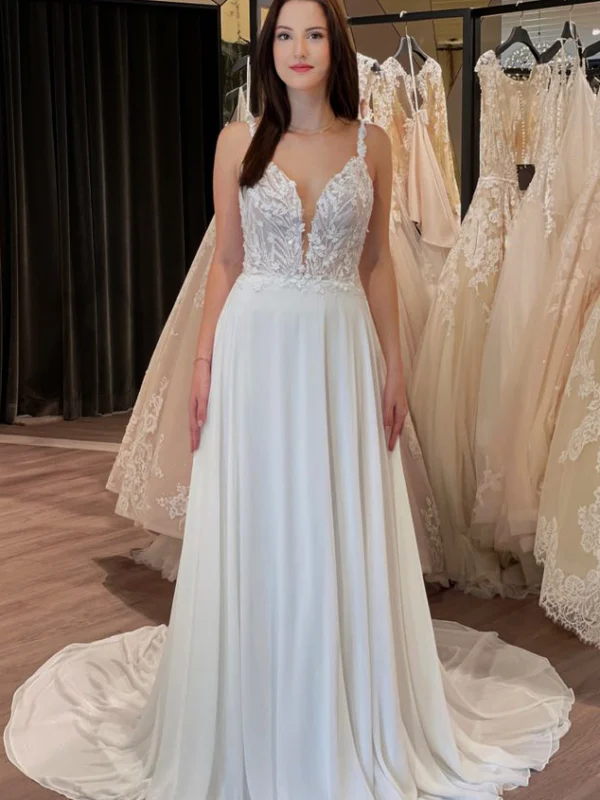
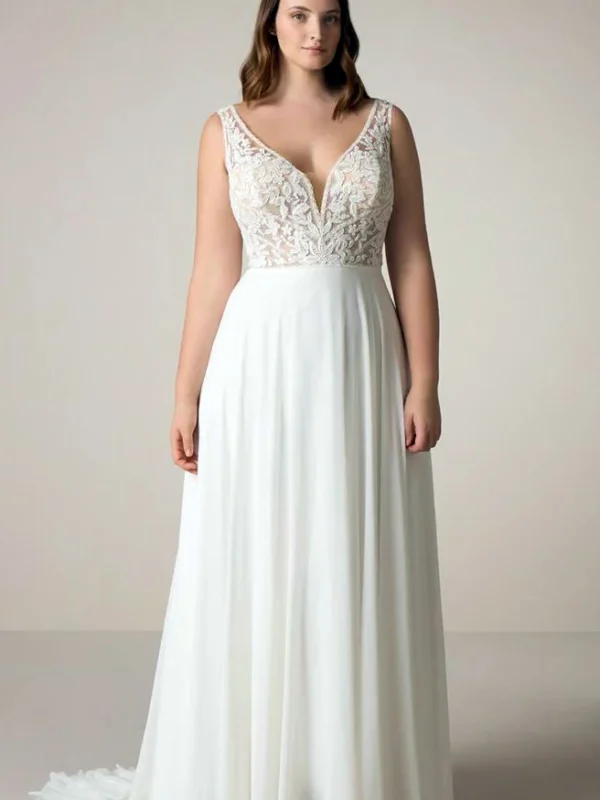
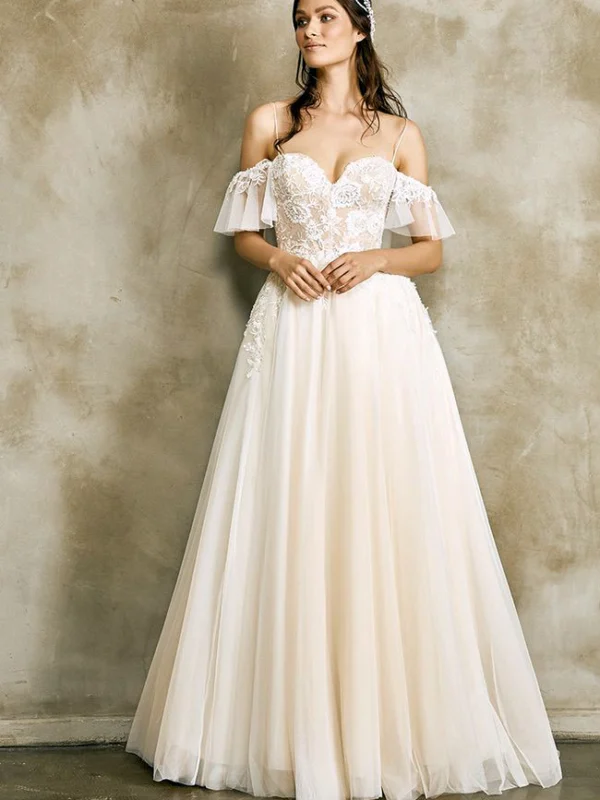
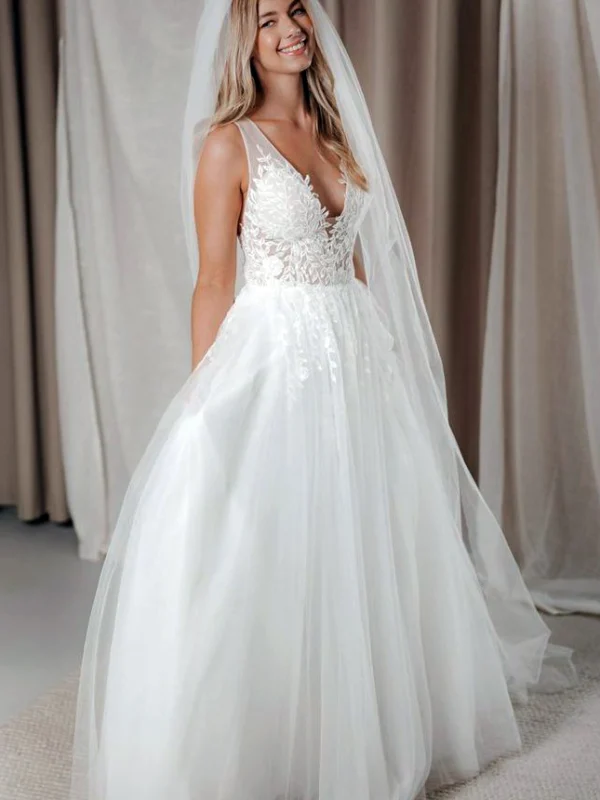
An embellished bodice and plain skirt are considered here as a specific combination within wedding dress selection. Fine patterned straps sit above a long quiet skirt in the shop setting. Broader straps and a V neckline add a defined horizontal waist boundary and more vertical lower folds. Fine straps with short dropped shoulder panels accompany another full lower shape. The veiled view allows individual motifs to continue over the hips. These offer four transitions between upper decoration and a larger unpatterned area.
Choose where the motif should end first. Compare the chest-to-hip area at similar sizes, then add the complete skirt shape. A full skirt can have a quiet surface just as a narrower one can. Pattern distribution and lateral width therefore need not be selected as one fixed combination.
Add the actual intended lower layers and veil to your fitting. Hold a planned bouquet at its usual height to assess the visible waist area. For the final length decision, include shoes and complete front, side and rear views, keeping the underlying pieces consistent.
Guide to comparing these images
Compare the space above the motif ending
Fine decorated straps and broader floral straps create different widths beside the V-shaped front. The short dropped panels add another line below the shoulder. Compare those upper widths separately from where the pattern ends near the waist. Similar quieter skirts do not require the same amount of drawing around the arms.
The veil in the hip-motif view adds another pale area above and beside the dress. Keep that extra layer separate when following the bodice’s own route into the upper skirt. The visible transition can remain the main reference even if you later choose another strap width or leave the veil out of your initial trial.
Control the comparison area
Ask for actual front photographs at similar distance, with the same veil state and hands clear of the middle. Mark one zone for the shoulder framing and another for the transition below. Discuss each in turn before returning to the whole skirt. This helps a preferred upper detail remain identifiable without becoming an automatic choice of every lower or accessory feature.