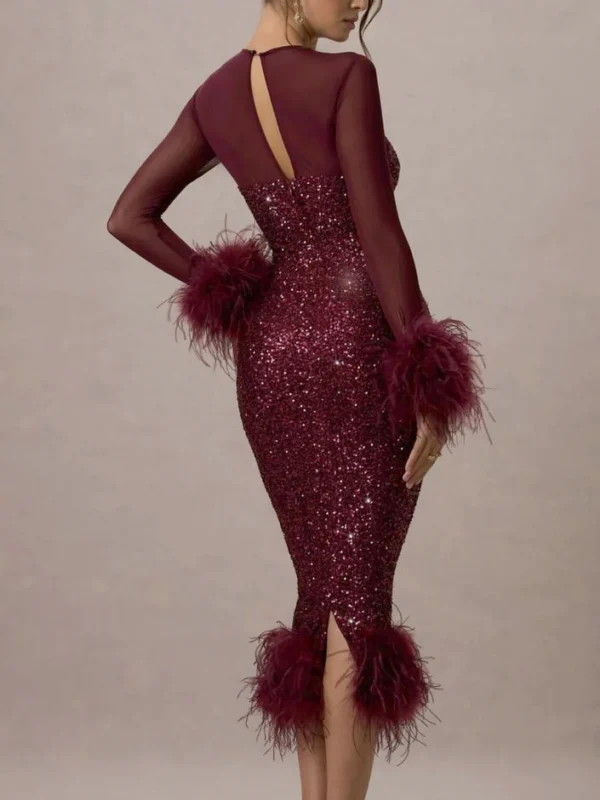
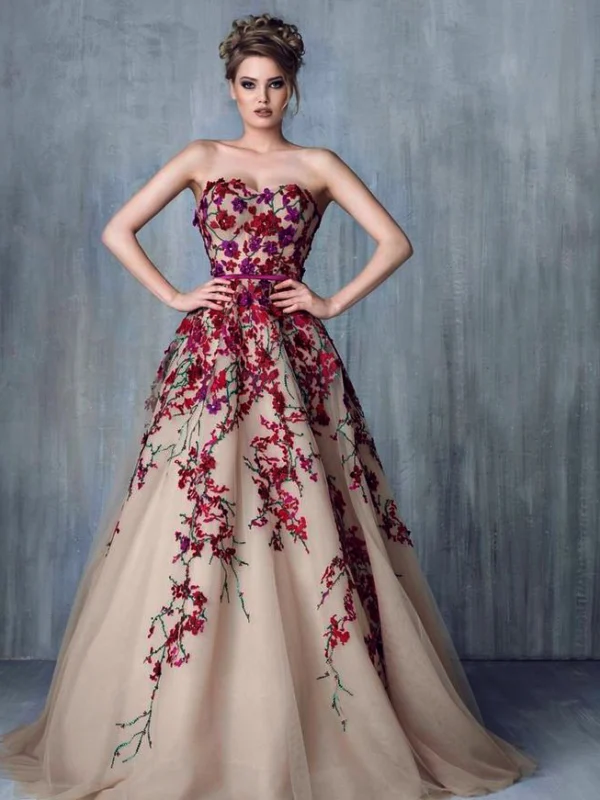
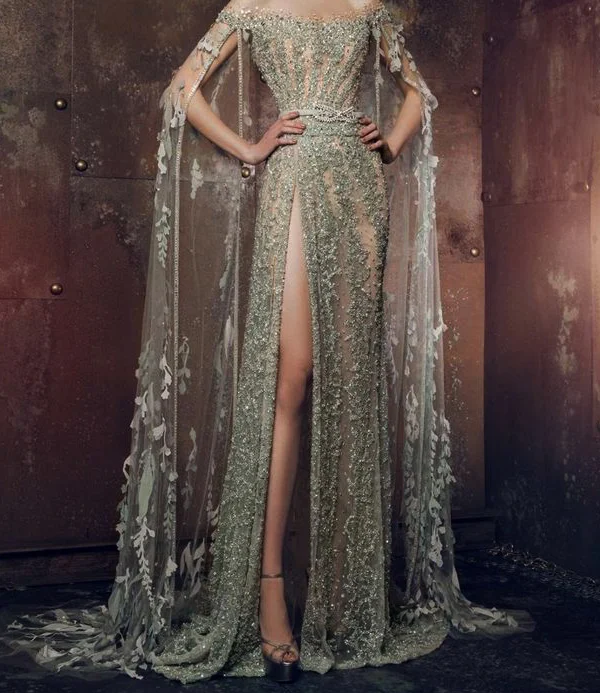
Burgundy evening outfits receive three distinct colour comparisons in this sequence. The burgundy dress combines a fitted longer skirt with fine sleeves, many reflections and black strappy shoes. A pale strapless dress distributes red and magenta branches over a full skirt. The greenish-silver-looking option has long side panels and a deep leg opening. The silver-looking strapless dress adds a gathered front skirt and a spread train. Each picture combines colour with a different form; these are not identical dresses in alternative shades.
Choose one question for the first comparison: should the largest visible area look dark red, pale and patterned, or paler and reflective? Bring in neckline, skirt width and the shoes actually visible afterwards. This helps you identify whether you favour the colour or another feature of each outfit.
Try your two preferred directions on an available dress with your own accessories. A narrow shoe strap and a larger bag add different amounts of another colour. Photograph both versions from similar distances before introducing another jewellery group, keeping shoe visibility comparable as well.
Guide to comparing these images
Follow the coloured crosswise line in the floral example
The narrow red waistband sits between red and magenta branches. It connects the drawing across the middle while other motifs travel more widely over bodice and skirt. If the red connection appeals, record band and branches separately. A related colour idea can then be sought without an entirely patterned skirt.
Separate lower drawing from side companion areas
The burgundy rear places feather-like details at wrists and hem. The green-silver-looking version instead adds long fine side areas with floral borders. Compare moving garment edges with an additional outer area beside the dress. Broad side extension does not always belong to the same skirt route.
Give each reference a card with three notes: main colour, pattern location and outermost boundary. Add the gathered silver skirt as a separate shape idea. When holding a bag in front later, check which recorded area it covers first. This keeps clear which property the accessory should preserve or interrupt.