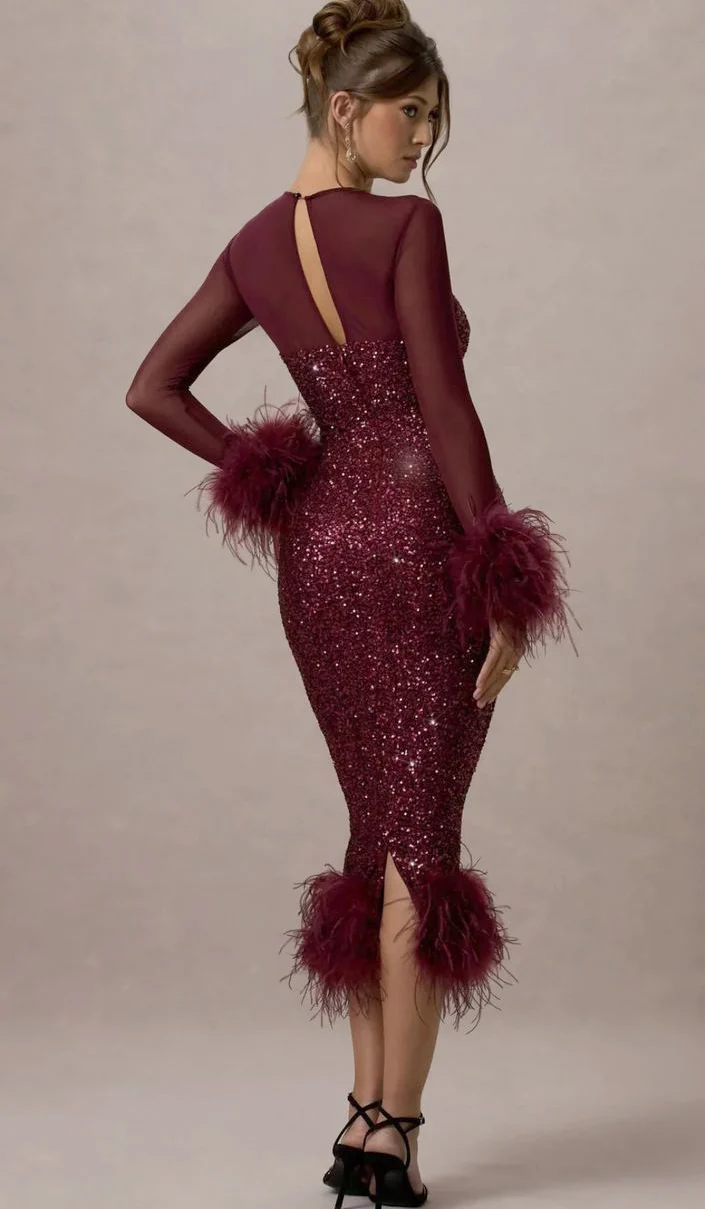
A burgundy evening dress offers a different starting point from a bright red dress or a large silver-coloured surface. In the burgundy reference, many reflective-looking details cover the fitted skirt. Fine translucent-looking long sleeves, a narrow back opening and feather-like finishes accompany the colour. Black strappy shoes add a dark finish below. Separate these decisions when making your choice: which red shade do you want, how much visible decoration, and which colours should appear in the shoes and jewellery? You can identify a preferred detail without adopting every part of the photographed outfit.
Compare a burgundy evening dress in your own lighting
Look at the actual dress where you will prepare and, where possible, in daylight too. Compare the same front view rather than changing the pose each time. In the burgundy rear view, the colour appears beside fine translucent-looking sleeves and many pale reflections. That creates a different overall impression from a broad, evenly coloured red surface. Decide which property you are actually seeking before narrowing the selection.
Place two available dresses or colour samples beside one another if you are choosing between dark red and a paler alternative. Assess them from normal mirror distance and alongside your face. Comparing only an enlarged surface photograph with another complete outfit makes the decision less clear. Choose the colour of the worn garment first, then examine its sleeves, neckline and decoration as separate aspects of that candidate.
Compare black straps with a paler shoe finish
The black shoes in the burgundy reference have crossing ankle straps. A shorter hem makes that arrangement clearly visible. Ask whether you want a dark finish below the dress. Place a black pair beside a paler alternative and try both before settling on a bag colour. Wearing them provides information about the position of the straps that simply holding a shoe beside the fabric will not supply.
Keep the dress unchanged during this comparison. A longer skirt or train may leave much less of the shoe visible. A small exposed front section then creates the colour transition rather than a whole strap arrangement. Walk several steps and sit briefly in both versions. Choose the shoe-and-dress combination you want to use through the evening, taking the actual skirt length into account rather than favouring only a standing pose.
Choose jewellery around the neckline and sleeve endings
The upper back lines are fine in the burgundy example, while the wrists have pronounced decoration. Begin your jewellery test at the places where you want to add something. An earring viewed with an updo differs from one beside hair lying over a shoulder. Try a short jewellery accent and a longer option separately, judging the entire head and neck area rather than an isolated close-up of the accessory.
A burgundy evening dress does not require one particular metal colour. Set out the jewellery you actually own and choose a group you want to use together. Then assess it beside the pale reflections on the dress. An additional bracelet may contact the existing wrist trim. Move your arm carefully and choose a jewellery location after that test. Ask for the actual trim material separately in the product information.
Treat floral red as a different colour distribution
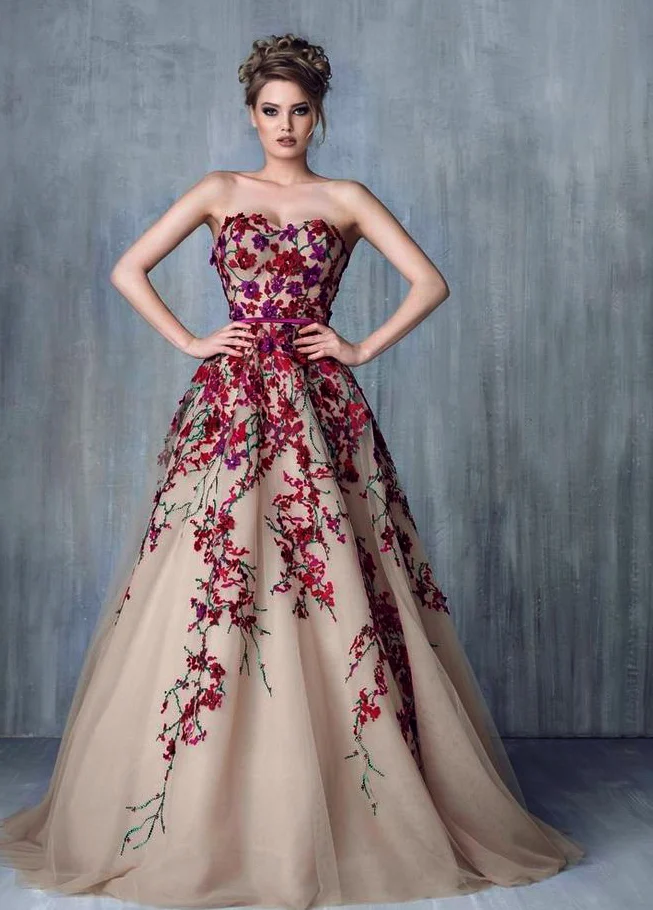
The long strapless comparison dress spreads red and magenta floral branches across a pale base. A narrow red waistband gathers the colour at another point. Here you are choosing a pattern with pale intervals as well as red tones. Reconsider shoes and bag for that distribution. Two dresses proposed for similar events can still lead you to place colour accents in different parts of the outfit.
Begin with one shade you can actually see in the floral pattern. Repeat it on a single item and decide whether you like that repetition. A pale bag is another option to compare. Accessory size matters: a narrow shoe strap introduces a smaller new colour area than a large bag held beside the skirt. Keep the same dress and stance when comparing the two additions so that the difference is clear.
Use silver and muted green as complete alternatives
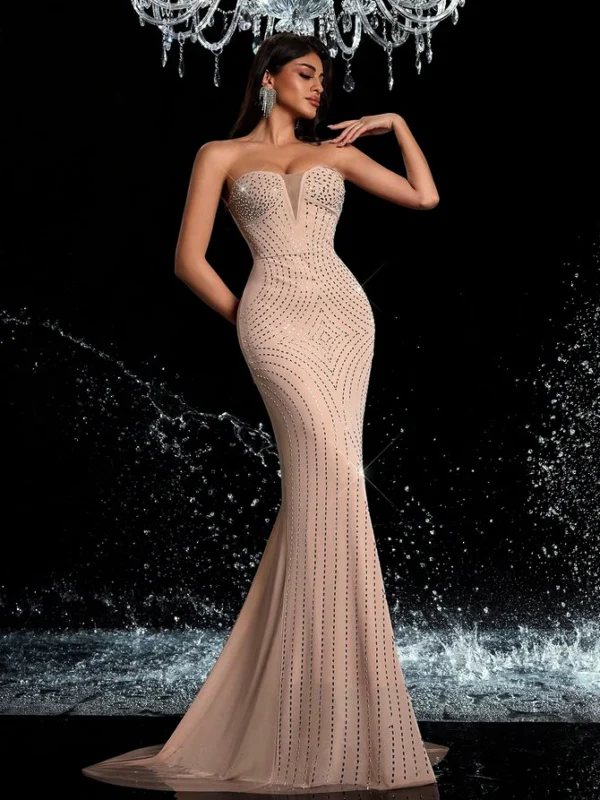
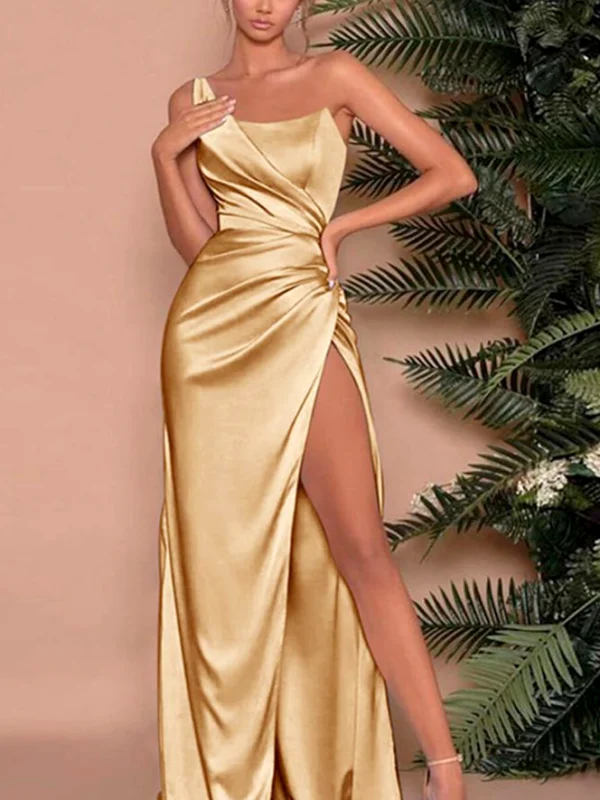
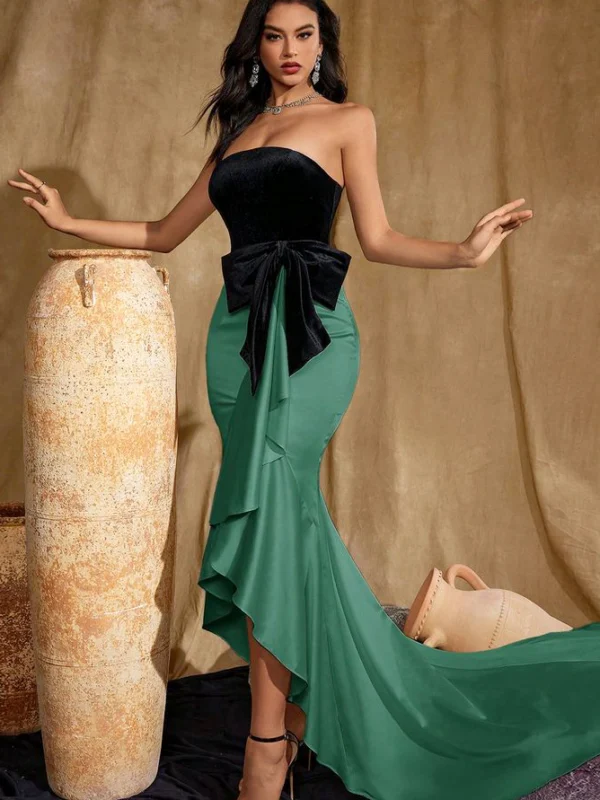
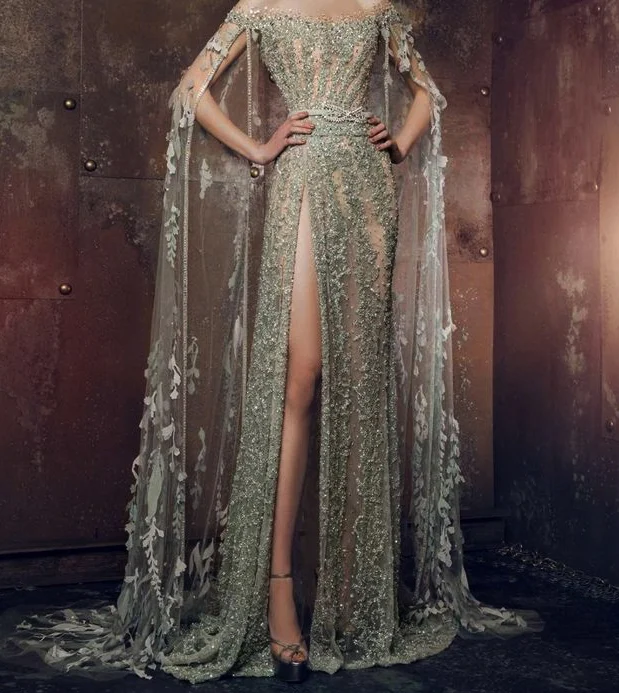
The silver-looking dress with a shaped strapless neckline and train places attention on a pale reflective surface. The muted green-looking reference adds long side panels and a deep leg opening. Assess these as complete alternatives. Their colour changes accompany different necklines, leg coverage and side volume, so name those differences separately. This makes it easier to identify the feature you actually prefer in each dress.
If the paler direction appeals, the silver evening dress guide develops cool-looking colour coordination. Use the green evening dress comparison for the other option. Return to the burgundy candidate afterwards. You can then say whether you prefer its colour or chiefly its particular decoration, rather than searching for every feature in one model without deciding their priority.
Prepare two complete combinations for the evening
Assemble two full versions, such as burgundy with black shoes and one jewellery accent, then the same dress with paler shoes and a different bag. Try the outer layer with both. Where cuffs and hem have feather-like details, pay particular attention to contact with the coat, bag and jewellery. Ask to see the actual composition and care information for the available model as part of that fitting.
The GINETEX care symbols help you read the product instructions. Keep dress and outer-layer information separately. Your burgundy evening dress can then be selected through a wearable whole: colour, visible shoe, jewellery and the route outside belong to the same plan. Photograph both options in the same stance so that the last decision uses genuinely comparable views.
Choose a burgundy evening dress as a complete outfit. Compare shoes and jewellery beside the actual shade, then add other colours deliberately.
Frequently asked questions
Which shoes should I compare with burgundy?
Begin with a black pair and a paler option you actually have. Assess both with the whole dress; visible straps and hem length can change the result as much as colour.
Must jewellery match the shoe colour exactly?
No. Choose one jewellery group you want to wear together, then add the shoes. Decide whether you prefer repetition or a visible difference in the complete outfit.
How can I introduce another strong colour?
Try it on one item first, such as a bag or shoe. Compare the complete outfit with a version using fewer colour accents and choose what you want to wear.
How should I choose an outer layer for a decorated dress?
Try it over the actual dress and check contact around sleeves, back and hem details. Consider colour after establishing how the garments will be worn together.