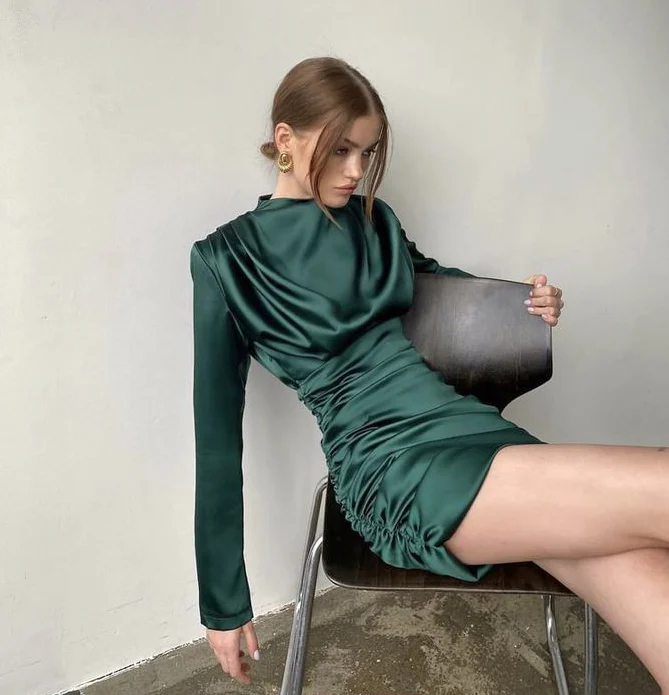
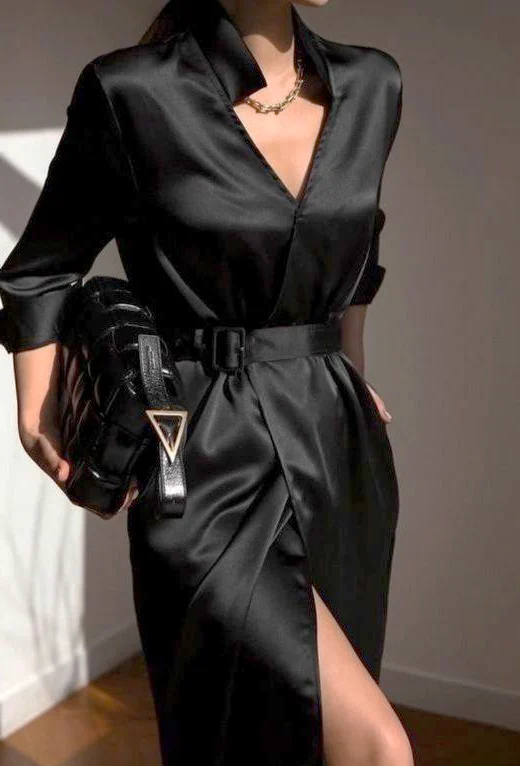
Monochrome party outfits become clearer when you define which pieces should share the colour. A green dress can provide the shared colour area; adding a black bag of your own would introduce another accent. In the black example, dress, belt and bag connect more closely within one colour range while visible jewellery details work differently. These distinctions are not mistakes you need to hide. They are palette decisions. Choose your intended repetition or exception first, then assess shine, folds and shape. A one-colour idea need not mean an unchanging or automatically minimal outfit. Each piece can have a clear reason for being included.
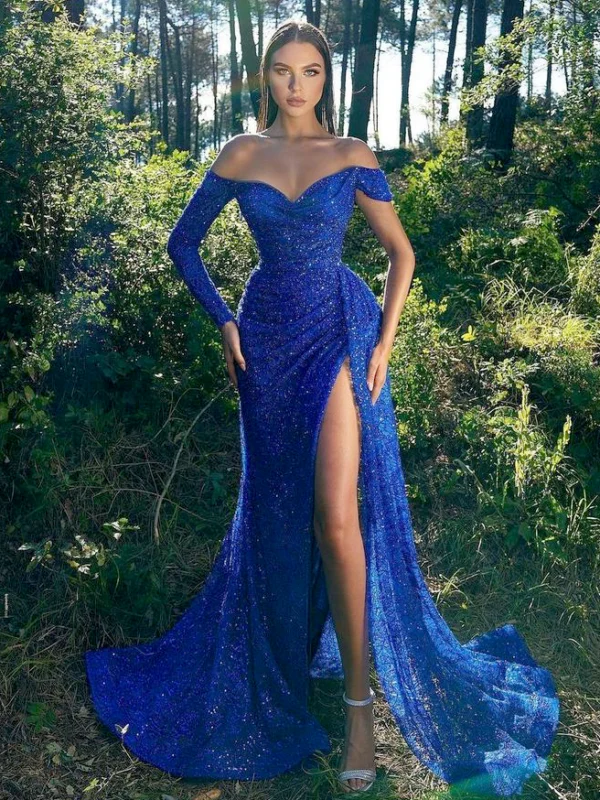
Another blue draped dress in the gallery adds a broad pale belt as a visible exception to the main colour. Alongside the black dress’s bag, it lets you compare a contrasting boundary through the middle of the garment.
Monochrome party outfits start with the scope of the palette
Place the main piece, shoes, bag and outer layer together. Which items do you want to connect through colour? You can seek a consistent overall look or relate only dress and shoes closely. Note an intended exception, such as a darker bag beside the green garment. This shows whether the next addition continues the main idea or introduces another accent deliberately. A strict label matters less than a clear account of the actual combination. Do not describe a differently coloured companion as invisible simply to make a term fit. Its role can remain explicit.
In the green photograph, the dark shape beside the upper body belongs to the chair back. It is part of the setting, rather than a bag carried with the dress. For your own styling, compare a related-colour bag and a contrasting one as separate additions. Keep the dress unchanged so the new accessory’s contribution becomes clear, instead of deriving it from a background object. Retain the contrast if you consciously prefer it, describing it as an added accent beside the main colour. The black photograph does show a dark bag, allowing its colour relationship with that dress to be considered directly.
Compare the actual shades in monochrome party outfits
Two items labelled black or green may look different side by side. Compare the real pieces at the same time instead of combining colours from separate screen views. Hold their surfaces together, then look while wearing them. Decide whether you want close repetition or a visible graduation. A difference need not be removed if it belongs to your intention. Conversely, an almost-matching shade is not automatically the right answer if you specifically want a more continuous area. Let your intended result determine the comparison rather than relying solely on the colour names.
Consider where each piece sits in the outfit. A darker shoe occupies a different position from a darker belt through the middle of a dress. The belt draws a visible boundary across the surface. Check large areas before smaller junctions for that reason. The green evening dress guide considers that main colour more closely. The question here remains narrower: which graduation do you want within the complete party look, and where should it actually appear? Placement turns accessory choice into more than matching labels.
Compare shine and folds on single-colour party dresses
The green dress shows light and dark areas along its draping. Within the photograph, these variations occur inside the same main colour. The black style combines larger shiny-looking areas with folds near the belt. Decide whether you like this pattern of light and folds or prefer a more even surface. A shared palette can still carry different focal points. You do not need another pattern to perceive structure. Equally, several textures are not compulsory when a quieter area matters to you. Try the alternatives instead of turning either into a universal rule about one-colour clothing.
Describe the surface by its visible effect first. Shine does not establish silk, and soft fall does not explain every material property. The satin evening dress comparison separates those questions more closely. Ask about composition and the particular version of a real offer. Turn slightly to watch the visible light areas change. Then decide whether another shiny companion supports the connection you want. A shiny bag beside a shiny dress is a choice rather than a necessary completion. Keeping one quieter does not abandon the colour idea.
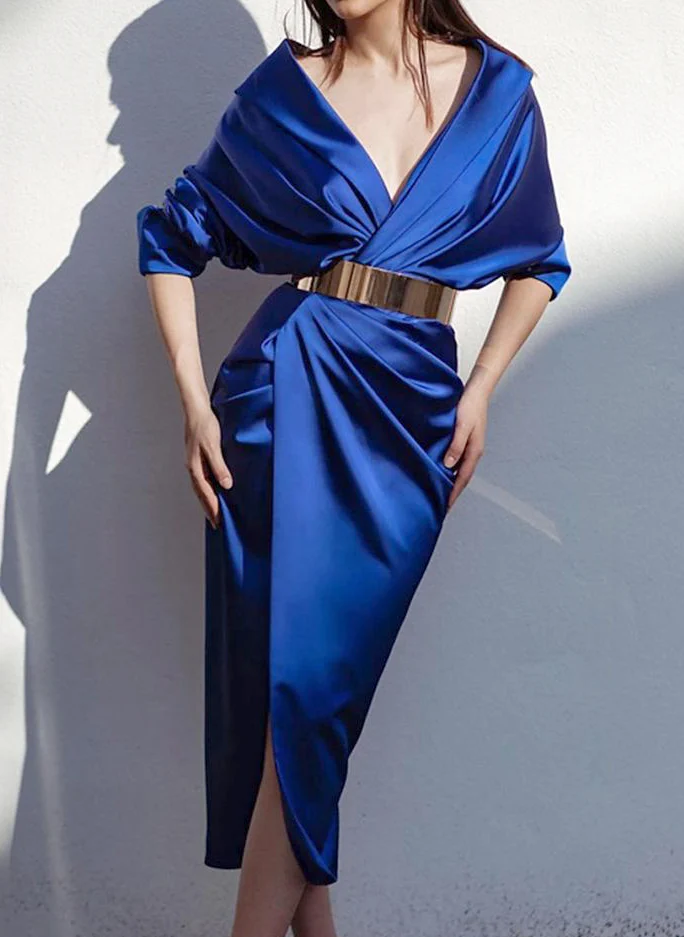
Choose belts and necklines for monochrome party outfits deliberately
In the black example, a broad belt with a visible fastening makes a clear middle boundary. The shirt collar and open V-direction frame the neck area. Compare a real style with its offered belt and an actually available alternative where appropriate. Establish that an exchange is possible rather than assuming any belt can be substituted. Look at the upper section’s length and the folds below. Do you want this division or a more continuous surface? The answer concerns shape and does not follow automatically from choosing black. Discuss the actual garment if you want a different belt width or placement.
The green dress has a higher folded neck area and long sleeves. A separately chosen bag could direct attention sideways without interrupting the middle with a belt. Decide on that distribution before adding necklaces or other large details. Try earrings and a necklace individually. A single-colour dress does not demand a complete set of equally prominent accessories. If you deliberately prefer stronger jewellery, compare it in a full view. The quieter main colour can accompany several personal solutions; it does not establish a universal quantity of decoration. Check which earlier feature remains visible after each addition.
Confirm the finished look as your own combination
Look at the arrangement standing first and then with the bag in its normal carrying position. The seated green reference changes the visible length through pose. Do not transfer that directly to the actual standing hem position. The black crop also lacks a complete view of the lower finish. Check the real dress with your shoes while walking and sitting. Look beyond colour to the chosen waistband junction and the items you will actually carry. Adding the outer layer shows which parts of the palette remain visible, preventing the photograph’s limits from becoming the limits of your final decision.
Read the actual care label before ordering; GINETEX explains its symbols. Retain your palette decision afterwards: shared colour, intended graduations and deliberate exceptions. At another occasion you can change an accessory without inventing the entire outfit again. A personal monochrome style grows from understandable connections and may be quiet or strongly divided. What matters is that colour, surface and accessories show the relationship you chose and that you confirmed the combination on the real outfit. Keeping that note with a photograph records the specific details you liked.
Define which pieces belong to the shared palette. Shine, folds and a belt structure a one-colour look; a differently coloured accessory can remain a deliberate exception.
Frequently asked questions
Must monochrome party outfits use exactly the same shade throughout?
That depends on your goal. Compare close repetition with deliberately lighter or darker areas and choose the graduation you want.
Is a green dress with a black bag completely monochrome?
If the bag belongs to your overall palette, it is a different-colour accent. You can deliberately choose and describe that exception.
Do monochrome party outfits require many textures?
No. Different surfaces are one option rather than a requirement. A quieter continuous surface may be the effect you prefer.
Thoughts on this article