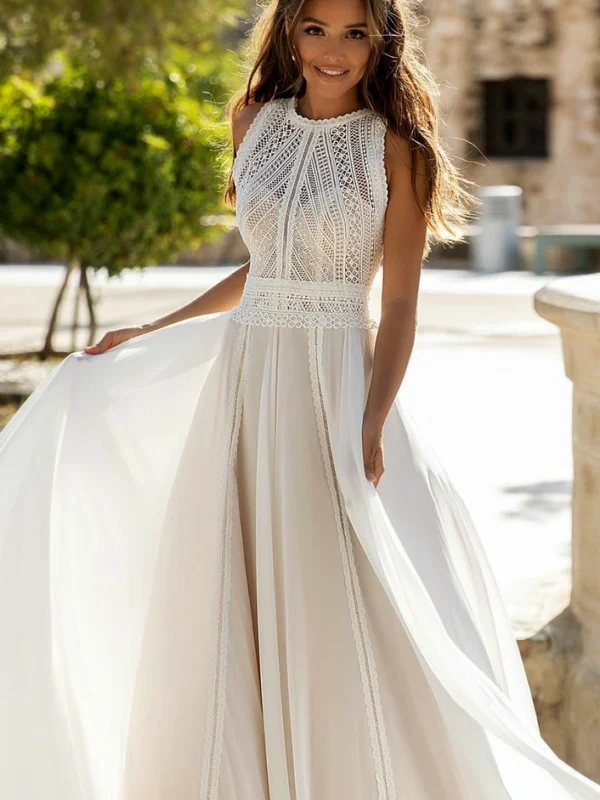
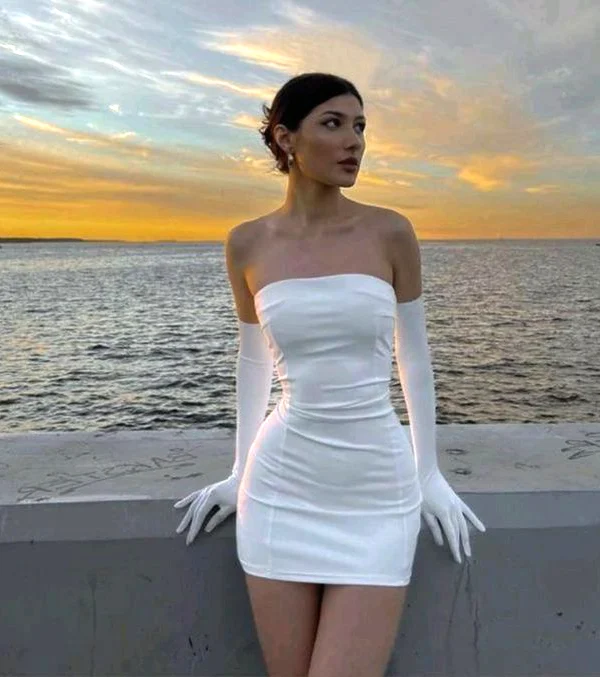
Patterned wedding dresses play different roles in these two views. The long dress concentrates pale geometric lines on a high bodice. A wide, less densely marked skirt opens below it. In the short white alternative, the upper surface stays quieter while the straight strapless edge and long gloves establish other boundaries. Compare the neck area first and skirt length afterwards, so two separate choices do not become bundled together.
This is a comparison of visible design. Neither a pattern nor white colouring assigns a cultural origin to a photograph. If a particular connection matters to your wedding, research the actual piece through specific documentation. These images do not answer that question.
Take corresponding necklines into a real fitting. Look without jewellery before adding one accessory. Test the long or short skirt with your intended shoes and movements. Note which pattern area should remain visible and which lower finish you prefer. With gloves, try opening your actual bag as well. The useful result is your own combination rather than an obligation to adopt every accessory or accept a broad style label.
Guide to comparing these images
Compare the framing above the waist
The high patterned bodice fills the area towards the neck with pale geometric lines. The short strapless reference leaves that space open above a straight edge, while its long gloves place pale areas along the arms. Compare the neck and arm zones separately. Both photographs contain detail above the waist, but the detail does not occupy the same parts of the outline.
Below the middle, the long reference offers a wide quieter area held to one side. The short dress shows side gathers before its higher finish. Look at the point where the lower shape begins as well as where it ends. This gives you a choice about distribution rather than simply long versus short.
Build a visible-feature description
Use plain notes such as high geometric upper area, straight open edge, long gloves or side gathering. Select the features that matter and leave the others as alternatives. A complete actual view can then show whether your chosen upper and lower ideas occur together, without assigning a cultural name or historical role to the outfit.