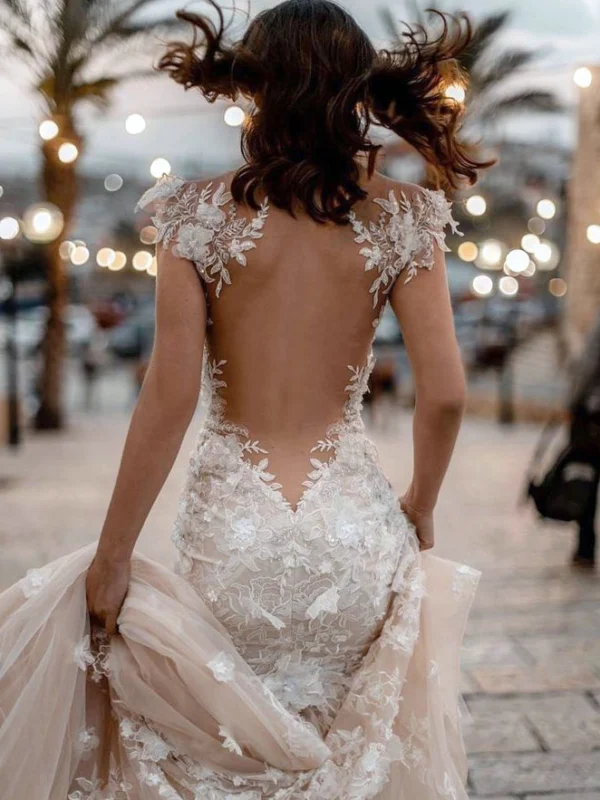
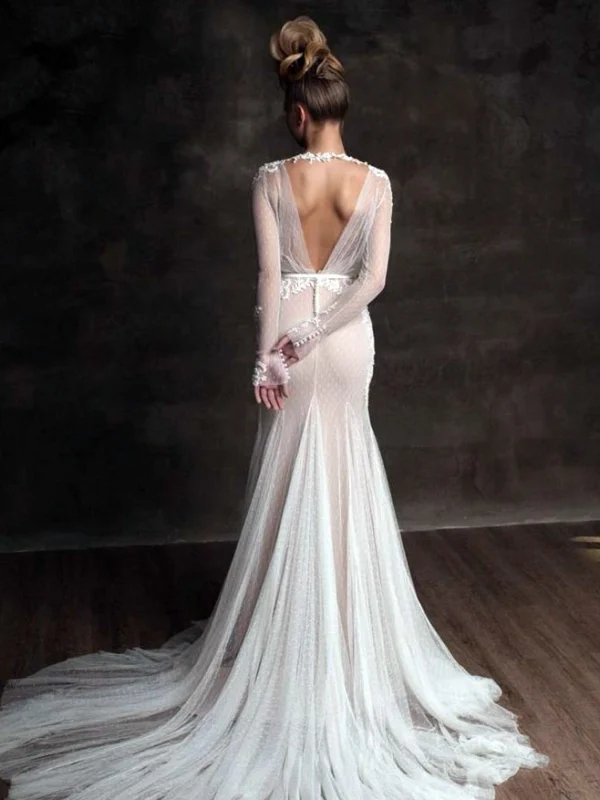
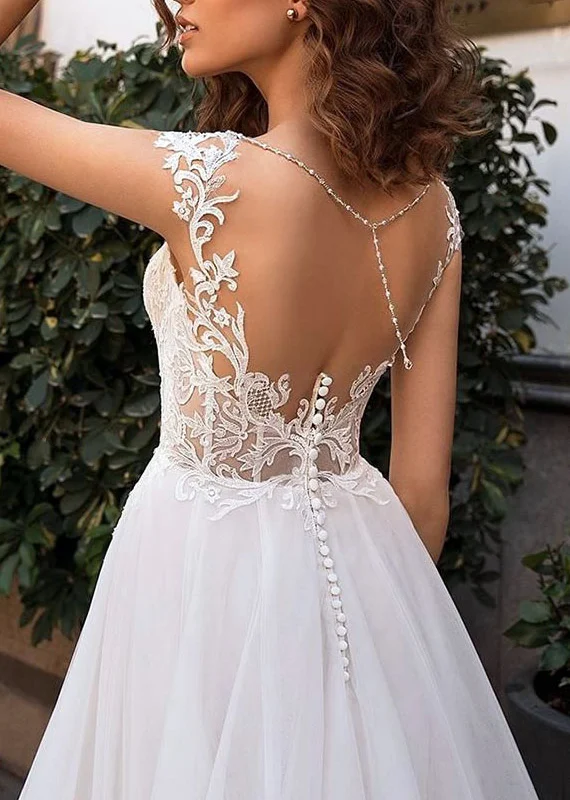
Open-back wedding dresses provide different upper information in this selection. The long-sleeve view has a visible narrow bridge beneath raised hair, with a deep V opening leading towards a narrower middle below it. In the other photograph, pale floral motifs outline shoulders and sides. Moving hair hides the nape there, so the picture does not establish that an upper connection is absent. A third photograph shows fine Y-shaped back jewellery between floral borders. This added jewellery line is a contrast reference rather than further evidence of a fabric nape strap.
Compare the visible horizontal line beside the hairstyle you intend. Raised hair reveals more of it, while loose hair can emphasise another part of the design. Choose the clearer diagonal boundary or more irregular floral edge afterwards. A longer train and fabric held by the hands are additional features rather than this selection’s first question.
Request an unobstructed complete rear view of your actual candidate. Try hair, underwear and intended accessories beside the real opening next. Describe the boundary to retain and clarify attachment or alterations through the offered garment. The images supply a precise comparison of visible lines rather than a general account of the dresses’ internal construction.
Guide to comparing these images
Read the upper connection separately from the side edge
The long-sleeved example places a narrow bridge beneath raised hair. Below it, the exposed area descends into a deeper V. The floral side views draw a more irregular boundary. Follow one side from shoulder to middle first. That route can be described even when another nape area remains hidden in a photograph.
Assign an additional line to its location
The fine Y-shaped jewellery line sits between floral boundaries. Compare how it divides exposed space with the single upper bridge rather than grouping both as connections. An upper line and a descending middle place visible accents in different locations.
If both ideas appeal, save them as separate properties with their own references. Establish the actual candidate’s existing upper and side boundaries first, adding planned back jewellery afterwards. A photograph without hair over the nape and another with your intended hairstyle answer different questions: identifying an existing line and choosing its later visibility.