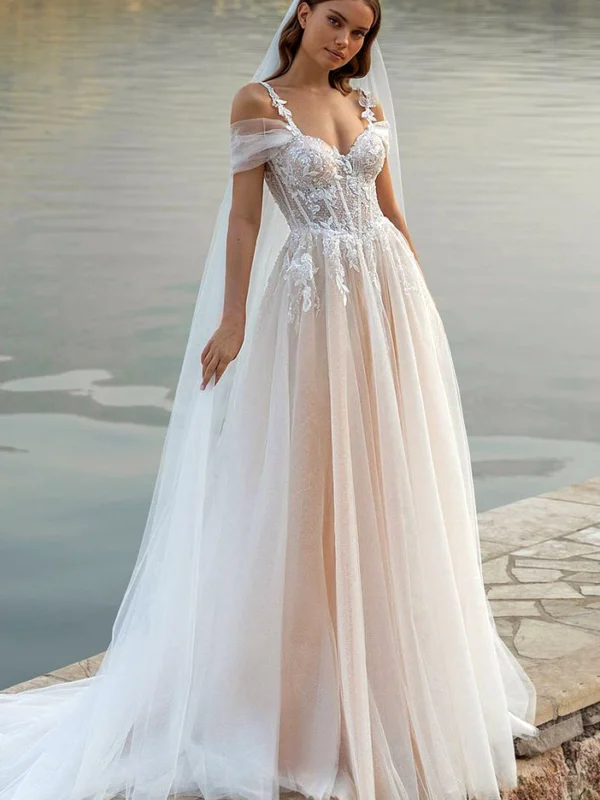
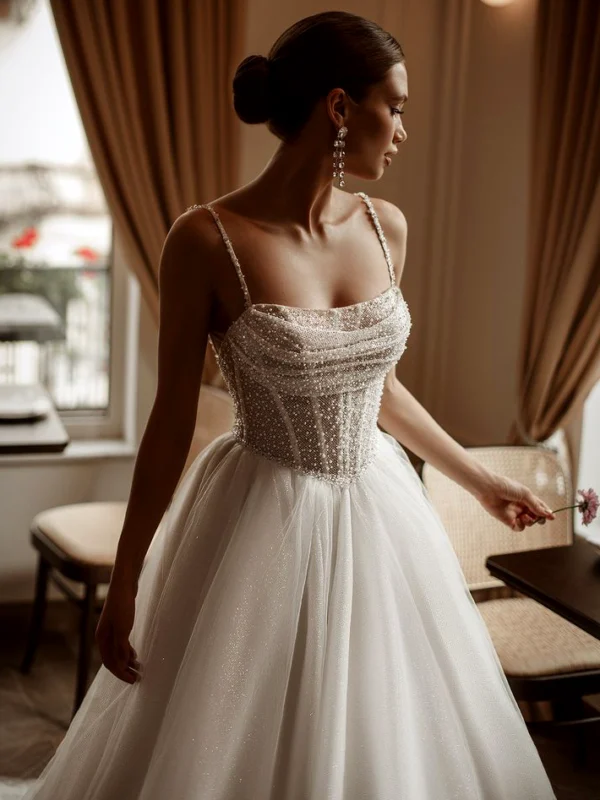
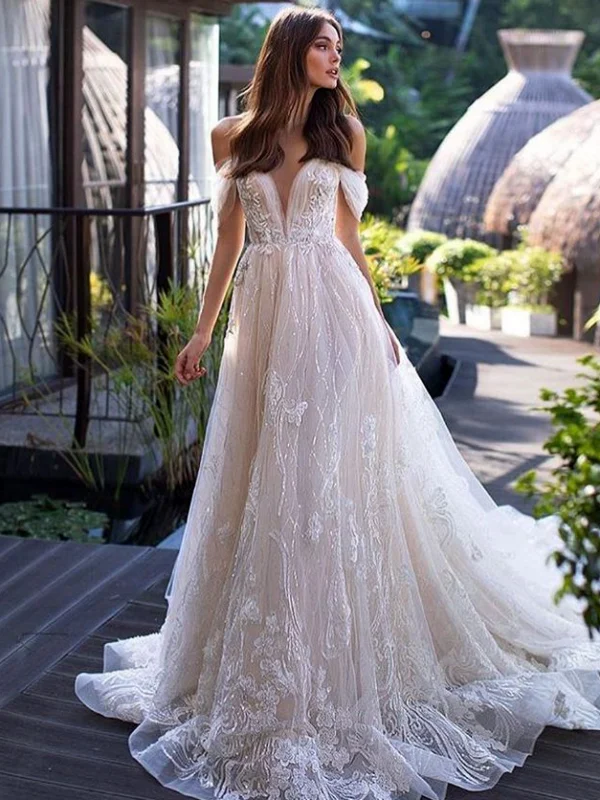
Wedding dresses with waist decoration offer three ways to connect an embellished upper area to a wider skirt here. In the pale floral look, individual motifs extend below the middle between quieter spaces. Narrow decorated straps and loose upper-arm bands frame the top. The other outfit has a more densely dotted reflective bodice, thin straps and a clearer boundary before a more evenly appearing skirt. Quantity of decoration alone does not describe this difference. The third view continues motifs through the long skirt to its visible hem. It extends the two waist endings into a pattern distributed across a much larger area.
Look at the last visible motif before deciding on extra embellishment. A trailing branch and a continuous bodice edge organise the same area differently. Choose how much quieter skirt surface should remain beside that boundary afterwards. The veil layer in the first picture can frame parts of the side at different moments; its placement is another independent decision.
Compare the transition from conversation distance and close up at a fitting. Hold your bag or bouquet at the intended height so ordinary hand positions enter the assessment. Name the preferred ending and clarify alterations on the real garment. The photographs provide visible motifs rather than confirmed manufacture or fibre details for an offered model.
Guide to comparing these images
Use the final motif as a comparison point
Trailing flowers leave smaller quiet spaces beside individual continuations. The point-reflective bodice ends more clearly before a quieter skirt. The third photograph retains drawing down to the visible hem. Locate the last place where pattern remains in each view. Its position explains how far you want decoration to extend more precisely than quantity alone.
Notice the outer frame beside the pattern
The floral example’s long veil lies beside other pale areas. The wooden-walkway photograph instead shows the patterned lower garment edge directly. Establish which drawing belongs to the skirt and which to a neighbouring companion. A small preview can merge those boundaries.
Save a waist crop and complete view of the same favourite. One explains the transition; the other shows its weight across the full length. If your own bouquet conceals the middle, add a photograph without it. Assess decoration itself before deciding how visible it should remain beside the bouquet later.