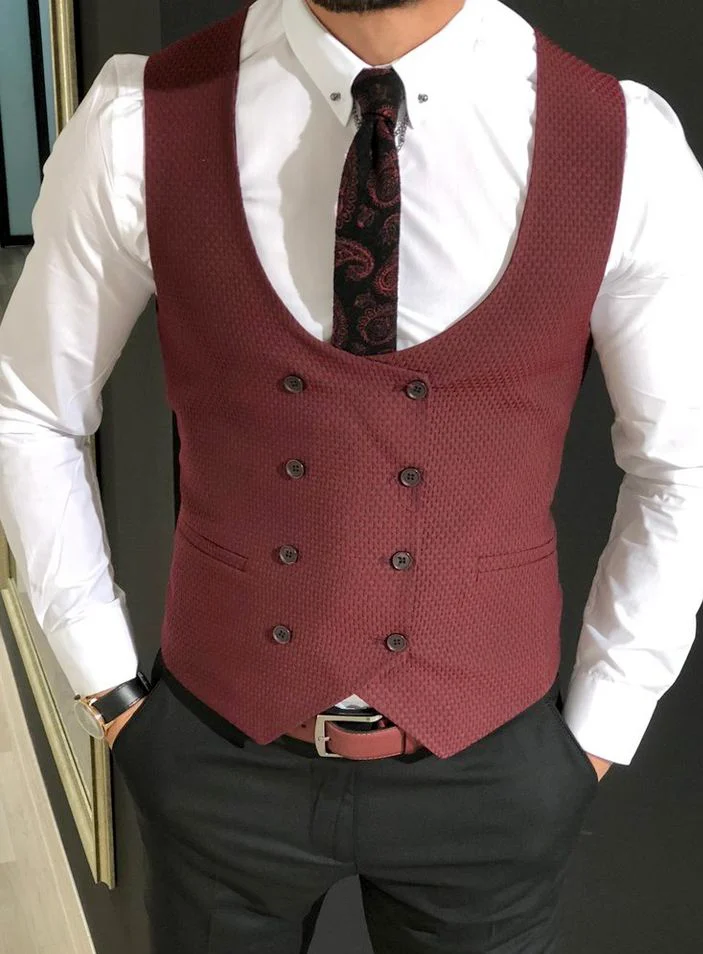
A double-row waistcoat in burgundy fills the middle over a pale shirt here. Two button rows sit beside one another. The opening reveals a dark patterned tie, with dark trousers and a coloured belt below. Unlike the single-row references, the button drawing spreads across more width. That arrangement is a design preference of its own rather than only a colour question, and the pale shirt makes its boundaries especially visible.
Compare it with a central row on the same shirt if you are still choosing. Keep tie and posture as consistent as possible. Decide whether you enjoy the broader front as a strong focus or prefer a quieter middle line. Check the intended fastened position on the actual model rather than deriving a universal wearing rule from its visible button count.
Assess the lower finish with your real trousers afterwards. A visible belt may be deliberate, but should not appear accidentally only after the choice. Sit and stand again. Decide whether you enjoy the edges in those states. Request the rear view too, because a waistcoat worn without a jacket consists of more than this front area.