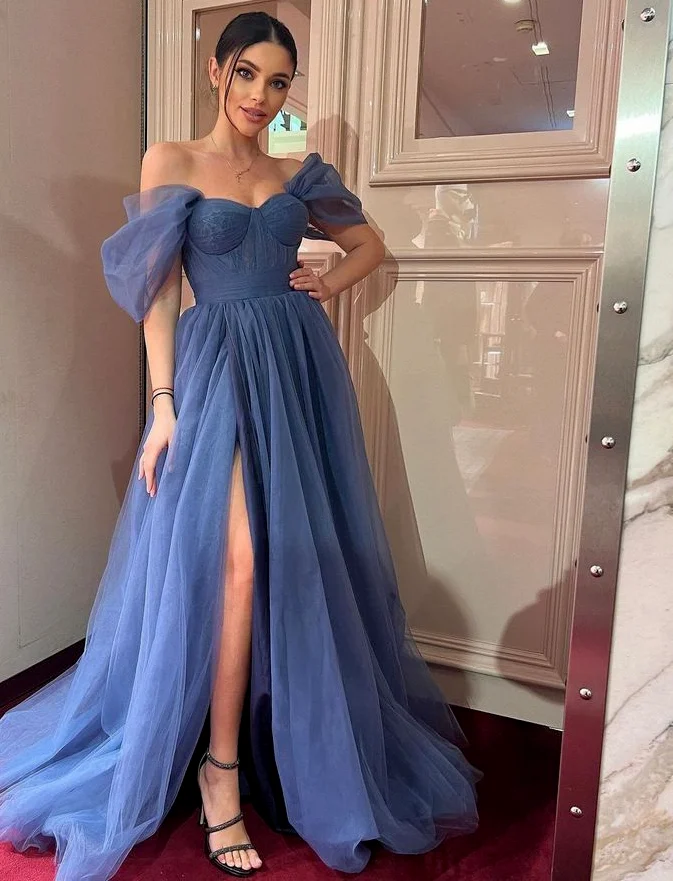
Blue upper volume frames the closer bodice at the sides here. Fine vertical lines and a rounded middle edge divide the upper area. A long skirt spreads below, while a front opening reveals leg and shoe. One hand rests at the waist. The photograph adds another blue direction whose exact relationship to the paler references needs checking on real fabric rather than through a shared shade name alone.
Compare the colour direction for the group first, not every detail simultaneously. May a deeper blue stand beside paler shades? If so, record that variation explicitly. Decide afterwards whether the side shoulder width remains a personal preference. A quieter upper area can provide another outline within the same palette without abandoning the agreed connection. Return to the differences your initial brief actually welcomes.
Try the real opening with the skirt falling normally. Walk in the intended shoes and sit. Check the upper shape with relaxed hands and while holding a bouquet. The pose establishes neither ordinary opening width nor bodice support. Choose visible properties and clarify the actual construction on the specific model before placing it within the shared selection.