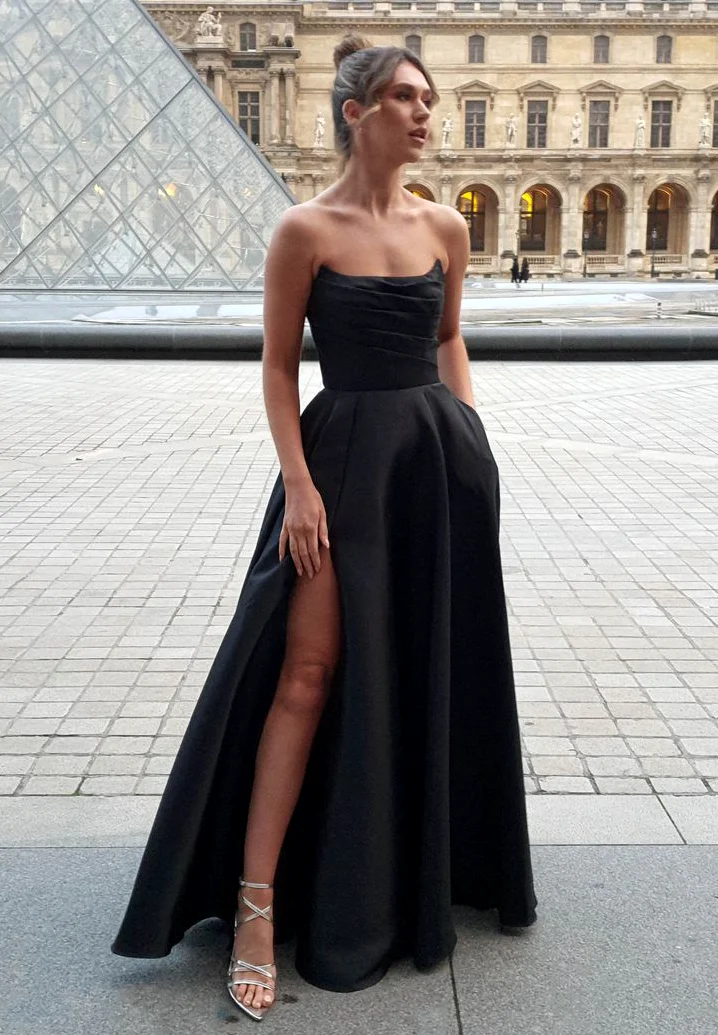
A quiet middle on a black dress provides the counterpoint to bow and draping here. The strapless upper edge curves slightly and has more marked ends at the sides. Beneath a clear waist, the skirt falls broader. A leg opening remains visible in front, with a shoe supplying a pale accent below. One hand sits partly within the side skirt area, but no large added bow shape appears there.
Use this view to establish whether you want a hip accent at all. Compare its transition with the black bow version and red fold direction. You may prefer the quieter middle and place emphasis through a bag or jewellery instead. Choose that deliberately rather than treating an open-looking surface as automatically incomplete.
Test the real skirt with hands relaxed down and while sitting. A quiet surface cannot establish movement room or internal construction. Choose the opening as a line of its own too. Visible shoes and a posed stance can complement your actual hem assessment, but they cannot replace wearing your intended shoes with the dress.