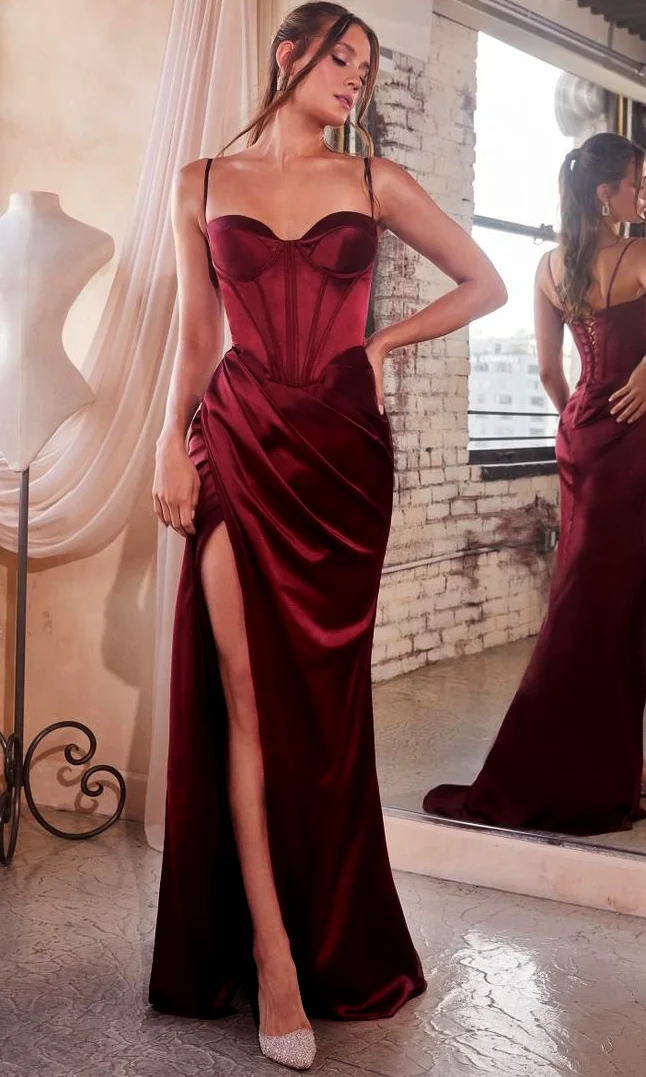
Red draping at the hip connects several diagonal folds with an open front skirt line in this photograph. The bodice has vertical drawn areas and rounded upper edges. Narrow shoulder lines remain visible. A mirror shows part of the back with a lacing-like connection. The comparison can therefore separate two questions: which direction you want at the front, and which actual back arrangement accompanies it.
If the diagonal folds appeal most, describe their position independently of red. Try a real candidate with relaxed hands first. The hand held at the side and forward leg change the photographed surface. Walk afterwards and let the folds fall without rearranging them. Check whether the open edge retains your preferred coverage in ordinary movement.
A quieter bodice could frame a similar hip idea differently; equally, you may enjoy vertical upper drawing with a quieter skirt. Ask about genuinely available versions. Visible shine and a lacing-like back establish neither fibre nor support or adjustment range. Select the form, then check specific functions on the actual product.